
Power washing before painting is the single most important prep step for any exterior paint job in Sacramento. It costs $150 to $800 depending on your home's size and siding material, and it directly determines whether your new paint bonds properly or starts peeling within two years. Skip it, and you are painting over a layer of Sacramento Valley dust, mold, oxidized paint, and airborne contaminants that prevent adhesion.
Sacramento's climate makes power washing especially critical. The region averages fewer than 20 inches of rain per year (National Weather Service Sacramento, 2025), which means exterior surfaces accumulate layers of fine dust, pollen, and agricultural particulate that rain does not wash away naturally. North-facing walls grow mold and mildew from winter moisture, while south- and west-facing surfaces collect UV-degraded paint chalking that feels powdery to the touch.
This guide covers everything Sacramento homeowners need to know about power washing before an exterior painting project: cost breakdowns, PSI settings by siding type, drying time by season, the DIY vs. professional decision, and how to bundle power washing with your painting project for maximum savings.
Power Washing Cost Before Painting in Sacramento
The cost to power wash a house in Sacramento ranges from $150 for a small single-story home to $800 or more for a large two-story property. Most homeowners pay between $250 and $500 for a full exterior wash as part of a painting project.
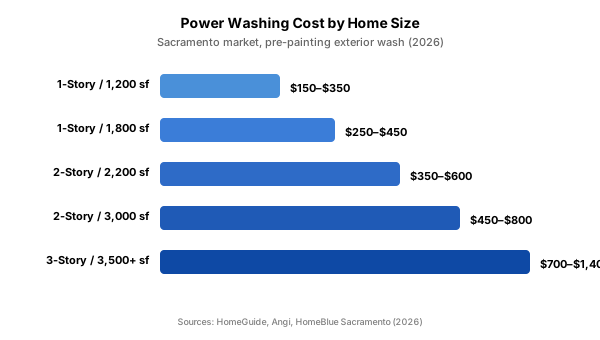
| Home Type | Approx. Exterior Sq Ft | Standalone Cost | Bundled With Painting |
|---|---|---|---|
| 1-story ranch (1,200 sf) | 1,600–2,000 | $150–$350 | $75–$175 |
| 1-story ranch (1,800 sf) | 2,200–2,800 | $250–$450 | $125–$225 |
| 2-story (2,200 sf) | 3,000–3,800 | $350–$600 | $175–$300 |
| 2-story (3,000 sf) | 4,000–5,000 | $450–$800 | $225–$400 |
| 3-story / large estate | 5,000+ | $700–$1,400 | $350–$700 |
Sources: HomeGuide, 2026; Angi, 2026; HomeBlue Sacramento, 2025.
These prices include labor, equipment, and basic detergent. They do not include mold treatment, rust stain removal, or soft washing add-ons -- those are covered below.
The "bundled with painting" column is the key number for most Sacramento homeowners. When power washing is part of a larger exterior painting project, the painting contractor absorbs the mobilization cost and often discounts the washing by 40–60% because the crew and equipment are already on-site.
Cost Factors That Push Prices Higher
Several factors can increase power washing costs beyond the base ranges above:
- Height and access difficulty -- Two-story homes cost 40–60% more than single-story because of ladder work and specialized equipment. Two-story painting projects carry similar premiums.
- Heavy mold or mildew -- North-facing walls in Sacramento neighborhoods like Land Park, Curtis Park, and East Sacramento frequently develop mold from winter shade and moisture. Treating mold adds $50–$150 to the wash.
- Paint chalking or oxidation -- Older paint that has chalked (turned powdery) requires additional detergent and sometimes a second pass. This is common on homes that have gone 10+ years without repainting, as described in our how often to repaint guide.
- Stucco with deep texture -- Sacramento stucco homes hold dirt in the texture grooves, requiring more time and detergent. See our stucco painting cost guide for related pricing.
- Deck, fence, or driveway add-ons -- Adding a deck staining project or fence painting to the same service call increases the total but reduces per-item cost.
PSI Settings by Siding Material
Using the wrong pressure on your siding causes damage that costs more to fix than the power washing saved. This is the most common DIY mistake and the primary reason professionals adjust their equipment for each surface type.
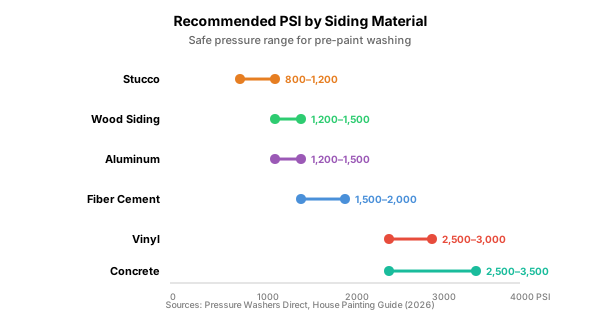
Stucco: 800–1,200 PSI
Sacramento has more stucco homes than almost any other metro in California. Stucco is porous and relatively soft -- high pressure blasts through the surface, creates divots, and forces water behind the coating where it causes hidden moisture damage. Use a wide-fan (40-degree) nozzle and keep the wand 18–24 inches from the surface.
Homes with elastomeric coatings on stucco need even more care. The elastomeric membrane is flexible but can be punctured by concentrated spray. Soft washing (low pressure plus detergent) is the preferred method for elastomeric-coated stucco.
Wood Siding and Trim: 1,200–1,500 PSI
Wood lap siding, shingles, and trim are vulnerable to water intrusion at joints and end grain. High pressure drives water behind the siding, which causes swelling, warping, and eventually rot. Use a 25-degree nozzle, spray at a downward angle to avoid driving water under lap joints, and maintain 12–18 inches of distance.
For homes with peeling paint on wood siding, power washing also serves as a mechanical stripping method. Flaking and loose paint comes off during the wash, exposing bare wood that needs primer before painting. This is part of the standard exterior painting preparation process.
Vinyl Siding: 2,500–3,000 PSI
Vinyl handles higher pressure than wood or stucco because it is non-porous. However, the seams between panels are designed to flex and overlap -- blasting water upward into those seams forces it behind the siding and into the wall cavity. Always spray downward or horizontally, never upward.
Fiber Cement (Hardie Board): 1,500–2,000 PSI
Fiber cement siding is durable but can chip at edges if hit with concentrated spray. A 25-degree nozzle at moderate distance handles fiber cement well. Sacramento's newer developments in Natomas, Elk Grove, and Rancho Cordova commonly feature fiber cement siding.
Concrete and Masonry: 2,500–3,500 PSI
Concrete foundations, retaining walls, and brick can handle the highest pressure settings. For pre-paint cleaning of concrete surfaces like garage floors, see our epoxy garage floor guide which covers surface preparation in detail.
How Long After Power Washing to Paint
The number-one rule: the surface must be completely dry before painting. Painting over moisture traps water under the new paint film, which causes blistering, peeling, and premature failure -- the exact problems Sacramento homeowners deal with when heat damages exterior paint.
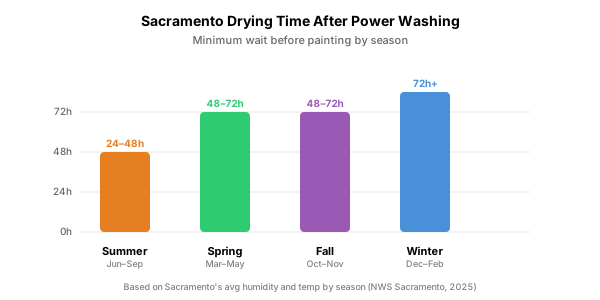
Sacramento Drying Times by Season
Sacramento's climate creates significant variation in drying time depending on when you wash:
- Summer (June–September): 24–48 hours. Sacramento's dry heat with daytime temperatures of 95–105 degrees Fahrenheit and relative humidity below 20% dries surfaces fast. However, thick stucco and textured surfaces retain moisture in pores longer than smooth siding.
- Spring (March–May): 48–72 hours. Moderate temperatures and occasional rain showers mean you need to watch the forecast carefully. A surprise spring shower within 24 hours of washing resets the clock.
- Fall (October–November): 48–72 hours. Similar to spring, but Sacramento's first rain events (the "Tule fog season" transition) can catch homeowners off guard.
- Winter (December–February): 72 hours minimum, often longer. Cold temperatures, fog, and rain make winter the worst time for power washing before painting. Our best time to paint your house exterior guide explains why spring and early fall are the ideal painting windows in Sacramento.
How to Test if the Surface Is Dry
Do not guess. Use these methods:
- Moisture meter test -- A pin-type moisture meter reads the moisture content of wood and stucco. Readings below 15% mean the surface is ready for primer. Above 15%, wait longer.
- Tape test -- Press a strip of painter's tape firmly against the surface, wait 10 minutes, then peel. If the adhesive side shows moisture or feels damp, the surface is not ready.
- Touch test -- Run your hand across the surface in a shaded area (shaded spots dry last). If it feels cool or damp to the touch, it needs more time.
What Power Washing Removes (and What It Does Not)
Power washing is effective at removing surface contaminants, but it is not a replacement for manual scraping, sanding, or chemical stripping. Here is what it handles versus what it cannot.
Removes Effectively
- Dirt and dust -- Sacramento's Central Valley location means constant dust accumulation on exterior surfaces, especially during dry months
- Mold and mildew -- Green or black growth on shaded walls, common in Sacramento neighborhoods with mature tree canopy
- Loose and flaking paint -- Chips, peels, and alligator-pattern paint come off under pressure
- Chalking -- The powdery residue from UV-degraded paint washes away cleanly
- Cobwebs and insect debris -- Under eaves, around windows, and along trim
- Pollen buildup -- Sacramento's tree pollen seasons (February through May) coat every outdoor surface
Does Not Remove
- Firmly adhered old paint -- Paint that passes the adhesion test stays. This is fine -- new paint bonds well to old paint that is still tightly adhered.
- Deep stains -- Rust stains, tannin bleed from wood, and efflorescence on masonry require chemical treatment, not just pressure.
- Lead paint -- Homes built before 1978 may have lead paint. Power washing lead paint creates contaminated runoff that violates EPA regulations. See our lead paint testing guide for proper testing and abatement procedures.
- Structural damage -- Rot, cracked stucco, and deteriorated wood need repair, not washing. Our drywall and surface repair service handles these issues before painting begins.
DIY vs. Professional Power Washing
The decision to DIY or hire a professional depends on your home's siding material, height, and the severity of contamination.
DIY Power Washing
Cost: $50–$150 (equipment rental + detergent)
A pressure washer rental from Home Depot or a Sacramento tool rental shop runs $40–$80 per day for a 2,000–3,000 PSI gas unit. Add $10–$30 for exterior house wash detergent.
DIY works when:
- Your home is single-story with easy access
- Siding is vinyl or fiber cement (more forgiving of technique errors)
- No significant mold, chalking, or paint failure
- You have experience operating a pressure washer
DIY is risky when:
- Your home has stucco siding (too easy to damage at wrong PSI)
- The house is two stories or taller (ladder + pressure washer = safety hazard)
- You see mold, heavy chalking, or lead paint concerns
- You plan to paint within a week (improper technique can drive moisture into the substrate)
Professional Power Washing
Cost: $250–$600 for most Sacramento homes (standalone)
Professional power washing contractors bring commercial-grade equipment, surface-appropriate detergents, and experience matching PSI to your siding type. They also carry liability insurance that covers accidental damage -- which matters when a wrong nozzle setting can gouge stucco or crack a window seal.
The best value, however, is hiring a painting contractor who includes power washing in their exterior prep. ProFlow Painting's crew handles exterior painting preparation as an integrated process: wash, dry, scrape, sand, prime, paint. Splitting these steps across contractors introduces coordination delays, finger-pointing if something goes wrong, and higher total cost.
| Factor | DIY | Professional (standalone) | Bundled With Painting |
|---|---|---|---|
| Cost | $50–$150 | $250–$600 | $125–$300 |
| Time investment | 4–8 hours | 2–4 hours | Included in painting schedule |
| Damage risk | Moderate–high | Low | Low |
| Equipment quality | Consumer-grade | Commercial-grade | Commercial-grade |
| Mold treatment | No | Optional add-on | Included if needed |
| Surface assessment | None | Basic | Full (painting contractor evaluates for repairs) |
Sacramento & Placer County
Need a real quote on your project?
Free, no-obligation walkthrough. Itemized estimate within 24 hours. Most jobs scheduled within 2–3 weeks.
Power Washing for Specific Sacramento Exterior Projects
Different exterior painting projects have different power washing requirements.
Exterior House Repainting
Full exterior repaints require the most thorough power washing. The entire house gets washed top to bottom, including eaves, soffits, fascia, window frames, and trim. Stubborn areas get a second pass or spot treatment with detergent. This is the standard process for a full house painting project.
Deck and Fence Staining
Decks and fences need power washing before staining to remove gray weathered wood fibers, mold, and old stain residue. PSI settings for deck washing typically run 1,200–1,500 to avoid splintering the wood grain. After washing, a wood brightener solution restores the natural pH balance before stain application. Our deck staining guide covers the full process and pricing.
Stucco Painting
Sacramento stucco homes deserve special mention because stucco is the most common exterior material in the region and the easiest to damage with a pressure washer. Soft washing -- using low pressure (under 1,000 PSI) combined with a biodegradable detergent -- is the preferred method. The detergent does the cleaning work while the low-pressure rinse avoids surface damage.
For stucco with existing elastomeric paint, soft washing is mandatory. High pressure can compromise the elastomeric membrane's waterproofing properties.
Commercial Exterior Washing
Commercial buildings, apartment complexes, and HOA communities require a different approach than residential washing. Larger equipment, scaffolding or lift access, and coordination around tenant schedules add complexity. See our commercial painting cost guide for commercial-specific pricing.
Common Power Washing Mistakes That Ruin Paint Jobs
These mistakes are the reason professional painters do their own washing rather than relying on a separate service or a homeowner's DIY effort.
-
Wrong PSI for the siding material -- The most common and most damaging mistake. Too much pressure on stucco etches the surface. Too much on wood splinters the grain. Both conditions make the paint job look worse, not better.
-
Spraying upward under lap siding -- Water driven behind siding takes weeks to dry. Painting over that trapped moisture causes blistering within months.
-
Washing on a hot day at midday -- In Sacramento's summer heat, detergent dries on the surface before you can rinse it, leaving streaks and residue. Wash in the morning before 10 AM or in the evening after direct sun moves off the wall.
-
Not allowing enough drying time -- Impatience is the enemy. Painting a surface that is 90% dry still traps enough moisture to cause adhesion failure. Test, do not guess.
-
Standing too close -- Keeping the nozzle 6 inches from the surface concentrates the stream to a damaging point. Maintain 12–18 inches minimum for siding, 18–24 inches for stucco.
-
Ignoring detergent -- Pressure alone does not kill mold spores. Without a mildewcide detergent, mold returns within months and grows under the new paint film. Sacramento's damp winters create ideal conditions for mold regrowth on untreated surfaces.
-
Forgetting to protect landscaping -- Pressure washing detergent and paint chips from old surfaces can damage plants. Wet down landscaping before washing and cover sensitive plants with plastic sheeting.
Power Washing as Part of the Full Prep Process
Power washing is step one in a multi-step exterior preparation process. Understanding where it fits helps Sacramento homeowners evaluate whether their painter is following best practices.
The complete exterior prep sequence:
- Power wash -- Remove dirt, mold, loose paint, and chalking
- Dry -- Wait 48–72 hours (Sacramento spring/fall) or 24–48 hours (summer)
- Scrape and sand -- Remove remaining loose paint and feather edges of intact paint for a smooth transition
- Repair -- Fill cracks, patch holes, replace rotted wood, caulk gaps around windows and trim
- Prime -- Spot-prime bare wood, repaired areas, and stain-blocking primer over water stains or tannin bleed
- Paint -- Apply two coats of exterior paint to properly prepared surfaces
Skipping any step in this sequence compromises the paint job. Our interior painting preparation guide covers the indoor equivalent of this process, while our exterior painting preparation guide goes deeper on each step.
Frequently Asked Questions
Should you power wash a house before painting it?
Yes. Power washing before exterior painting is essential for paint adhesion and longevity. It removes dirt, mold, chalking, and loose paint that prevent new coatings from bonding to the surface. According to paint manufacturers including Sherwin-Williams and Benjamin Moore, surface cleaning is a mandatory step in their warranty requirements (Sherwin-Williams Exterior Application Guide, 2026). Skipping power washing can reduce your exterior paint's lifespan by 30–50% and may void the paint manufacturer's warranty. For a full breakdown of paint brand recommendations, see our Sherwin-Williams vs. Benjamin Moore comparison.
How long after pressure washing can you paint a house?
Wait at least 24–48 hours in Sacramento's dry summer heat and 48–72 hours in spring, fall, or overcast conditions. Winter washing may require 72 hours or more. The critical factor is that the surface must be completely dry -- not just surface-dry, but dry through the substrate. Use a moisture meter for wood surfaces (target below 15% moisture content) or a tape test for stucco and masonry. Painting over a damp surface causes blistering, peeling, and premature paint failure.
How much does it cost to power wash a house in Sacramento?
Standalone power washing in Sacramento costs $150 to $800 depending on home size, with most single-story homes running $150–$350 and two-story homes $350–$600 (HomeGuide, 2026; HomeBlue Sacramento, 2025). When bundled with an exterior painting project, power washing costs drop 40–60% because the painting crew handles it as part of their prep process. For complete exterior painting pricing, see our Sacramento house painting cost guide.
Can you use a pressure washer on stucco?
Yes, but only at low pressure -- 800 to 1,200 PSI with a wide-fan (40-degree) nozzle held 18–24 inches from the surface. Higher pressure damages stucco by etching the surface, creating divots, and forcing water behind the coating. Many professionals prefer soft washing stucco, which uses low pressure (under 1,000 PSI) combined with a cleaning solution that dissolves dirt and mold without mechanical force. Sacramento has a high concentration of stucco homes, and our stucco painting cost guide covers preparation and pricing specific to stucco exteriors.
Is power washing the same as pressure washing?
The terms are used interchangeably in the residential market, but there is a technical difference. Pressure washing uses unheated water at high pressure. Power washing uses heated water at high pressure. The heated water in power washing is more effective at removing grease, oil, and stubborn organic growth. For pre-paint exterior cleaning, standard pressure washing is sufficient for most Sacramento homes. Power washing with heated water adds 10–15% to the cost and is typically reserved for commercial surfaces, driveways, and heavily soiled concrete.
Do painters include power washing in their price?
Reputable exterior painters include power washing as part of their preparation process. The cost is built into the overall painting estimate rather than itemized separately. If a painter's estimate does not mention surface cleaning or preparation, that is a red flag -- either they skip prep entirely or they will add it as a surprise upcharge later. When comparing estimates, always ask what prep work is included. Our guide to choosing a painting contractor in Sacramento covers what a professional estimate should include.
Get a Free Exterior Painting Estimate (Power Washing Included)
Every ProFlow Painting exterior estimate includes professional power washing as part of our standard preparation process. We do not charge it separately because we consider it a non-negotiable step -- paint applied to a dirty surface is paint that fails early.
When you schedule a free estimate with ProFlow Painting, you will receive:
- On-site assessment of your siding condition and cleaning needs
- PSI and method recommendation specific to your siding material
- Detailed estimate covering wash, prep, prime, and paint
- Timeline with built-in drying time between washing and painting
- Product recommendations matched to Sacramento's climate
We serve Sacramento, Elk Grove, Folsom, Roseville, Rancho Cordova, Citrus Heights, and surrounding communities throughout the Greater Sacramento area.
Call (916) 740-7249 to schedule your free exterior painting consultation. We will walk your property, assess what your exterior needs, and provide a written estimate within 24 hours -- no surprises and no hidden prep charges.
Free quote · Sacramento & Placer County
Ready for a real estimate, not a guess?
Tell us about your project and we'll walk it with you in person. Itemized quote within 24 hours, no high-pressure sales.