
Elastomeric paint is worth it for most Sacramento stucco homes built after 1990 that have hairline cracks and no moisture issues behind the walls. It costs $900–$2,000 more than standard acrylic but lasts twice as long, making it cheaper per year over the life of the coating (HomeGuide, 2026).
But here's the catch that marketing materials gloss over: elastomeric coatings trap moisture. On older Sacramento homes with poor vapor barriers or hidden plumbing leaks, that waterproof membrane becomes a liability instead of an asset. A $200–$400 moisture inspection before application can save you thousands in trapped-water damage.
This guide covers what elastomeric paint actually is, how it compares to standard acrylic on stucco, which Sacramento homes benefit most, the moisture risks you need to understand, and how to decide which coating makes sense for your house. If you've already priced out your project, our stucco painting cost guide covers full Sacramento pricing in detail.
What Is Elastomeric Paint and How Does It Work on Stucco?
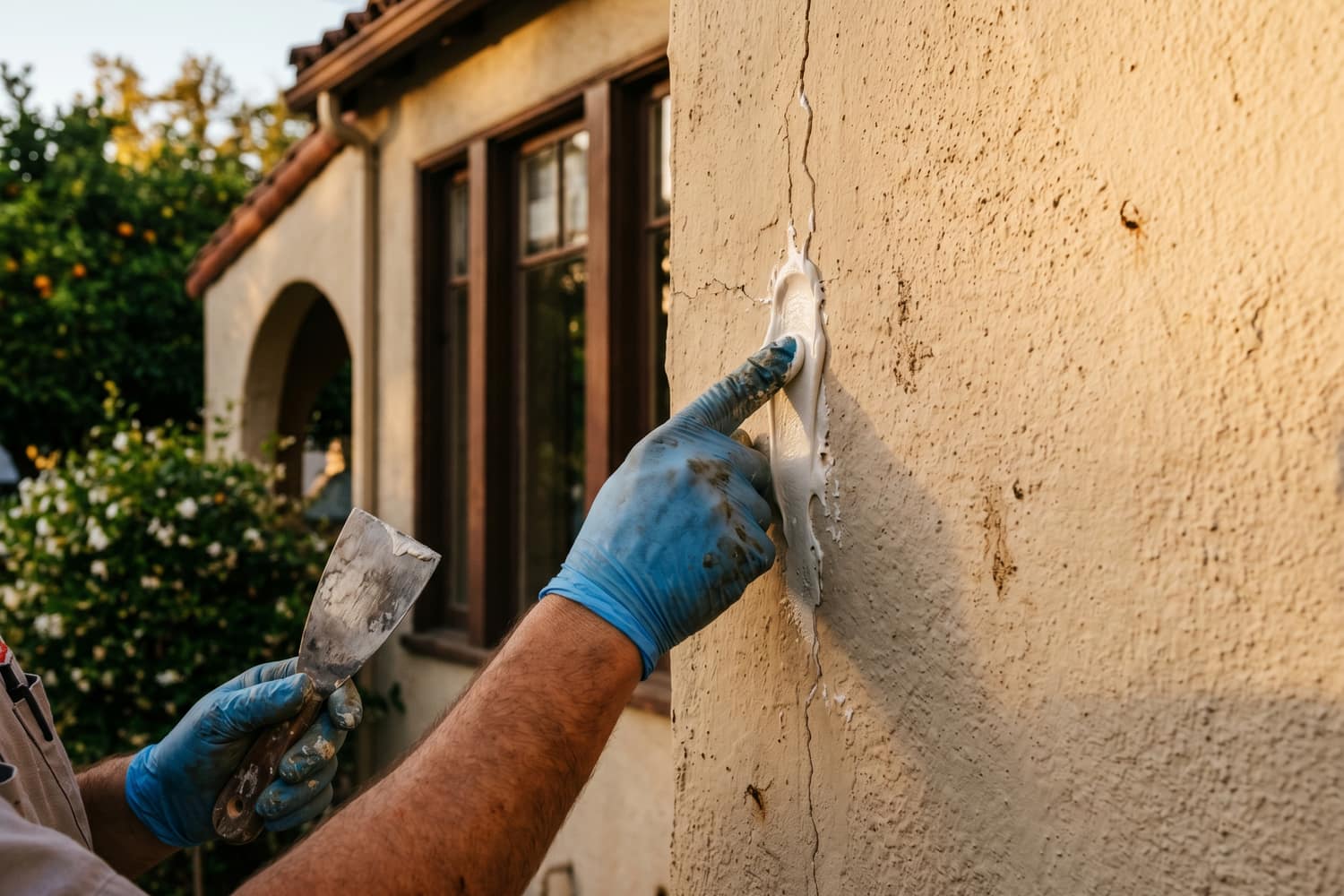
Elastomeric paint is a thick, rubber-like coating that forms a flexible membrane over stucco surfaces. Unlike standard paint, which dries to a rigid film, elastomeric coatings stretch 300–800% without cracking (Arizona Painting Company, 2025). That flexibility is the entire selling point for stucco homes.
Standard acrylic latex stretches 50–200%. When Sacramento's summer heat pushes surface temperatures above 130°F on south-facing walls, stucco expands. When winter nights drop into the 30s, it contracts. Over years of thermal cycling, rigid paint films crack. Elastomeric coatings absorb that movement.
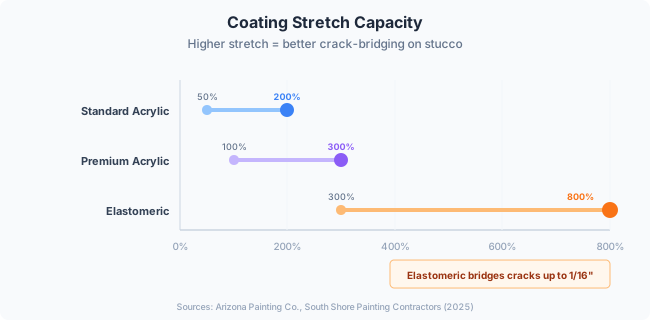
The coating goes on 10 times thicker than standard paint -- typically 10–15 mils dry film thickness compared to 1.5–3 mils for acrylic (Behr, 2026). That thickness is what allows it to bridge hairline cracks up to 1/16 inch wide, effectively waterproofing the surface while hiding cosmetic defects.
Three properties make elastomeric paint different from standard exterior paint:
- Crack-bridging: Fills and spans hairline cracks without separate caulking or patching
- Waterproofing: Creates a continuous membrane that blocks rain penetration through stucco pores
- UV resistance: Thicker film provides better protection against Sacramento's intense sun exposure
The tradeoff is that same waterproof membrane prevents walls from breathing. More on that critical limitation in the moisture section below.
Citation capsule: Elastomeric coatings stretch 300–800% compared to 50–200% for standard acrylic, and dry to 10–15 mils thickness versus 1.5–3 mils for conventional paint (Arizona Painting Company, 2025; Behr, 2026). This thickness enables crack-bridging up to 1/16 inch on stucco surfaces.
Elastomeric vs Standard Acrylic Paint for Stucco: Full Comparison
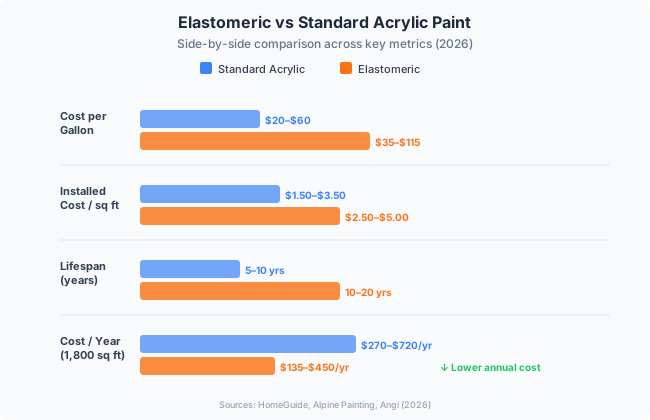
The cost difference between elastomeric and standard acrylic is significant upfront but reverses when you calculate cost per year. Elastomeric coatings cost $900–$2,000 more to apply on a typical 1,800 sq ft Sacramento home, but their 10–20 year lifespan makes them 30–50% cheaper annually (Alpine Painting, 2024).
Cost Breakdown
Elastomeric paint runs $35–$115 per gallon versus $20–$60 for standard acrylic (Consumer Reports, 2025). But the real cost multiplier is coverage rate. Elastomeric covers roughly 100 square feet per gallon on stucco, while acrylic covers 250–300 square feet per gallon (A New Leaf Painting, 2025). You'll use about 2.5 times more product.
For an 1,800 sq ft Sacramento stucco home:
- Standard acrylic (2 coats): $2,700–$6,300 installed
- Elastomeric (2 coats): $4,500–$9,000 installed
- Price difference: $900–$2,700
Lifespan and Annual Cost
Here's where the math shifts. A $6,000 elastomeric job lasting 15 years costs $400/year. A $4,000 acrylic job lasting 7 years costs $571/year. Over 30 years, the elastomeric homeowner repaints twice while the acrylic homeowner repaints four times.
| Metric | Standard Acrylic | Elastomeric |
|---|---|---|
| Cost per gallon | $20–$60 | $35–$115 |
| Coverage per gallon | 250–300 sq ft | ~100 sq ft |
| Installed cost (1,800 sq ft) | $2,700–$6,300 | $4,500–$9,000 |
| Lifespan | 5–10 years | 10–20 years |
| Stretch capacity | 50–200% | 300–800% |
| Cost per year | $270–$900 | $225–$600 |
| Best for | Budget-conscious, newer stucco in good shape | Cracked stucco, long-term savings |
When Acrylic Wins
Standard acrylic is the better choice when your stucco is in good condition with no visible cracks, you're planning to sell within 5 years, your home was built before 1990 and hasn't had a moisture inspection, or you're on a tight budget and need the lowest upfront cost. For context on how long exterior paint typically lasts across different surfaces and conditions, we've covered that in a separate guide.
Citation capsule: Elastomeric coating costs $900–$2,000 more upfront than standard acrylic on a typical 1,800 sq ft home but lasts 10–20 years versus 5–10, making annual costs 30–50% lower over the coating's lifetime (Alpine Painting, 2024; HomeGuide, 2026). Coverage rate is the key cost driver: elastomeric covers ~100 sq ft/gallon versus 250–300 for acrylic.
The Moisture Risk Every Sacramento Homeowner Needs to Understand
This is the section most elastomeric paint articles skip or bury. Elastomeric coatings create a waterproof barrier -- and that barrier works in both directions. Water can't get in through the paint, but moisture trapped behind the stucco can't get out either.
How Moisture Gets Trapped
Sacramento homes face moisture intrusion from several sources that have nothing to do with rain:
- Plumbing leaks behind walls (common in homes 20+ years old)
- Irrigation overspray hitting exterior walls daily
- Rising damp from poor grading or absent weep screeds
- Condensation from interior humidity migrating through walls
- Failed window flashing allowing water behind the stucco plane
When standard acrylic paint is on the wall, this moisture evaporates through the porous paint film. When elastomeric is on the wall, the moisture has nowhere to go. It accumulates between the stucco substrate and the elastomeric membrane, causing bubbling, peeling, and eventually substrate deterioration (Left Shore Construction, 2025).
Real-World Failure Scenario
A Natomas homeowner applied elastomeric coating to a 2003-built stucco home without a moisture inspection. The coating looked flawless for 14 months. Then bubbles formed along the west wall near the master bathroom. The source: a slow shower supply line leak behind the wall had been pushing moisture outward for years. Standard acrylic had been letting it evaporate harmlessly. The elastomeric membrane trapped it, causing the coating to delaminate across a 12-foot section. Repair cost: $3,400 to strip the failed coating, address the plumbing, dry the wall cavity, and recoat.
The $200–$400 Insurance Policy
A professional moisture inspection before elastomeric application is non-negotiable on any Sacramento home over 15 years old. The inspector uses a moisture meter to test stucco walls at multiple points, checking behind bathrooms, kitchens, and near hose bibs and irrigation lines.
If you're already dealing with paint failure on your stucco, our guide on how to fix peeling paint covers the diagnosis and repair process.
Citation capsule: Elastomeric paint creates a non-permeable membrane that prevents moisture from escaping stucco walls, potentially causing bubbling, delamination, and substrate damage if moisture is present behind the wall (Left Shore Construction, 2025). A $200–$400 professional moisture inspection is essential before elastomeric application on homes over 15 years old.
Which Sacramento Stucco Homes Are Good Candidates for Elastomeric?
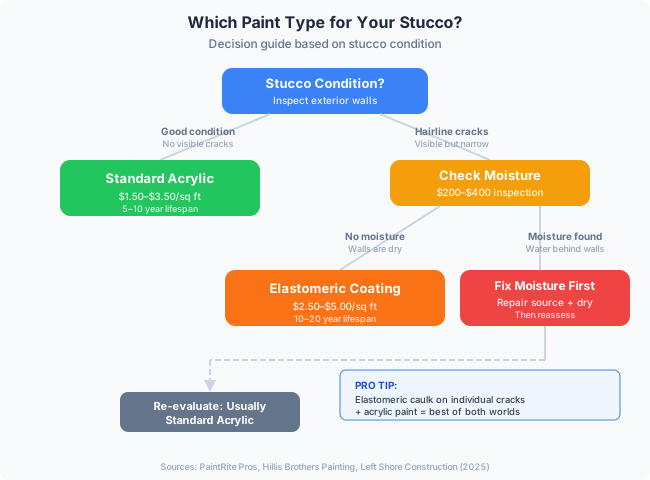
Not every stucco home in Sacramento needs elastomeric paint, and not every stucco home should get it. The decision depends on your home's age, condition, and existing moisture profile.
Ideal Candidates
Elastomeric coating makes the most sense for Sacramento homes that check these boxes:
- Built after 1990 with modern building envelope practices and proper flashing
- Visible hairline cracks across the stucco surface (thermal cracking is common in Sacramento's hot climate)
- Clean moisture inspection showing no moisture intrusion behind walls
- Owner plans to stay 10+ years to recoup the higher upfront investment
- South- and west-facing walls that take the worst UV and thermal abuse
Poor Candidates
Skip elastomeric and go with quality acrylic if your home matches any of these:
- Pre-1990 construction without verified modern flashing and drainage planes
- Known moisture issues such as efflorescence (white mineral deposits), prior water staining, or plumbing concerns
- Stucco over wood framing with no weep screed -- common in older Sacramento neighborhoods like Land Park and Curtis Park
- Existing elastomeric coating with 2+ layers already applied (additional layers risk delamination from weight)
- Planning to sell within 5 years -- standard acrylic provides sufficient curb appeal at lower cost
Sacramento's dry climate is actually favorable for elastomeric performance compared to humid coastal areas. With only 18 inches of annual rainfall and low humidity most of the year (Weather Spark, 2026), the primary moisture concern is internal, not external. That's why the plumbing and irrigation check matters more than the weather here.
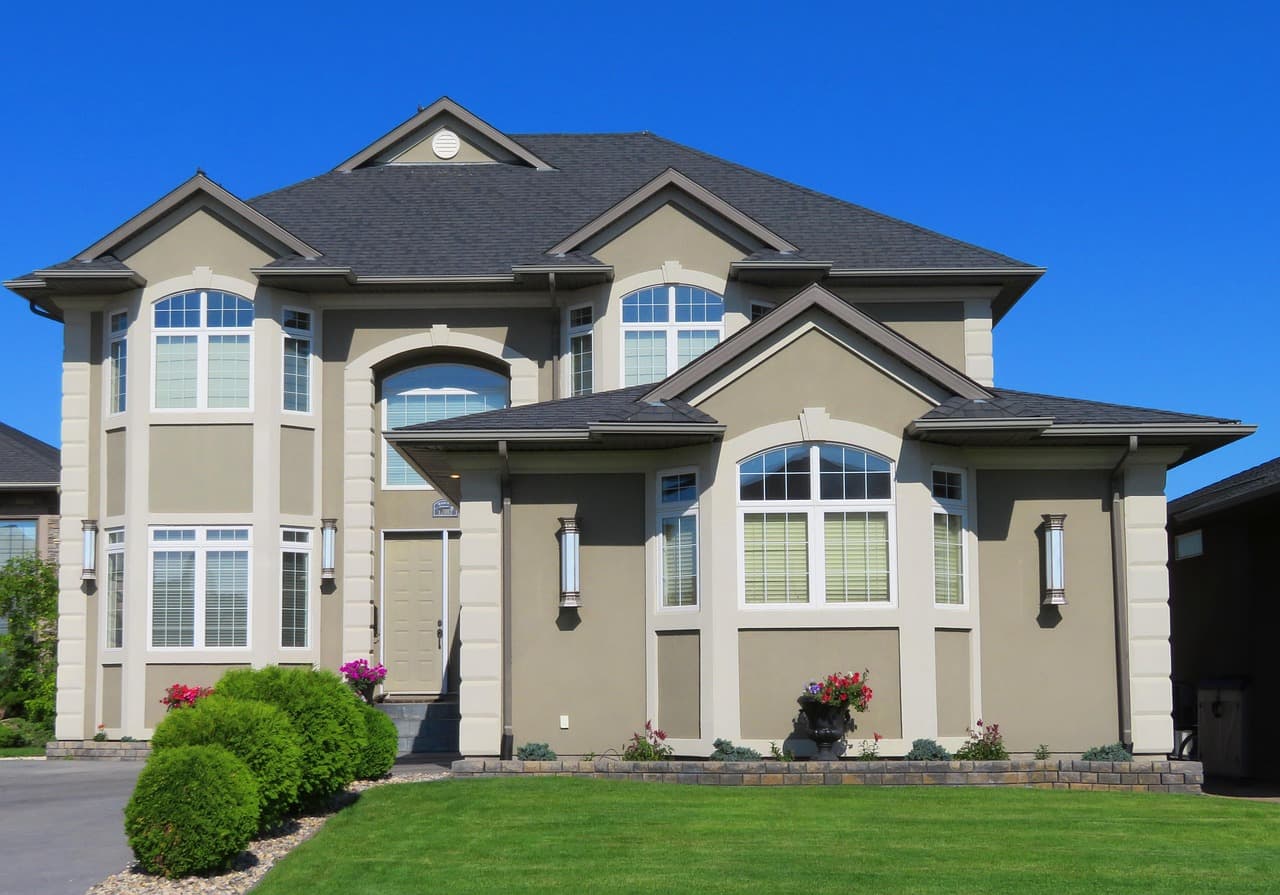
For homeowners in neighborhoods like Elk Grove, Natomas, and Roseville where newer tract homes dominate, elastomeric is often the right call. These homes typically have modern building envelopes, are 15–25 years old, and are showing their first round of thermal cracking.
Citation capsule: Sacramento's 18 inches of annual rainfall and low humidity make it more favorable for elastomeric coatings than humid coastal climates, but internal moisture sources (plumbing, irrigation) remain the primary risk factor (Weather Spark, 2026). Homes built after 1990 with clean moisture inspections are the best candidates.
Best Elastomeric Paint Brands for Sacramento Stucco
Not all elastomeric products perform equally on stucco. The best options for Sacramento's hot, dry climate balance flexibility, breathability, and UV resistance. Here are the top products professional painters in the Sacramento area use most frequently.
Sherwin-Williams Loxon XP
Specifically engineered for masonry and stucco, Loxon XP offers self-priming application and strong resistance to alkali burn -- a common issue when painting fresh or recently patched stucco. It's breathable for an elastomeric, which partially addresses the moisture-trapping concern. Most Sacramento painting contractors stock this as their default elastomeric recommendation.
Benjamin Moore UltraSpec Masonry Elastomeric
Rated at 300% elongation, UltraSpec provides reliable crack-bridging for homes with moderate thermal cracking. It's widely available through Sacramento-area Benjamin Moore dealers and carries a strong warranty. Our Sherwin-Williams vs Benjamin Moore comparison covers how these two brands stack up across all product lines.
Behr Premium Elastomeric
Available at Home Depot locations throughout Sacramento, Behr's elastomeric product is the most accessible option for DIY-inclined homeowners. It covers approximately 100 sq ft per gallon on textured stucco and requires no thinning. At $35–$50 per gallon, it's the most affordable elastomeric entry point, though professional painters generally prefer Loxon XP or UltraSpec for their application properties.
Product Comparison
| Brand/Product | Elongation | Coverage | Price/Gallon | Best For |
|---|---|---|---|---|
| SW Loxon XP | High | ~100 sq ft | $55–$85 | Pro application, new stucco |
| BM UltraSpec | 300% | ~100 sq ft | $50–$75 | Moderate cracking |
| Behr Premium | Standard | ~100 sq ft | $35–$50 | Budget / DIY projects |
Sacramento & Placer County
Need a real quote on your project?
Free, no-obligation walkthrough. Itemized estimate within 24 hours. Most jobs scheduled within 2–3 weeks.
How to Apply Elastomeric Paint on Stucco (or What to Expect From Your Contractor)
Elastomeric application on stucco requires more prep and different techniques than standard painting. Whether you're hiring a Sacramento painting contractor or evaluating quotes, here's what proper application looks like.
Step 1: Surface Preparation
Prep work for elastomeric is more intensive than for acrylic because the coating amplifies any underlying problems. Our exterior painting preparation guide covers the full process, but elastomeric-specific prep includes:
- Pressure washing at 2,000–2,500 PSI to remove dirt, chalky residue, and loose material
- Crack repair for any cracks wider than 1/16 inch (elastomeric bridges hairline cracks but not structural ones)
- Efflorescence removal with muriatic acid solution or commercial remite
- 48-hour dry time minimum after washing -- elastomeric applied to damp stucco is the single most common cause of failure (Ghaster Painting, 2025)
Step 2: Priming
Not every surface needs primer under elastomeric, but bare stucco, patched areas, and previously unpainted surfaces do. Use a masonry-compatible primer recommended by the elastomeric manufacturer. Mixing primer brands and topcoat brands is a common mistake that voids warranties.
Step 3: Application
The best application method for elastomeric on stucco:
- Spray first coat at 75% of target thickness using an airless sprayer with .025"–.029" tip
- Back-roll immediately with a 1-1/4" nap roller while the surface is still wet
- Allow 24 hours of dry time between coats (Sacramento's dry climate helps here)
- Apply second coat the same way, targeting 10–15 mils total dry film thickness
- Avoid application when surface temperature exceeds 90°F or drops below 50°F
Step 4: Inspection
After the final coat cures (48–72 hours), inspect for holidays (thin spots), pinholes, and missed areas around window frames and utility penetrations. These gaps defeat the waterproofing purpose of the coating.
Best Time to Apply in Sacramento
March through May and September through November provide ideal conditions: warm days (65–85°F), minimal rain risk, and moderate humidity. Avoid June through August -- when stucco surface temperatures can exceed 140°F on south-facing walls, elastomeric dries too fast and doesn't bond properly. For detailed seasonal guidance, see our guide on when to paint your house exterior.
Citation capsule: Elastomeric coatings require airless spray application with .025"–.029" tip followed by back-rolling with 1-1/4" nap roller for proper 10–15 mil dry film thickness. The surface must be completely dry for at least 48 hours before application -- damp substrate is the most common cause of elastomeric failure (Ghaster Painting, 2025; Behr, 2026).
How Long Does Elastomeric Paint Last on Stucco in Sacramento?
Elastomeric coatings last 10–20 years on stucco when properly applied, with most Sacramento homes seeing 12–15 years before a recoat is needed (Arizona Painting Company, 2025). That's roughly double the 5–10 year lifespan of standard acrylic on the same surface.
Sacramento's climate both helps and hurts elastomeric longevity. The dry conditions reduce moisture-related failures (the primary killer in humid climates), but intense UV exposure degrades the coating faster than in milder climates.
Factors That Shorten Lifespan
- Dark colors on south- and west-facing walls fade 30–40% faster than light colors due to UV absorption. Lighter, heat-reflective colors are a smarter choice in Sacramento's sun -- see our best exterior paint colors for California guide.
- Insufficient film thickness below 10 mils compromises both waterproofing and longevity
- Poor surface prep including inadequate drying time after pressure washing
- Layering over old elastomeric without stripping -- each additional layer adds weight and reduces adhesion
Factors That Extend Lifespan
- Light, heat-reflective colors that reduce thermal stress on the membrane
- Proper 10–15 mil thickness achieved through spray + back-roll application
- Regular maintenance including annual inspection for damage and touch-ups to nicks or scrapes
- Good drainage that keeps water away from the foundation and lower walls
Maintenance Between Recoats
Elastomeric coatings require less maintenance than acrylic but aren't maintenance-free. Annual inspection for nicks, scrapes, and damage from ladders or impact keeps the waterproof membrane intact. Spot repairs are straightforward: clean the area, apply one coat of matching elastomeric, and feather the edges. Leaving even small breaks in the membrane allows water in while the surrounding coating prevents it from evaporating out.
Citation capsule: Elastomeric coatings last 10–20 years on stucco with proper application, compared to 5–10 years for standard acrylic. Sacramento's dry climate is favorable, but intense UV exposure means light colors outperform dark by 30–40% in longevity (Arizona Painting Company, 2025). Proper mil thickness (10–15 mils) is the single biggest factor in coating lifespan.
What Does Elastomeric Paint for Stucco Cost in Sacramento?
Elastomeric stucco painting in Sacramento costs $4,500–$9,000 for a typical 1,800 sq ft home, compared to $2,700–$6,300 for standard acrylic (HomeGuide, 2026). The premium ranges from $900 to $2,700 depending on home size, stucco condition, and number of coats required.
Cost by Home Size
| Home Size | Standard Acrylic | Elastomeric | Premium |
|---|---|---|---|
| 1,500 sq ft | $2,250–$5,250 | $3,750–$7,500 | $1,500–$2,250 |
| 1,800 sq ft | $2,700–$6,300 | $4,500–$9,000 | $1,800–$2,700 |
| 2,000 sq ft | $3,000–$7,000 | $5,000–$10,000 | $2,000–$3,000 |
| 2,500 sq ft | $3,750–$8,750 | $6,250–$12,500 | $2,500–$3,750 |
Where the Extra Money Goes
The elastomeric premium comes from three sources:
- Product cost: 40–90% more per gallon than acrylic
- Volume: 2.5x more product needed for the same square footage due to lower coverage rates
- Application time: Thicker coats and back-rolling requirements add labor hours
Labor still accounts for 70–85% of the total project cost regardless of coating type (Angi, 2026). For a full breakdown of Sacramento painting costs across all project types, see our house painting cost guide.
Ways to Reduce Elastomeric Cost
- Schedule November–February when Sacramento painting contractors offer slow-season pricing (10–20% savings on labor)
- Bundle with other exterior work like trim and baseboard painting or gutter touch-ups
- Use elastomeric selectively -- apply it only on cracked walls or high-exposure faces, with acrylic on protected walls in good condition
- Get three written estimates that itemize prep, primer, and coats separately
Citation capsule: Elastomeric stucco painting costs $4,500–$9,000 for a typical 1,800 sq ft Sacramento home versus $2,700–$6,300 for standard acrylic, with 70–85% of total cost attributed to labor (HomeGuide, 2026; Angi, 2026). Selective application on cracked or high-exposure walls combined with acrylic on protected walls can reduce the premium significantly.
Frequently Asked Questions
Is elastomeric paint worth it for stucco?
Yes, for most Sacramento stucco homes built after 1990 with hairline cracks and no moisture issues. Elastomeric costs $900–$2,000 more upfront but lasts 10–20 years versus 5–10 for acrylic, making it 30–50% cheaper per year (Alpine Painting, 2024). Skip it on older homes without a moisture inspection -- trapped moisture causes more damage than the cracks elastomeric is designed to bridge.
What is elastomeric paint?
Elastomeric paint is a thick, rubber-like exterior coating that stretches 300–800% without cracking (Arizona Painting Company, 2025). It's 10 times thicker than standard paint and forms a waterproof membrane that bridges hairline cracks up to 1/16 inch. Commonly used on stucco, masonry, and concrete block exteriors in climates with significant thermal expansion cycles.
How long does elastomeric paint last on stucco?
Properly applied elastomeric coating lasts 10–20 years on stucco, with most Sacramento homes seeing 12–15 years before recoating. Standard acrylic lasts 5–10 years on the same surface. Key factors affecting longevity include film thickness (10–15 mils minimum), color choice (light colors last longer), and surface preparation quality.
Can you paint over elastomeric coating with regular paint?
No. Standard acrylic paint won't adhere properly to an existing elastomeric layer. You must recoat with another elastomeric product. After 2–3 layers of elastomeric, professional painters generally recommend stripping the old coating before reapplication to prevent delamination from accumulated weight and thickness.
Does elastomeric paint trap moisture in stucco?
It can. Elastomeric creates a non-permeable membrane that prevents moisture from evaporating through the wall surface (Left Shore Construction, 2025). If moisture enters from plumbing leaks, irrigation overspray, or condensation, it gets trapped between the stucco and the coating, causing bubbling and delamination. A moisture inspection ($200–$400) before application is essential on older homes.
What is the best elastomeric paint for stucco in Sacramento?
Sherwin-Williams Loxon XP is the most widely recommended elastomeric for Sacramento stucco among professional painters. It's self-priming, breathable for an elastomeric product, and resistant to alkali burn from fresh stucco patches. Benjamin Moore UltraSpec Masonry Elastomeric (300% elongation) and Behr Premium Elastomeric ($35–$50/gallon) are also solid options.
The Bottom Line: Is Elastomeric Worth It for Your Sacramento Stucco Home?
For newer Sacramento homes with cracking stucco and clean moisture profiles, elastomeric paint is one of the highest-ROI exterior investments available. You pay $900–$2,000 more upfront and save $3,000–$6,000 over 20 years by avoiding an extra repainting cycle or two.
For older homes, or homes where you haven't verified the moisture situation behind the walls, standard acrylic with targeted elastomeric caulk on cracks is the safer play. You still get crack protection where it counts without sealing the entire wall.
Three things to remember before committing. First, get a moisture inspection on any home built before 2000 -- it's the single most important step in the decision. Second, insist on spray-and-back-roll application to achieve proper film thickness. Third, choose light, heat-reflective colors to maximize coating lifespan under Sacramento's intense sun.
Ready to find out which coating makes sense for your home? ProFlow Painting provides free stucco assessments across the Sacramento area. We'll inspect your stucco condition, test for moisture concerns, recommend the right coating type, and deliver a transparent, itemized estimate. Call (916) 740-7249 or request your free estimate online.
Free quote · Sacramento & Placer County
Ready for a real estimate, not a guess?
Tell us about your project and we'll walk it with you in person. Itemized quote within 24 hours, no high-pressure sales.