
Drywall and Surface Repair · Sacramento & Bay Area
Drywall Repair in Sacramento, CA
Dust-controlled drywall and surface repairs that deliver paint-ready finishes with perfect texture matching.
- Sacramento, established
- 2018
- Estimate turnaround
- 24 hr
What’s included
The work, at a glance
Nail pops & cracks
Patched and feathered
Holes
Cut, backed, taped, mudded
Water damage
Replaced section + texture
Texture match
Orange peel, knockdown, smooth
Why us
Types of Drywall Damage We Repair
Understanding the specific type of drywall damage in your home helps us provide the most effective repair solution. Different damage types require unique approaches and techniques for optimal results.
Small Holes & Nail Pops
Nail pops occur when drywall fasteners work loose over time, creating small bumps or dimples in your walls. These common issues happen due to wood framing movement, humidity changes, or settling foundations. We carefully reset fasteners, fill the affected areas with joint compound, and sand smooth for an invisible repair. Small holes from picture hangers, doorknob impacts, or removed fixtures receive similar treatment with appropriate patching techniques.
Large Holes & Damage
Significant wall damage from furniture impacts, doorknob collisions, or renovation work requires more extensive repair. We cut damaged sections to solid framing members, install backing support as needed, and secure properly sized drywall patches. Multiple layers of joint compound ensure seamless edges that blend perfectly with surrounding surfaces. Our contractors take time to properly reinforce repairs, preventing future cracking or sagging.
Cracks & Settlement Damage
Sacramento's clay soils cause homes to settle, creating stress cracks in drywall. These cracks typically appear at door corners, ceiling joints, and wall intersections. We evaluate crack patterns to distinguish between cosmetic issues and structural concerns. Our repair process addresses underlying causes while creating flexible repairs that accommodate normal building movement. Specialized mesh tape and multiple compound applications ensure long-lasting crack solutions.
Water Damage Repair
Water damage from roof leaks, plumbing failures, or flooding compromises drywall integrity. We assess moisture levels, remove damaged sections completely, and verify areas are thoroughly dry before repairs begin. Addressing water-damaged drywall promptly prevents mold growth and structural deterioration. Our team coordinates with other trades when necessary to resolve source issues before completing drywall restoration.
Texture Damage
Texture inconsistencies from previous repairs, wall modifications, or damage create visual distractions even after painting. We remove old texture, smooth surfaces properly, and reapply matching texture patterns. Whether your walls feature orange peel, knockdown, or smooth finishes, our contractors replicate existing textures precisely for uniform appearance throughout your space.
Our Drywall Repair Process
Our systematic approach to drywall repair ensures consistent, professional results every time. Each step builds on previous work to deliver seamless repairs.
1. Assessment & Documentation
We begin every drywall repair project with thorough damage assessment. Our contractors examine affected areas, identify underlying causes, and document all issues requiring attention. This inspection reveals hidden problems like moisture damage, structural concerns, or extensive cracking that might not be immediately visible. We provide detailed repair recommendations and transparent pricing before work begins.
2. Damage Preparation
Proper preparation determines repair quality. We remove loose material, clean damaged areas, and cut back to solid surfaces. For larger repairs, we expose framing members and ensure adequate backing support. Thorough preparation prevents future failures and creates optimal conditions for patching materials to bond correctly. We protect surrounding areas with drop cloths and plastic sheeting.
3. Patching & Filling
Selecting appropriate repair materials matters. Small repairs receive quality joint compound applications, while larger damage gets proper drywall patches secured to framing or backing boards. We install patches flush with existing surfaces, tape all seams with appropriate tape types, and apply multiple joint compound coats. Each layer builds toward smooth, level surfaces that blend seamlessly with surrounding walls.
4. Sanding & Smoothing
Professional sanding distinguishes excellent repairs from mediocre ones. We sand between each joint compound application, progressively smoothing surfaces to perfection. Our contractors use appropriate grit sandpaper for each stage, carefully feathering edges beyond repair areas. Proper sanding techniques create imperceptible transitions between patched and existing surfaces. We contain dust with proper equipment and clean thoroughly after sanding.
5. Texture Matching
Texture matching expertise separates professionals from amateurs. We carefully analyze existing wall textures, replicate spray patterns or hand-applied techniques, and blend new texture into surrounding areas. Our contractors carry various texture materials and application tools to match virtually any finish. Practice applications ensure pattern accuracy before final application to repaired areas.
6. Priming & Paint Prep
Properly primed repairs accept paint evenly without flashing or color variation. We apply quality primer to all repaired surfaces, sealing joint compound and creating uniform absorption. This final preparation step ensures your new paint application looks consistent across entire walls. When providing full painting services, we coordinate primer and paint applications for optimal efficiency and results.
Texture Matching Expertise
Achieving invisible drywall repairs requires precise texture matching skills. Sacramento homes feature various wall textures, each requiring specific replication techniques.
Orange Peel Texture
Orange peel texture is Sacramento's most common wall finish, featuring a subtle, evenly distributed pattern resembling citrus skin. We replicate this popular texture using properly thinned joint compound sprayed through specialized hoppers. Adjusting air pressure, material consistency, and spray distance allows us to match existing orange peel patterns precisely. Our contractors practice on sample boards before final application, ensuring perfect pattern consistency.
Knockdown Texture
Knockdown texture starts as sprayed or hand-applied material that's partially flattened with trowels before drying. This technique creates random, organic patterns popular in newer Sacramento homes. We carefully analyze knockdown timing, trowel pressure, and directional strokes to replicate existing patterns. Proper technique produces natural-looking results that blend seamlessly into surrounding areas.
Skip Trowel Texture
Skip trowel creates elegant, hand-applied patterns using joint compound spread in random, overlapping strokes. This texture adds subtle visual interest while maintaining sophisticated appearance. Our skilled contractors replicate skip trowel patterns through careful observation of existing stroke patterns, material thickness, and application density. Hand-applied textures require artistic skill and experience for convincing results.
Smooth Finish
Smooth wall finishes demand skilled drywall finishing skills. Without texture to hide minor imperfections, every surface irregularity shows. We apply additional joint compound coats, sand carefully between applications, and use proper lighting to identify any remaining flaws. Skim coating techniques create glass-smooth surfaces worthy of high-end paint applications. Smooth finishes showcase paint colors beautifully but require expert preparation.
Popcorn Ceiling Alternatives
Many Sacramento homeowners want outdated popcorn ceilings removed. We safely scrape popcorn texture, repair underlying surfaces, and apply modern ceiling finishes. Popular alternatives include smooth ceilings, light orange peel, or subtle knockdown patterns. When matching existing popcorn for repairs, we use appropriate materials and application techniques, though we generally recommend full ceiling updates for better results.
Why Repair Before Painting
Professional drywall repair before painting delivers significantly better results than painting over damaged surfaces. This essential preparation step impacts both immediate appearance and long-term performance.
Better Final Results
Paint accentuates surface imperfections rather than hiding them. Cracks, holes, and uneven textures become more visible after painting, especially with glossy sheens or dramatic colors. Professional drywall repair creates smooth, uniform surfaces that showcase your paint investment beautifully. Proper repairs eliminate shadows, bumps, and irregularities that compromise finished appearance. The difference between painted-over damage and properly repaired surfaces is immediately noticeable.
Long-Lasting Finish
Painting over cracks or damaged drywall provides only temporary cosmetic improvement. Underlying issues continue deteriorating, causing paint failure, crack expansion, or visible damage within months. Our comprehensive repairs address root causes, ensuring your paint job lasts for years without premature touch-ups or repainting. Properly repaired drywall provides stable surfaces that expand and contract normally without compromising paint adhesion or appearance.
Cost Efficiency
While drywall repair adds upfront project costs, it prevents expensive future problems. Addressing damage during initial painting projects costs significantly less than returning later for repairs and repainting. When damage continues deteriorating under new paint, you'll face complete paint job replacement much sooner than properly prepared surfaces. Our repair work protects your paint investment, delivering maximum return on your renovation budget.
Professional Appearance
Visible wall damage undermines otherwise beautiful paint applications. Professional repairs demonstrate attention to detail and quality standards that update your entire space. Whether preparing your home for sale or creating personal enjoyment, properly repaired walls project care, maintenance, and quality. The seamless appearance of professional drywall repair combined with expert painting transforms rooms completely, creating impressive results that enhance your home's value.
Drywall Repair Cost Factors
Understanding cost factors helps you budget appropriately for drywall repair services. Multiple variables influence project pricing beyond simple per-hole estimates.
Size of Damage
Repair complexity and material requirements increase with damage size. Small nail pops or minor holes require minimal materials and time, while large damage needs drywall sheets, backing materials, and extensive finishing work. We calculate pricing based on repair scope, ensuring fair costs that reflect actual work involved. Small repairs often receive per-item pricing, while extensive damage gets detailed project estimates.
Texture Matching Requirements
Complex textures require additional time, specialized materials, and advanced skills. Smooth wall finishes demand multiple compound applications and careful sanding between applications. Heavy knockdown or skip trowel patterns need skilled hand application. Matching existing textures precisely requires experience and attention to detail. Simple orange peel textures cost less to replicate than complex hand-applied patterns or smooth finishes.
Location Accessibility
Repair location affects labor requirements and pricing. Standard wall repairs at comfortable working heights cost less than high ceilings, stairwell walls, or confined spaces. Difficult access requires additional equipment, safety measures, and time. We evaluate accessibility during initial assessments, providing accurate pricing that reflects actual working conditions. Cathedral ceilings, two-story entries, and tight spaces require added pricing for additional labor and equipment needs.
Extent of Water Damage
Water damage severity dramatically impacts repair costs. Surface discoloration might need simple stain-blocking primer, while saturated drywall requires complete replacement. We inspect thoroughly to determine damage extent, moisture levels, and potential mold concerns. Structural drying, mold remediation, and source repairs increase project scope beyond basic drywall work. Our transparent assessments help you understand all necessary work before committing to repairs.
Frequently Asked Questions
How long does drywall repair take?
Most drywall repairs require 2-4 days for complete curing and finishing. Small repairs might be completed in one day, but joint compound requires proper drying time between applications. We typically apply 2-3 compound coats with drying time between each application. Rushing repairs compromises quality—joint compound shrinks as it dries, requiring multiple applications for smooth results. Texture matching and priming add additional time. We schedule repairs to allow proper curing before painting begins, ensuring optimal results.
Can you match my existing wall texture perfectly?
Our skilled contractors replicate virtually any wall texture with remarkable accuracy. We carefully analyze your existing texture pattern, material, and application technique before beginning repairs. Practice applications on sample boards verify pattern accuracy before final application. While we achieve excellent matches, understand that new texture materials may appear slightly different initially but blend in after painting. Aged textures sometimes show slight color or sheen variations, but proper priming and painting create uniform final appearance.
Should I repair or replace damaged drywall?
This decision depends on damage extent and severity. Small holes, cracks, and minor damage repair effectively with patching techniques. Extensive damage covering large wall areas, severe water damage, or multiple repairs in one section often warrant complete drywall replacement for better results. We assess your specific situation and recommend the most cost-effective solution. Complete replacement costs more initially but sometimes provides better long-term value than extensive patching. Our honest assessments help you make informed decisions.
Will repaired areas show through paint?
Professional repairs executed properly should be completely invisible after painting. Proper joint compound application, thorough sanding, texture matching, and quality priming ensure repaired areas accept paint identically to surrounding surfaces. Poor repairs without adequate sanding or priming may show color variation, surface irregularities, or flashing. Our thorough process prevents these issues. Using quality materials and proven techniques, we guarantee invisible repairs that maintain appearance for years.
How do you prevent future drywall cracks?
We prevent crack recurrence by addressing underlying causes rather than just cosmetic symptoms. Settlement cracks receive flexible mesh tape and proper joint compound application that accommodates normal building movement. We identify structural issues requiring additional attention and recommend appropriate solutions. For homes experiencing ongoing settlement, we may suggest monitoring periods before final repairs. Proper application techniques, quality materials, and realistic expectations about building movement help us deliver long-lasting crack repairs that minimize recurrence.
Do you offer drywall repair warranties?
Yes, we warranty our drywall repair work against defects in materials and workmanship. Our repairs are guaranteed to remain intact and invisible under normal conditions. This warranty covers proper adhesion, crack prevention, and finish quality but doesn't extend to new damage from impacts, settlement, or moisture exposure. We stand behind our craftsmanship and will address any legitimate warranty concerns promptly. Our reputation for quality work means we rarely face warranty claims—we do it right the first time.
Sacramento Drywall Repair Specialists
ProFlow Painting serves Sacramento, Roseville, Folsom, Elk Grove, and surrounding communities with expert drywall repair services. Our experienced contractors bring precision craftsmanship and attention to detail to every project, ensuring your walls receive professional repairs that last. We understand local building styles, common damage types, and regional construction methods that affect repair approaches. Whether you need minor patching before painting or extensive damage restoration, we deliver quality workmanship that exceeds expectations.
Contact ProFlow Painting at (916) 740-7249 for professional drywall repair services. We provide free estimates, transparent pricing, and reliable service that Sacramento homeowners trust. Let us prepare your walls properly for beautiful, long-lasting paint results that transform your space. Our commitment to quality and customer satisfaction makes us Sacramento's preferred choice for drywall repair and painting services.
Ready to repair your walls? Call (916) 740-7249 or request your free estimate online. ProFlow Painting delivers the perfect foundation for perfect paint.
Pricing factors
What drives the price of drywall and surface repair in Sacramento
Every estimate is line-item — no flat-rate guessing. These variables move the number on your project, in order of how much they typically affect total cost.
Number and size of repair areas
Each patch location requires individual prep, compound application, drying, and sanding cycles.
Texture matching complexity
Hand-applied or aged textures take more test samples and adjustment time than standard orange peel.
Water damage extent
Active or historic water damage often requires removing and replacing drywall sections, not just surface repair.
Number of compound coats required
Larger patches need three or more coats of joint compound with drying time between each, extending the schedule.
Stain-blocking primer needs
Water-stained or smoke-damaged areas require shellac-based primer — higher material cost than standard primer.
Wallpaper removal condition
Walls behind wallpaper are often gouged, uneven, or have multiple adhesive layers requiring full skim coating.
Lead paint testing requirement
Homes built before 1978 may require lead paint testing before sanding or disturbing existing surfaces.
How it goes
Four steps. No surprises.
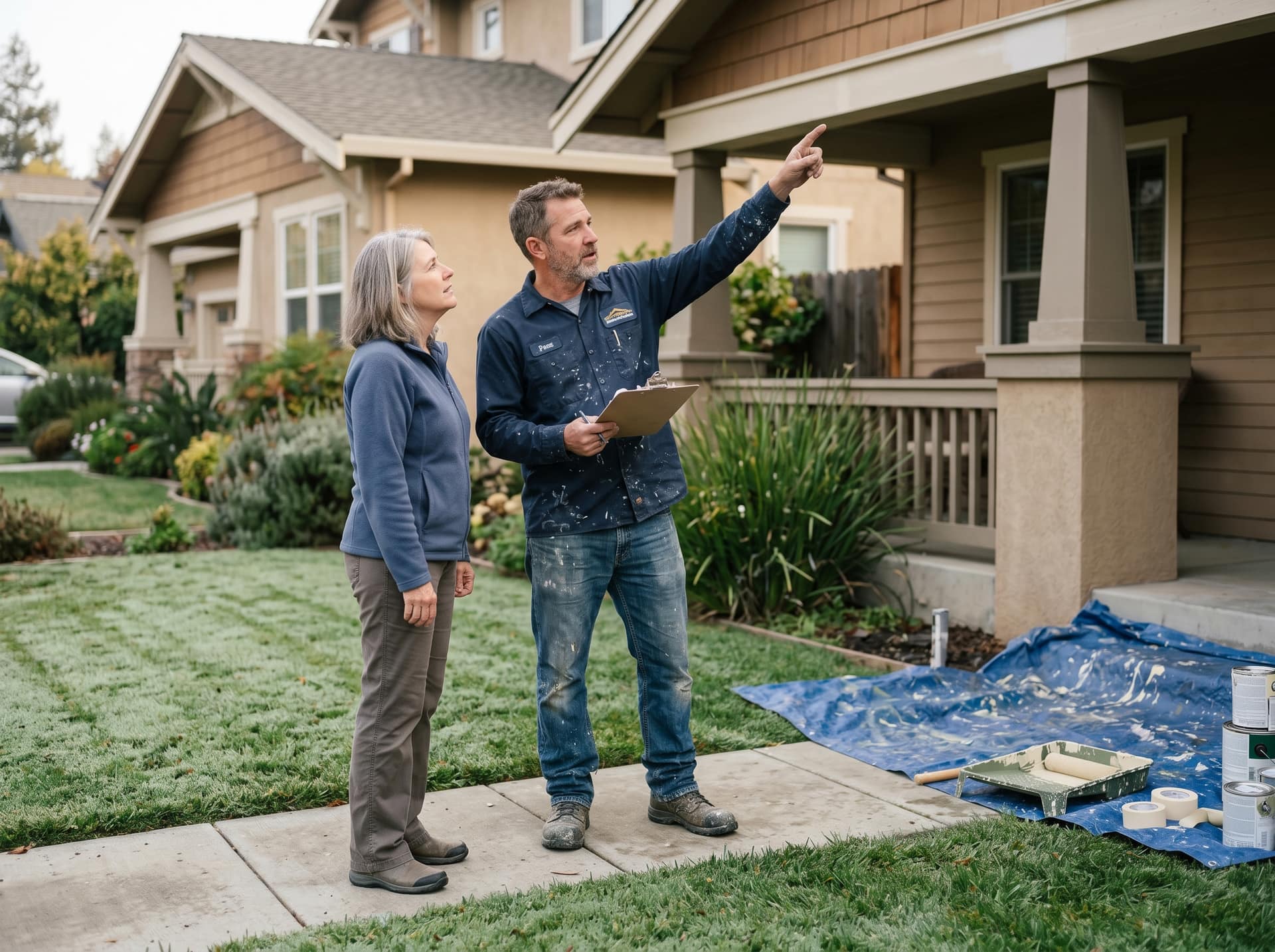
Step 01
Consult
On-site walkthrough. Scope, substrates, and timing — no upsell.
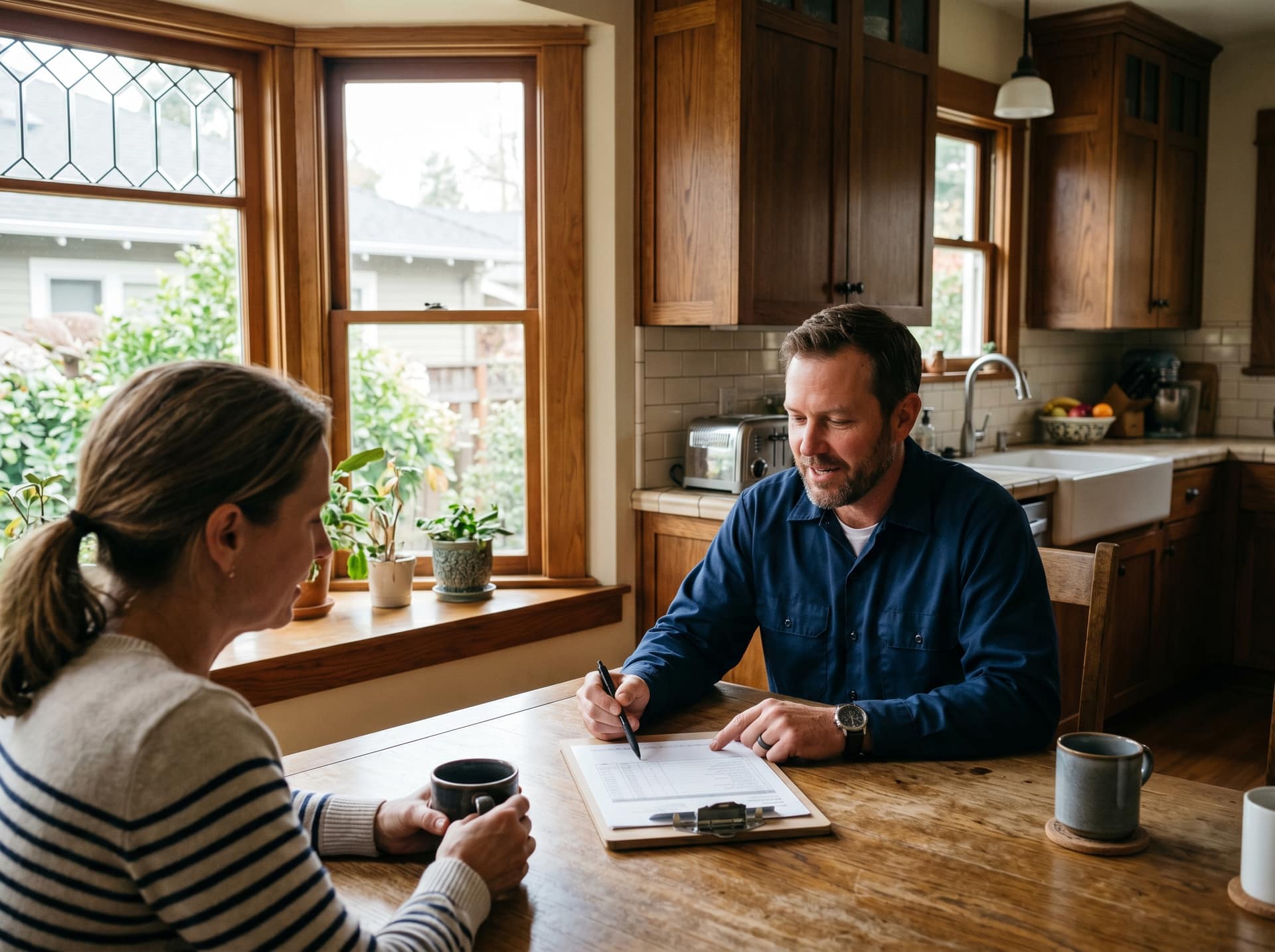
Step 02
Estimate
Written line-item bid within 24-48 hours. Products specified.
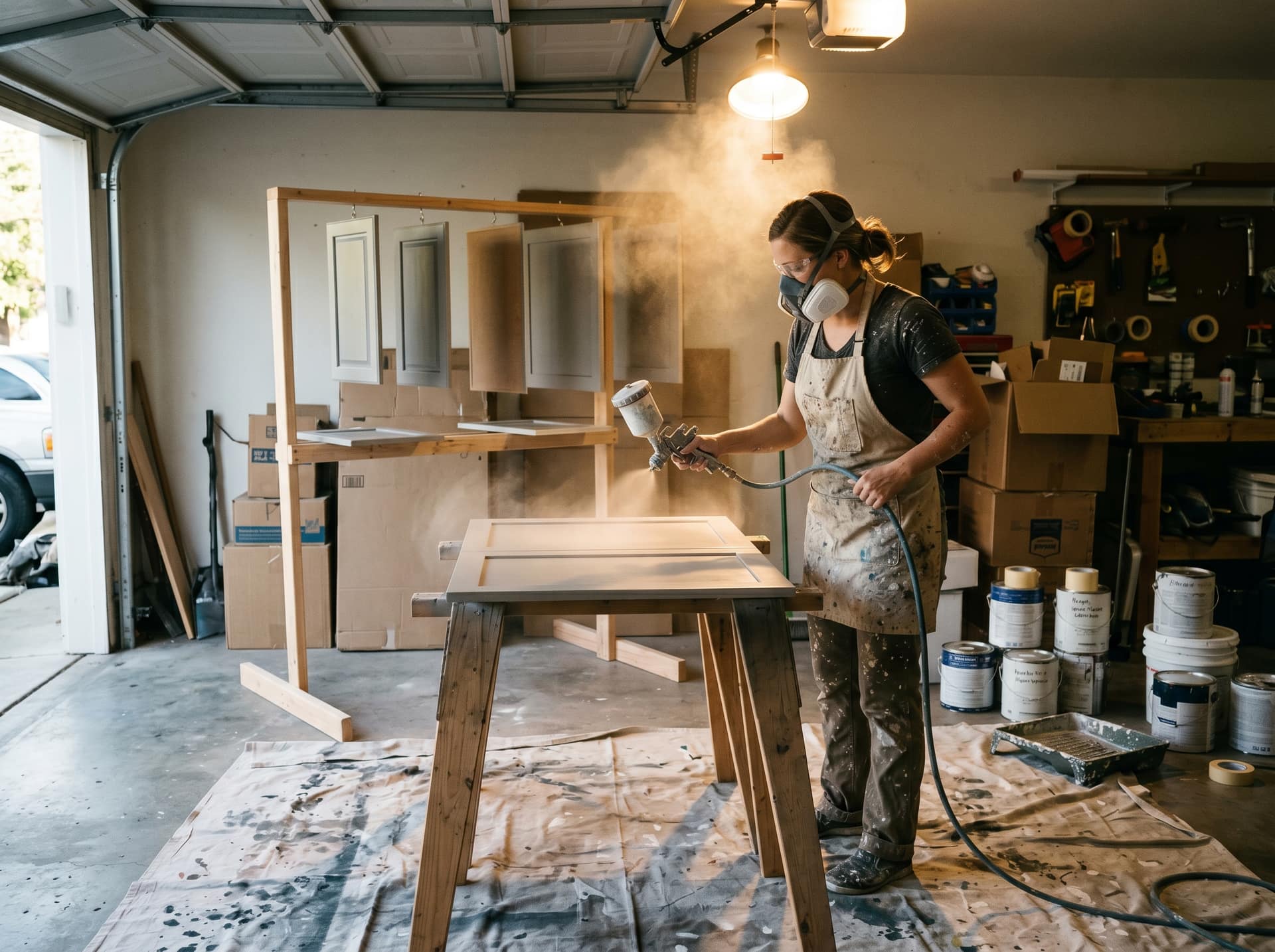
Step 03
Paint
Daily PM updates. Two coats minimum. Protected floors and landscaping.
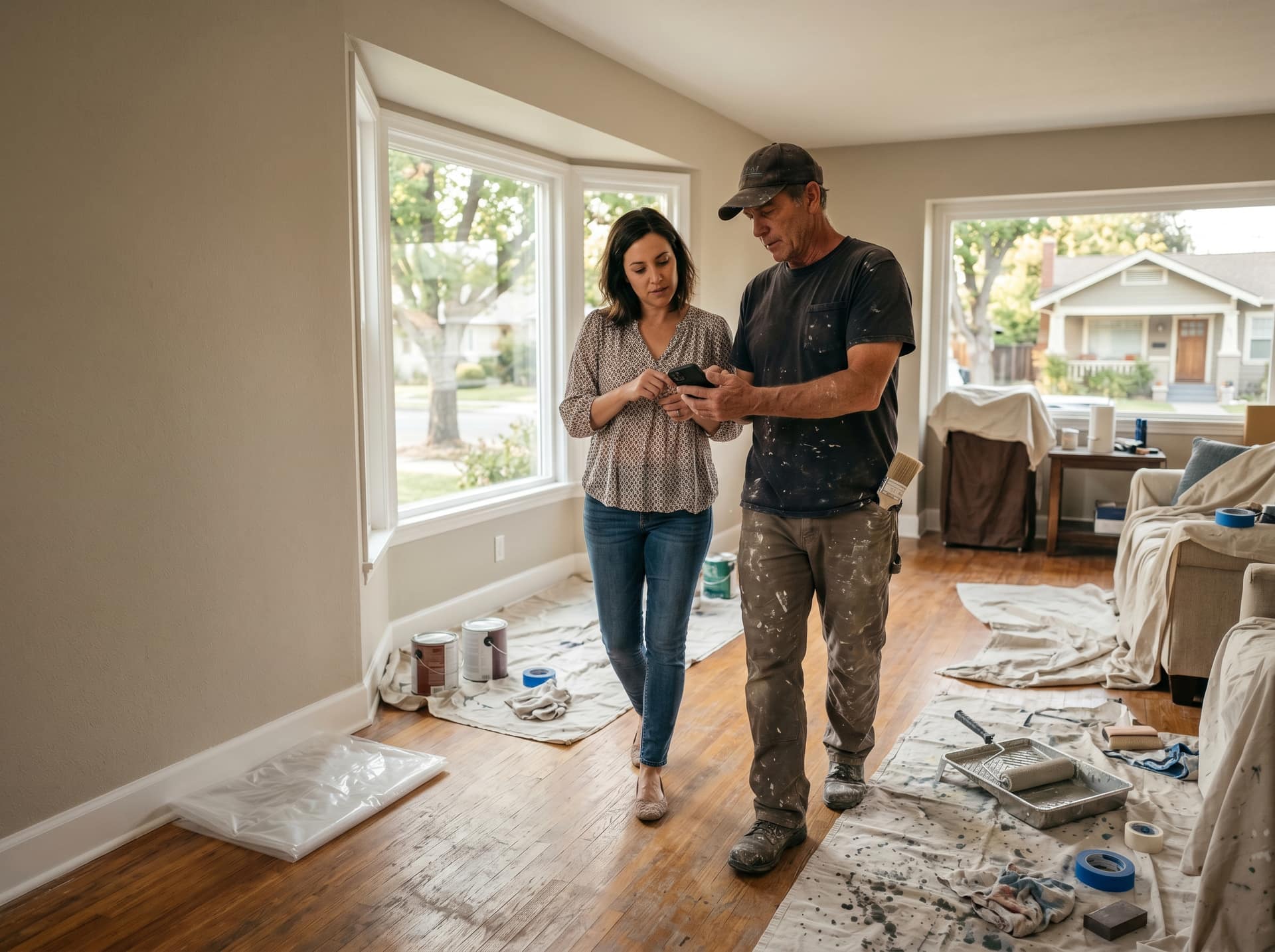
Step 04
Walkthrough
Signed punch list. Touch-ups before we pull tape. Paint cans labeled.
Room breakdown
Every room we paint, and what changes between them
Hole & Puncture Repair
Small holes up to 4 inches are repaired with mesh patch and setting compound. Larger holes require cutting back to the nearest studs and installing a new drywall section with taped and mudded seams. Every patch goes through at least two compound coats with sanding between — rushing this process is what causes patches to show through paint as a slight shadow or texture difference.
- Mesh patch for small holes
- New drywall section for large holes
- Two-plus compound coats with sanding
- Primed flush with surrounding wall
Crack Repair
Hairline cracks in paint can often be filled with flexible caulk and sanded smooth. Structural cracks — those that go through the drywall or follow the tape joints — are opened slightly with a utility knife, filled with setting compound, embedded with paper or fiberglass mesh tape, and feathered out over several coats. Cracks caused by ongoing settlement are documented so the homeowner knows to monitor them.
- Hairline cracks — caulk and sand
- Tape joint cracks — open, tape, compound
- Structural cracks documented
- Feathered and sanded flush
Water Damage Repair
Water damage repair only starts after the source of moisture has been resolved. We remove any soft, delaminated, or mold-compromised drywall, let the framing dry, and install new drywall where needed. All remaining surfaces in the affected area receive shellac-based stain-blocking primer — Zinsser BIN is our standard — before joint compound is applied. This prevents staining from bleeding through the topcoat years later.
- Source resolution confirmed before work begins
- Remove soft or mold-compromised drywall
- Zinsser BIN shellac primer on affected surfaces
- New drywall, tape, mud, texture, paint-ready
Texture Matching
Texture matching is where drywall repair either becomes invisible or obvious. We test every texture on a scrap piece of drywall first — adjusting hopper pressure, mud consistency, and spray distance until the sample matches the surrounding wall. Orange peel and knockdown textures are the most common in Sacramento-area homes built from the 1970s onward. Skip trowel and hand-applied textures are more common in older homes and require hand application to replicate.
- Test samples on scrap drywall first
- Orange peel, knockdown, skip trowel
- Hand-applied textures replicated by hand
- Primed and ready for topcoat after matching
Popcorn Ceiling
Popcorn (acoustic) ceiling texture is no longer applied in new construction and is increasingly being removed in Sacramento remodels. Patching popcorn requires matching the existing texture with spray-applied acoustic compound, which is mixed to the density of the existing surface. If the homeowner prefers to remove and replace the entire ceiling texture rather than patch, we offer smooth skim-coat ceilings or alternative textures like orange peel as options.
- Patch existing popcorn texture
- Acoustic compound spray-matched
- Or: remove and skim coat smooth
- Or: remove and apply new texture
Corner Bead & Edge Repair
Metal and vinyl corner bead protects the sharp edges and outside corners of drywall. When corner bead is dented, cracked, or pulled away from the wall, it shows as a ridge or gap in the finished surface. We cut out and replace the damaged section, secure the new bead, and apply three coats of compound feathered back 8 to 12 inches on each side to blend the repair into the flat wall surface.
- Remove damaged corner bead section
- Install and secure new bead
- Three compound coats feathered wide
- Sand and prime paint-ready
Wallpaper Removal Prep
Walls behind removed wallpaper are rarely paint-ready. The adhesive removal process often leaves gouges, paper facing tears, and uneven adhesive residue. We skim coat the entire affected area with joint compound to create a uniform surface, then prime with a high-build primer before painting. On walls where the drywall face paper has been damaged, we apply a skim coat thin enough to fill without adding significant wall thickness.
- Adhesive residue removal
- Full skim coat over affected area
- High-build primer
- Sanded smooth and paint-ready
Products we use
Brands and product lines we specify in Sacramento
USG Sheetrock
- Sheetrock 90 (setting compound)
- Sheetrock 45 (faster-set compound)
- Plus 3 Lightweight Topping Compound
Setting compounds (90 and 45) are used for first and second coats on larger patches — they cure chemically and are harder and more crack-resistant than air-dry compounds. Plus 3 Lightweight is our standard finish coat — sands easily and feathers thin for texture blending.
Zinsser
- BIN Shellac-Based Primer (stain blocking)
- Bulls Eye 1-2-3 (general primer)
Zinsser BIN shellac primer is the only product we trust for sealing water stains, smoke damage, and tannin bleed. It dries in 45 minutes and blocks virtually any substrate discoloration. Bulls Eye 1-2-3 is used as a general primer on repaired areas before topcoat.
Sherwin-Williams
- ProMar Drywall Primer
- Extreme Block (heavy stain blocking)
ProMar Drywall Primer is a standard primer for repaired areas before topcoat — good penetration on fresh compound and compatible with all topcoats we use. Extreme Block is an alternative to shellac for heavy stain jobs where a water-based product is preferred.
Local context
Sacramento neighborhoods and how their homes paint differently
Land Park & Curtis Park
Many homes in these neighborhoods have original plaster walls, not drywall. Plaster repairs use a different technique — bonding agent, scratch coat, and finish coat — and require matching the hand-troweled texture common in 1930s–40s construction. We work with both plaster and drywall substrates.
East Sacramento
A mix of plaster in older homes and standard drywall in mid-century additions and remodels. Water damage from aging roofs and deferred maintenance is a common repair trigger here. Stain-blocking primer is used on most water-affected repairs in these older homes.
Pocket, Greenhaven & Natomas
1970s–90s tract homes in these areas use standard orange-peel or light knockdown texture. Matching these textures is straightforward with the right hopper settings. Settlement cracks along ceiling-to-wall joints are common and typically require fiberglass mesh tape and two or three compound coats.
Folsom & El Dorado Hills
Newer construction often has Level-4 or Level-5 drywall finish — very smooth with minimal texture. Repairs on these walls are visible if not feathered widely and sanded carefully. We match the flat, smooth finish using multiple thin compound coats and final-sand with fine-grit paper.
Midtown & Downtown Condos
Condo drywall repairs often involve shared-wall moisture issues from adjacent units or plumbing in common walls. We confirm the source is resolved before starting, document the repair scope, and use shellac primer on any moisture-affected area as a standard precaution.
From the blog
More on drywall and surface repair, from our blog
Drywall Repair Cost in Sacramento
What drywall repairs cost by hole size and complexity — patch work, texture matching, and water damage restoration.
Read guide →How to Fix Peeling Paint Before Repainting
Why paint peels, how to identify the root cause, and the prep steps needed before applying a new coat.
Read guide →Interior Painting Preparation Guide
The full prep sequence before interior painting — patching, priming, masking, and surface cleaning.
Read guide →Popcorn Ceiling Removal Cost in Sacramento
What popcorn ceiling removal and texture replacement costs in Sacramento, including lead paint testing considerations.
Read guide →
Common questions
Frequently asked questions
Do you repair drywall before painting?+
Yes, and we recommend it for every project. Even minor imperfections like nail pops and hairline cracks become more visible under a fresh coat of paint. We include surface repair in our standard prep process—filling holes, taping cracks, sanding rough spots, and priming patched areas. For more extensive damage, we scope the repair work separately so you have a clear understanding of cost and timeline.
Can you match existing textures?+
We can. Our crew tests texture samples on scrap material before touching your walls, adjusting technique until the match blends seamlessly with the surrounding surface. We replicate orange peel, knockdown, skip trowel, smooth, and hand-applied textures commonly found in Sacramento homes built from the 1950s through today. Once the repair is painted, the patch should be invisible.
How do you treat water-damaged areas?+
First, we confirm the water source has been resolved—we will not paint over an active leak. Then we remove any soft or delaminated drywall, treat for mold if present, install new drywall where needed, and apply shellac-based stain-blocking primer to seal any remaining discoloration. This prevents the stain from bleeding through the topcoat and ensures a lasting repair.
Will repairs be dust-free?+
We minimize dust with sanding screens, vacuum-attached sanders, and plastic containment barriers around the work zone. For larger repair areas, we set up zip-wall barriers and run HEPA air scrubbers to capture airborne particles. While no sanding process is 100 percent dust-free, our containment methods keep dust out of the rest of your home and make cleanup fast.
Can repairs and painting happen in one visit?+
For minor repairs—nail pops, small holes, hairline cracks—yes, our crew handles both in the same visit. Larger repair work involving new drywall patches, taping, and texturing requires drying time between coats of joint compound, so these projects typically span 2 to 3 days before painting can begin. We schedule everything sequentially so there are no wasted gaps between phases.
What if a drywall repair cracks or shows through later?+
If a drywall repair we did cracks, separates, or shows bleed-through because of our work — tape joints, patches, texture matching, stain-blocking primer — we return and fix it. Structural movement, new water damage from unrelated sources, or impact damage aren't covered by anyone; those are separate repair scopes. We document the prep and products used so future work can pick up where we left off.
Where we paint
Drywall and Surface Repair across Sacramento & Northern California
90+ cities served across 10 regions. Click your city for localized pricing, neighborhoods, and recent drywall and surface repair projects.
Greater Sacramento
Foothills & Tahoe
Also serving 9 more Foothills & Tahoe cities↓
San Joaquin Valley
Yolo & Solano Corridor
Also serving 4 more Yolo & Solano Corridor cities↓
North Bay
Also serving 8 more North Bay cities↓
Peninsula & San Francisco
Also serving 9 more Peninsula & San Francisco cities↓
North Valley
Also serving 7 more North Valley cities↓
Gold Country
Also serving 9 more Gold Country cities↓
Ready when you are
Plan repairs + paint
Coordinate with our interior teams for zero-gap scheduling.