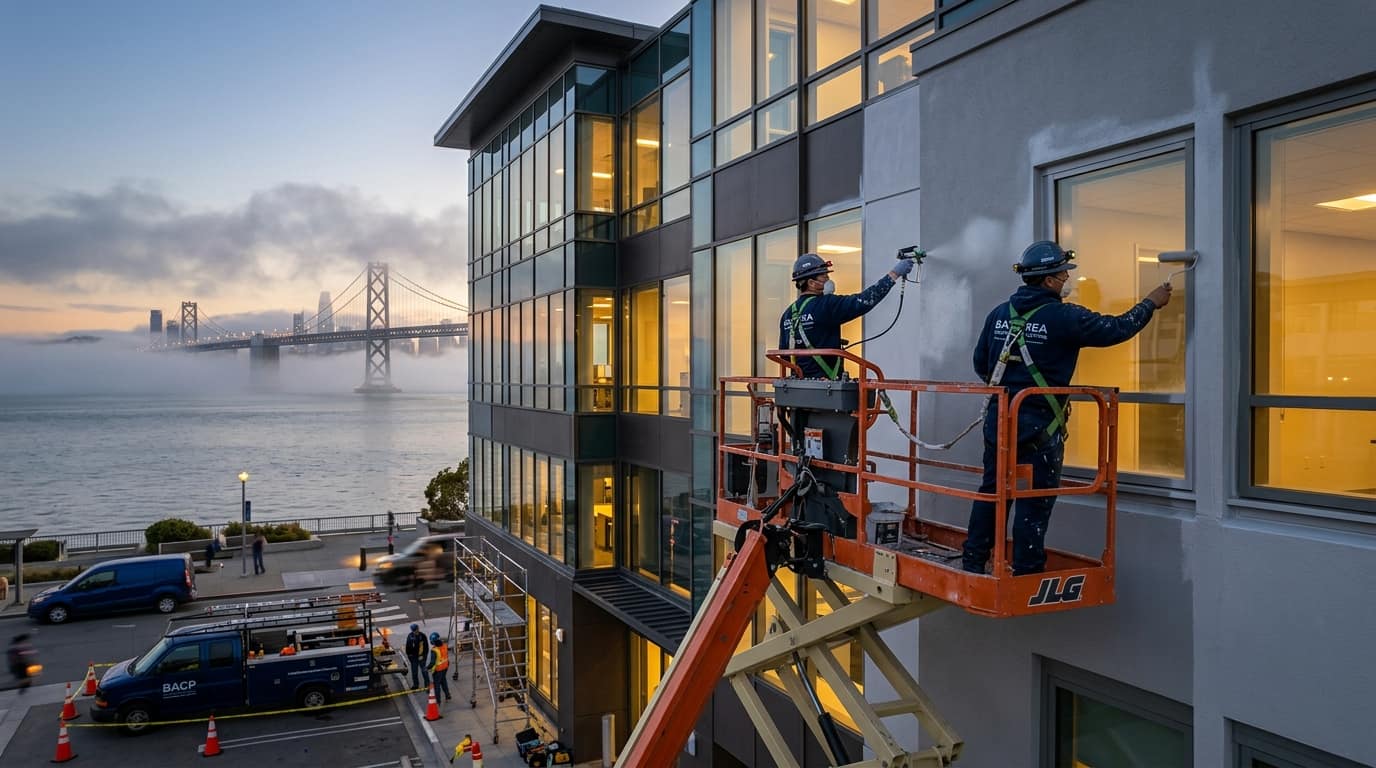

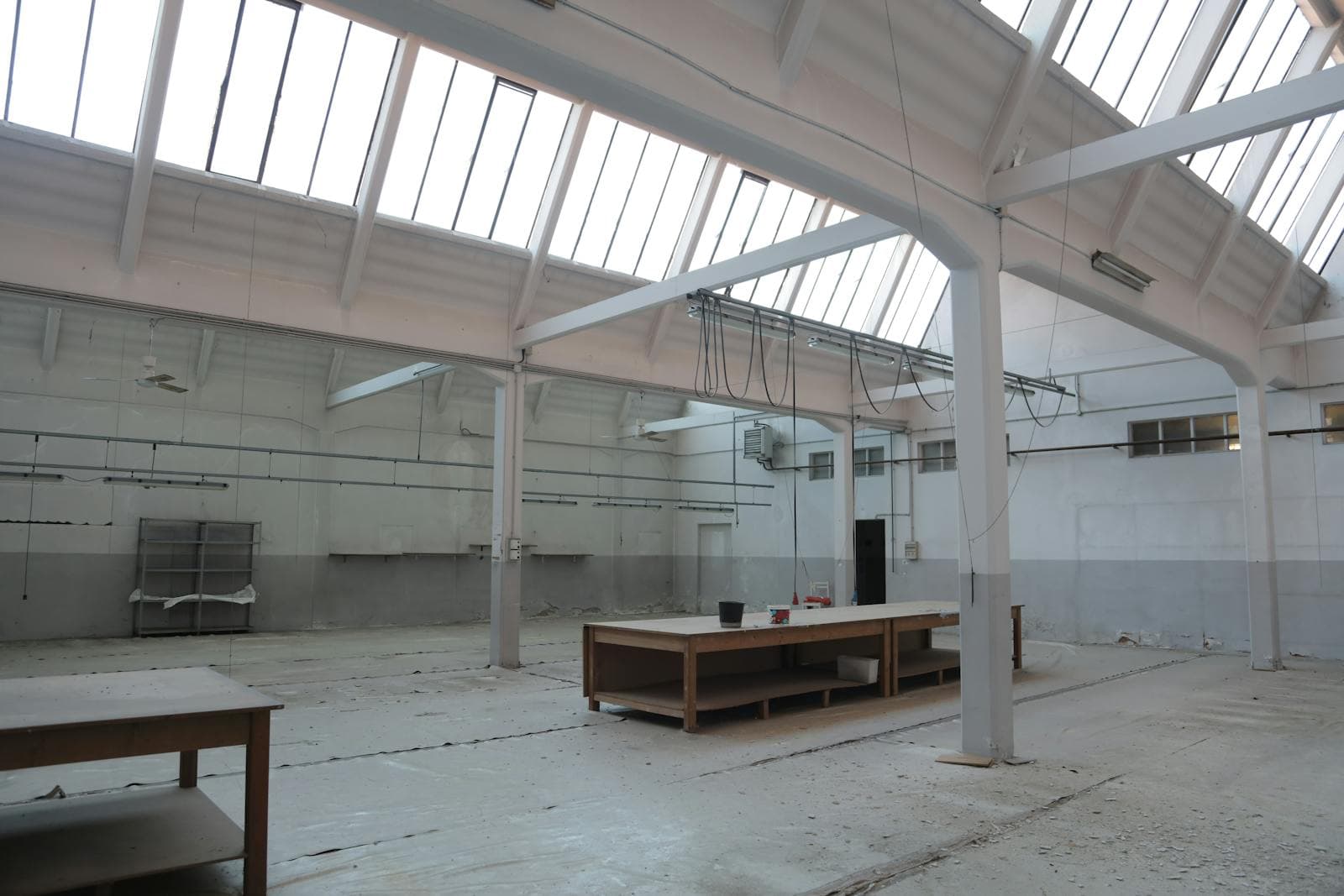
Warehouse painting in Sacramento typically runs $1.25 to $3.50 per square foot for walls and ceilings, and $3 to $8 per square foot for epoxy floor coatings, with the exact price driven by substrate type, height, operational access, and the coating system specified. A standard 40,000-square-foot tilt-up distribution building with a basic interior repaint and safety line striping usually lands between $52,000 and $110,000. Add seamless epoxy floors, rack-removal, and night-shift scheduling and that number can double.
Sacramento's warehouse market is one of the tightest on the West Coast. The Power Inn corridor, Metro Air Park, McClellan Park, and the distribution hubs along Highway 99 south of the city hold millions of square feet of industrial space, and vacancy rates in 2025 ran near 6 percent according to CBRE's Sacramento industrial reports. That pressure shortens tenant-improvement windows and makes well-timed, code-compliant paint work a measurable competitive advantage for owners and operators.
This guide breaks down what warehouse painting actually costs in the Sacramento metro, which industrial coatings hold up in Central Valley heat, how to schedule work around an active facility, and what OSHA, Cal/OSHA, and local fire-code requirements mean for your project. It is written for facility managers, industrial landlords, 3PL operators, and manufacturers who need to budget accurately and avoid the mistakes that turn a two-week repaint into a two-month nightmare.
What Does Warehouse Painting Cost in Sacramento?
Industrial facilities price differently than office or retail work because the variables are different. You are not paying for drywall finishing or fine trim — you are paying for height access, heavy surface prep, specialty coatings, and often after-hours scheduling. The 2026 Sacramento market sits inside these ranges for most projects:
| Scope | Sacramento Price Range | National Average | Notes |
|---|---|---|---|
| Interior walls & ceilings (basic) | $1.25–$2.25 /sq ft | $1.08–$2.00 /sq ft (Paintblue, 2026) | Single color, low-VOC acrylic |
| Interior walls & ceilings (industrial coating) | $2.25–$3.50 /sq ft | $2.00–$3.00 /sq ft | Epoxy, urethane, DTM coatings |
| Exterior tilt-up concrete | $1.00–$2.25 /sq ft | $0.75–$2.00 /sq ft (Angi, 2026) | Elastomeric recommended |
| Exterior metal siding | $2.00–$4.00 /sq ft | $1.50–$3.50 /sq ft | DTM primer + urethane topcoat |
| Epoxy floor coating | $3.00–$8.00 /sq ft | $3.00–$7.00 /sq ft (HomeGuide, 2026) | Prep is 50 percent of cost |
| Safety striping & line marking | $0.75–$2.50 /linear ft | $0.50–$2.00 /linear ft | OSHA/ANSI compliant |
| Rust remediation & DTM prep | $0.50–$1.75 /sq ft (add-on) | — | Often required on 15+ year buildings |
These ranges assume a reasonably accessible building, quality commercial products, and standard daytime scheduling. Night-shift work, live-facility bubble wrap, and hazmat prep on older buildings all push costs higher.
Citation capsule: Sacramento commercial painting rates currently average $1.45 per square foot across 364 tracked local projects (Homeyou, 2026), but warehouse-specific work tends to land above that baseline because of height access and specialty coatings. Industry guides put warehouse painting between $1.25 and $2.00 per square foot for walls and $3.00 to $8.00 per square foot for epoxy floors (Moorhouse Coating, 2025).
Example: 40,000 Sq Ft Distribution Center
Here is how those ranges play out on a typical Sacramento distribution building with tilt-up walls, 32-foot clear height, basic interior refresh, and full exterior repaint:
- Interior walls/ceilings (40,000 sq ft × $1.75): $70,000
- Exterior tilt-up (18,000 sq ft × $1.60): $28,800
- Safety striping (3,500 linear ft × $1.50): $5,250
- Surface prep & pressure washing: $6,000
- Lift rental and access: $4,500
Total estimate: $114,550 or roughly $2.86 per interior square foot.
Add seamless epoxy flooring on the same facility and you are looking at another $120,000 to $320,000 depending on system thickness. That is why most warehouse owners phase their work — wall and ceiling refresh one year, floor coating the next.
For a broader view of commercial pricing across all building types, see our commercial painting cost guide.
Industrial Coating Options: Which System for Which Job?
Warehouse painting is not one coating — it is a system. Primer, intermediate, topcoat, and in many cases a specialty additive package for chemical or abrasion resistance. Picking the wrong system is the fastest way to waste a six-figure project.
Acrylic Latex (Walls and Ceilings)
Standard 100 percent acrylic interior paint is the workhorse for office areas, employee break rooms, and low-traffic warehouse walls above 10 feet. It is low-VOC, low-odor, and compatible with occupied-building schedules.
- Cost: $45–$75 per gallon commercial-grade
- Lifespan: 5–7 years in warehouse conditions
- Best for: ceilings, upper walls, non-impact areas
Epoxy Coatings (Floors and High-Impact Walls)
Two-part epoxy systems are the industry standard for warehouse floors, food-processing walls, and anywhere you need chemical or abrasion resistance. Thinner epoxies (6–10 mils) handle light duty; high-build systems (40+ mils with aggregate) handle forklifts, pallet jacks, and chemical spills.
- Cost: $3–$8 per sq ft installed
- Lifespan: 10–20 years depending on traffic
- Best for: floors, food-grade areas, chemical storage
Urethane Topcoats (Exterior Metal and UV-Exposed Areas)
Aliphatic urethanes stay color-true under UV and shrug off abrasion. They are the go-to for metal siding, steel doors, and anything on a south-facing exterior wall in Sacramento's 260-plus sunny days per year. Pair them with a DTM (direct-to-metal) primer for the best system.
- Cost: $65–$120 per gallon
- Lifespan: 10–15 years on exterior metal
- Best for: metal siding, roll-up doors, steel structure
Elastomeric Coatings (Tilt-Up Concrete and Stucco)
Tilt-up concrete panels crack. That is not a defect — it is how the panels handle thermal expansion in Sacramento's 40-degree daily swings during summer. Elastomeric coatings bridge hairline cracks and keep water out of the substrate. Our dedicated deep-dive on elastomeric paint for stucco covers the same chemistry applied to warehouse panels.
- Cost: $75–$110 per gallon
- Lifespan: 10–15 years
- Best for: tilt-up, CMU, stucco
DTM Coatings (Rust-Prone Metal)
Direct-to-metal coatings combine primer and topcoat in one product, which speeds up schedules on exposed steel, overhead beams, and loading dock equipment. They are not a substitute for heavy rust remediation but work well as a maintenance coating once rust is mechanically removed.
- Cost: $55–$95 per gallon
- Lifespan: 7–12 years
- Best for: structural steel, pipes, mezzanines
Sacramento's Climate and What It Does to Warehouse Paint
Central Valley heat is brutal on exterior coatings. Summer surface temperatures on south-facing tilt-up panels regularly exceed 140 degrees Fahrenheit, and the combination of UV intensity and thermal cycling is why south-facing walls fail first. Our guide on why south-facing walls fade first in Sacramento walks through the mechanism.
For warehouses specifically, that means three things:
- UV-stable topcoats are not optional. Aliphatic urethanes and acrylic-urethane hybrids hold color. Standard acrylics chalk within 3–5 years on south and west elevations.
- Dark colors absorb more heat. A black metal warehouse wall can hit 160-plus degrees. That accelerates coating failure and can warp metal siding at seams. Light grays, tans, and off-whites stay cooler.
- Wildfire smoke and ash are real prep factors. After 2020–2024 fire seasons, Sacramento-area warehouses accumulated visible ash residue on exterior walls and roof surfaces. Our painting after wildfire smoke damage guide covers the extra cleaning and priming steps required before topcoating.
Exterior repaint windows in Sacramento are narrower than coastal cities. Most commercial exterior painting happens in two windows: April through May and September through October. Summer temperatures cause paint to skin-cure too quickly, trapping solvent and creating long-term adhesion failure. Winter rain and cool overnight temperatures prevent proper cure of water-based products.
OSHA, Cal/OSHA, and Local Code Requirements
Warehouse painting is not just an aesthetic job. Several layers of regulation touch almost every project.
OSHA 1910.144 — Color-Coding for Physical Hazards
Federal OSHA defines specific colors for hazard communication in industrial facilities:
- Red: fire protection equipment, emergency stops, flammable liquids containers
- Yellow: physical hazards (striking, stumbling, caught-in-between)
- Orange: dangerous parts of machinery
- Green: safety equipment, first aid locations
- Blue: information signage (not a hazard color)
- Purple: radiation hazards
Any painter working on a warehouse must know these codes and not paint over existing hazard markings without a documented plan to restore them.
ANSI Z535 — Safety Signs and Floor Markings
ANSI Z535 aligns with OSHA and specifies exact shades, line widths, and contrast ratios for safety striping. Aisle markings are typically 2 to 4 inches wide in yellow or white, pedestrian walkways get dedicated green or blue, and hazard zones use red-and-white or yellow-and-black striping patterns. A painter who does not know these standards will create compliance headaches during Cal/OSHA inspections.
Cal/OSHA Airborne Contaminant Limits
California sets lower VOC thresholds than federal OSHA. For interior warehouse work in occupied facilities, low-VOC or zero-VOC coatings are increasingly the only viable option. Our eco-friendly painting Sacramento guide covers the specifics, including which product lines meet South Coast AQMD and Sacramento Metropolitan Air Quality Management District standards.
NFPA 704 — Hazardous Material Identification
If your warehouse stores hazardous materials, NFPA 704 diamond placards must be painted or posted in compliance with the fire code. These are usually placed at building entrances and visible from exterior elevations.
City of Sacramento Building Permits
Most painting work does not require a permit. Exceptions: exterior color changes on buildings in historic districts, work that involves lead-paint disturbance on pre-1978 structures (see our lead paint testing Sacramento post), and any work that triggers Title 24 energy compliance (cool-roof coatings are the common case).
Scheduling a Warehouse Repaint Around Active Operations
The biggest difference between office and warehouse painting is schedule. Offices empty out after 6 p.m. Warehouses often run three shifts. Here is how experienced industrial painters approach active-facility scheduling.
Full Shutdown (Best for Floors)
A weekend or holiday shutdown is the cleanest option for epoxy floor work. Rack removal, grinding, priming, and topcoating can happen in a continuous 48–72 hour window. Many Sacramento 3PL operators schedule floor work around the post-holiday lull in January or during mid-July retail slowdowns.
- Pros: fastest completion, best quality control
- Cons: operational disruption, often requires product relocation
- Best for: full floor coatings, major exterior repaints
Phased by Zone (Best for Walls)
Divide the warehouse into 4 to 8 zones and paint one zone at a time while the others continue operating. This is the standard approach for interior walls and ceilings in active facilities.
- Pros: no operational shutdown
- Cons: 2–4x longer total timeline, more mobilizations
- Best for: interior walls, ceilings, office areas
Night-Shift Only (Best for Sensitive Operations)
For 24/5 operations that shut down overnight, painters work a 10 p.m. to 6 a.m. shift with product staging overnight. Night-shift premiums typically run 15 to 25 percent above day rates.
- Pros: zero daytime disruption
- Cons: 15–25 percent cost premium, slower progress
- Best for: food processing, pharma, e-commerce fulfillment
Weekend-Only (Best for Distribution Centers)
Many distribution centers run 6 days and go dark Sunday. Booking a painting crew for a 6-to-8-weekend sprint can complete a major interior repaint without any weekday impact.
- Pros: no workday disruption
- Cons: extended total timeline, contractor availability
- Best for: retail distribution, 6-day facilities
Coordinated Tenant Improvement (Best for New Leases)
Between tenants is the ideal painting window. Our apartment complex painting guide covers the same turnover logic for multifamily, and the principle translates to warehouse tenant-improvement work: empty building, no restrictions, complete scope in one pass.
Sacramento & Placer County
Need a real quote on your project?
Free, no-obligation walkthrough. Itemized estimate within 24 hours. Most jobs scheduled within 2–3 weeks.
Surface Preparation: Where the Real Money Goes
On a new warehouse, surface prep is 20 to 30 percent of the paint job. On a 15-year-old facility that has never been repainted, prep can hit 50 percent of total cost. This is where most bids differ — a low bidder usually cut prep, not paint.
Tilt-Up Concrete Walls
- Pressure wash at 3,000+ PSI to remove chalking, efflorescence, and contamination
- Mechanical grinding or shotblasting for any previously coated surfaces showing failure
- Patch panel cracks wider than 1/16 inch with elastomeric crack filler
- Apply masonry primer or alkali-resistant primer before topcoat
- Budget: $0.35–$0.85 per sq ft for prep alone
Metal Siding and Structural Steel
- Identify and mechanically remove all rust to SP2 or SP3 standard (hand or power tool cleaning)
- Severe rust areas may require SP6 commercial blast cleaning
- Apply rust-converting primer or DTM primer
- Budget: $0.50–$1.75 per sq ft depending on rust severity
Concrete Floors (Epoxy Prep)
Floor prep is where most epoxy failures start. Concrete must hit the correct profile (CSP 3 to 5 for most systems) through diamond grinding or shotblasting. Moisture testing is mandatory — any slab reading above 3 pounds of moisture vapor emission rate per 1,000 sq ft per 24 hours requires a moisture-mitigation primer or the whole system fails.
- Shotblast or grind to CSP 3–5
- Moisture testing per ASTM F1869 or ASTM F2170
- Crack fill and joint treatment
- Budget: 40–60 percent of total epoxy system cost
Pre-Existing Coatings
Never paint over a failing coating. Flaking paint must be scraped, sanded, and spot-primed. Chalking paint needs pressure washing plus a bonding primer. Peeling paint is the single most common cause of premature repaint failure — see our how to fix peeling paint post for the repair mechanics.
Energy and ROI Considerations
Paint is not just aesthetics on a warehouse. The right product selection can reduce cooling costs, extend roof life, and improve worker comfort.
Cool-Roof Coatings
Title 24 California energy code requires cool-roof compliance on most commercial re-roofs and many reflective-coating applications. A white or light-colored elastomeric roof coating can drop interior temperatures by 10 to 15 degrees in Sacramento summers and reduce HVAC loads by 20 percent or more according to California Energy Commission data. Cool-roof coatings cost $1.50 to $3.50 per sq ft installed.
High-Albedo Exterior Walls
Light-colored exterior walls reflect more solar gain. A south-facing warehouse wall painted a light gray or cream instead of a dark tan can run 15 to 20 degrees cooler on peak summer days. That translates to real HVAC savings over a 10-year coating life.
Interior Light Reflectance
White or near-white warehouse ceilings and upper walls can boost workspace illumination by 20 to 30 percent without adding fixtures. That reduces lighting energy costs and improves visibility for order picking and safety.
Property Value and Lease Rates
Well-maintained commercial properties lease 30 to 45 days faster than dated ones (CBRE via Integrity Paint, 2025), and professional commercial painting can increase property value by 5 to 10 percent (Integrity Paint, 2025). For industrial properties in the tight Sacramento market, a fresh repaint is often the difference between a 60-day lease-up and a 6-month vacancy. Our commercial painting maintenance schedule breaks down the full repaint cycle by building type.
How to Evaluate Bids on a Warehouse Painting Project
Three bids on a 40,000-square-foot warehouse can legitimately vary by 30 percent. They can also vary by 100 percent when one bidder is cutting corners you cannot see from the spec sheet. Here is how to read them.
1. Demand a Written Scope That Names Products
A legitimate industrial paint bid names the exact primer, intermediate, and topcoat by manufacturer and product code. Example: "Sherwin-Williams Pro Industrial Pre-Catalyzed Waterbased Epoxy, two coats at 6 mils DFT each." A bid that just says "commercial-grade paint" is hiding something.
2. Check Coverage Rates and Separate Prep From Paint
Each product has a manufacturer-specified coverage rate at a given thickness. Divide the square footage by that rate and add 15 percent waste. If a bid claims 400 square feet per gallon on a product rated at 200, they are going to underapply paint and that job will fail in 3 years. A thorough bid also lists prep separately — pressure washing, rust remediation, crack fill, and masking should each appear as line items, not bundled into "prep included."
3. Verify Licensing, Insurance, and References
California requires a C-33 Painting Contractor license for commercial work. Verify the license on the CSLB website. General liability should carry $2 million per occurrence minimum, and workers' compensation certificates should be in the contractor's own name. Ask for references from three warehouse projects in the past 18 months, preferably in the Sacramento region, and call them. Our 12-point list for choosing a painting contractor covers the full vetting process.
4. Review the Warranty
Standard commercial warranties run 2 to 5 years on labor and materials. Manufacturers offer extended 10-year warranties when the full specified system is installed by a certified applicator. For warehouse work, the extended warranty is worth pursuing because a failure at year 6 costs more than the original job.
A Real Sacramento Warehouse Project: The Breakdown
A recent ProFlow project illustrates how these numbers come together. A 28,000-square-foot tilt-up distribution warehouse in the Power Inn corridor had not been repainted in 11 years. The owner needed interior ceiling and upper-wall refresh, exterior repaint, and OSHA-compliant striping restoration before a new logistics tenant moved in.
Final cost breakdown:
- Interior ceilings & upper walls (28,000 sq ft): $48,600 at $1.74 /sq ft
- Exterior tilt-up (12,400 sq ft): $24,800 at $2.00 /sq ft
- Safety striping (2,800 linear ft): $4,480
- Caulk and surface prep: $5,100
- Rust remediation on 18 steel doors + 6 roll-ups: $6,300
Total: $89,280, completed on a weekend-only schedule across 6 weekends. The facility never shut down on weekdays. The new tenant signed a lease 2 weeks after project completion and moved in 30 days earlier than the original TI timeline. A non-industrial painter bid the same building at $58,000 but skipped the caulk, rust primer, and masonry primer — that coating would have failed by year 4, making the 10-year cost significantly higher than the properly specified job.
Frequently Asked Questions
How much does it cost to paint a warehouse in Sacramento?
Warehouse painting in Sacramento runs $1.25 to $3.50 per square foot for walls and ceilings and $3 to $8 per square foot for epoxy floor coatings. A typical 40,000-square-foot distribution center repaint lands between $52,000 and $160,000 depending on scope, coating system, and access requirements. Sacramento commercial painting averages $1.45 per square foot across 364 tracked local projects (Homeyou, 2026), with warehouse work typically landing above that baseline due to height and specialty coatings.
What is the best paint for warehouse walls?
For most warehouse walls, a 100 percent acrylic commercial paint like Sherwin-Williams ProMar 200 or Pro Industrial Multi-Surface Acrylic is the right choice for areas above forklift impact height. For areas exposed to chemicals, food processing, or heavy abrasion, a water-based epoxy such as Pro Industrial Pre-Catalyzed Waterbased Epoxy is the industry standard. On metal surfaces, a DTM coating or urethane topcoat over a proper primer lasts 10 to 15 years.
How long does warehouse paint last?
Interior warehouse paint typically lasts 5 to 10 years depending on traffic, coating system, and initial prep quality. Exterior coatings on tilt-up concrete can hold 7 to 12 years with elastomeric systems, and epoxy floors last 10 to 20 years with proper prep. Warehouses in Sacramento's Central Valley heat see slightly shorter exterior lifespans than coastal facilities because of UV intensity on south- and west-facing walls.
Do you need a permit to paint a warehouse in Sacramento?
Most warehouse painting does not require a City of Sacramento building permit. Exceptions include exterior color changes on buildings in historic districts, projects that disturb lead-based paint on pre-1978 structures, and any work that triggers Title 24 energy compliance such as cool-roof coatings. Always confirm permit status with the City before starting exterior work.
How long does it take to paint a warehouse?
A 40,000-square-foot warehouse interior repaint takes 3 to 5 weeks with a 6-person crew on a daytime schedule, 5 to 8 weeks on a night-shift or weekend-only schedule, or 1 to 2 weekends with a full shutdown and larger crew. Epoxy floor coatings on the same facility add another 4 to 10 days depending on system thickness and prep scope.
Can you paint a warehouse while it is operating?
Yes. Most warehouse repaints in Sacramento are completed without any operational shutdown through phased zoning, night-shift scheduling, or weekend-only work. Low-VOC and zero-VOC coatings make painting in active facilities compatible with workers remaining on site. Expect a 15 to 25 percent cost premium for night-shift or weekend-only scheduling.
What is the ROI of repainting a commercial warehouse?
Professional commercial painting can increase property value by 5 to 10 percent and cut vacancy periods by 30 to 45 days (Integrity Paint, 2025). For a 40,000-square-foot warehouse leasing at $0.90 per square foot per month, a 30-day vacancy reduction is worth $36,000, which covers a substantial portion of the repaint cost in the first lease cycle. Cool-roof coatings add ongoing HVAC savings of 10 to 20 percent during Sacramento summers.
Do warehouse painting contractors need special licensing?
In California, warehouse painting requires a C-33 Painting Contractor license from the Contractors State License Board. For spray application of industrial coatings, many contractors also carry applicator certifications from Sherwin-Williams Pro Industrial, Tnemec, or Sherwin-Williams High Performance Coatings programs. Always verify the license on the CSLB website before signing a contract.
Schedule Your Sacramento Warehouse Painting Project
Warehouse painting done right is a long-term investment. Done wrong, it is a two-year cosmetic patch that costs more than the original job. The difference is the contractor's knowledge of industrial coatings, surface prep, OSHA and ANSI compliance, and Sacramento's specific climate challenges.
ProFlow Painting works with warehouse owners, property managers, and 3PL operators across the Sacramento metro and Bay Area, including the Power Inn, McClellan Park, Metro Air Park, and Highway 99 distribution corridors. We handle everything from single-building repaints to multi-facility portfolio programs, with scheduling options that fit around active operations.
Request a warehouse painting estimate and we will walk your facility, document existing coatings and safety markings, specify the right industrial coating system, and deliver a detailed written proposal with line-item pricing. No generic per-square-foot numbers, no hidden prep costs, no coating compromises that shorten the job's lifespan.
Free quote · Sacramento & Placer County
Ready for a real estimate, not a guess?
Tell us about your project and we'll walk it with you in person. Itemized quote within 24 hours, no high-pressure sales.