
Indoor air is 2 to 5 times more polluted than outdoor air, according to the EPA's Total Exposure Assessment Methodology study -- and paint is one of the biggest contributors (EPA). In Sacramento, where wildfire smoke already pushes outdoor air quality into unhealthy ranges several weeks per year, what you put on your walls matters more than most homeowners realize.
Eco-friendly painting has moved past the "green premium" era. Today's zero-VOC and low-VOC paints from Sherwin-Williams, Benjamin Moore, and Dunn-Edwards deliver coverage, durability, and color accuracy that match or beat conventional coatings. The global low-VOC paint market is projected to reach $12.26 billion by 2030, growing at 5.6% annually (Mordor Intelligence, 2025). That growth reflects a simple reality: these products work.
This guide covers what eco-friendly paint actually means, how zero-VOC compares to low-VOC and conventional options, what it costs in Sacramento, which brands perform best, and how California's strict VOC regulations affect your next painting project. If you're already planning a repaint, our interior painting cost guide breaks down full project pricing.
What Makes Paint "Eco-Friendly"?
Eco-friendly paint reduces or eliminates volatile organic compounds -- the chemical solvents that cause strong paint fumes, headaches, and long-term indoor air quality problems. VOCs evaporate at room temperature and continue off-gassing for weeks or months after the paint dries.
Three categories exist, and the differences matter:
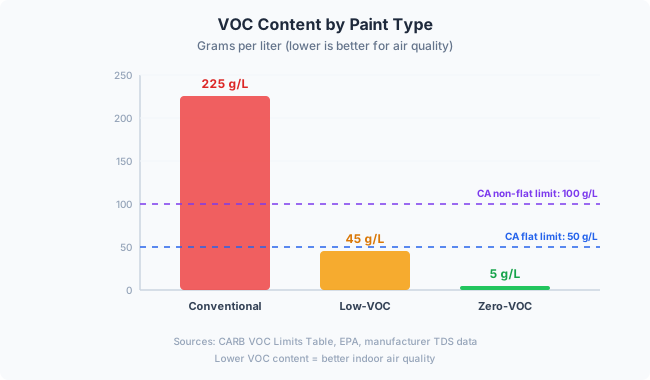
- Conventional paint: Contains 150–300+ g/L of VOCs. Strong odor during and after application. The cheapest option upfront but the worst for air quality.
- Low-VOC paint: Contains fewer than 50 g/L VOCs (interior) or 100 g/L (exterior). Noticeably reduced odor. Meets California's baseline regulations.
- Zero-VOC paint: Contains fewer than 5 g/L VOCs. Virtually odorless. Safe for immediate re-occupancy in most cases.
The distinction between low-VOC and zero-VOC isn't just marketing. A low-VOC paint at 45 g/L still releases nine times more volatile compounds than a zero-VOC formula at 5 g/L. For nurseries, bedrooms, kitchens, and homes with residents who have asthma or chemical sensitivities, that gap is significant.
Why VOCs Matter for Sacramento Homes
Sacramento ranks among the top 10 U.S. metro areas for ozone pollution, according to the American Lung Association's State of the Air report (American Lung Association). Outdoor air quality is already compromised for weeks each year during wildfire season.
Adding VOC-heavy paint to a closed indoor environment compounds the problem. The EPA found that VOC concentrations indoors can spike to 1,000 times outdoor levels during and immediately after painting (EPA). In a Sacramento summer, when windows stay shut to keep out 100-degree heat and air conditioning recirculates indoor air, those compounds have nowhere to go.
Zero-VOC paint eliminates this cycle. You paint, the room dries, and the air stays clean.
Zero-VOC vs Low-VOC vs Conventional Paint: Full Comparison
The cost difference between paint types is smaller than most homeowners expect -- especially when you factor in longevity. Here's how the three categories compare across the metrics that matter.
Cost Comparison
| Paint Type | Cost Per Gallon | VOC Content | Lifespan | Best For |
|---|---|---|---|---|
| Conventional | $20–$35 | 150–300+ g/L | 3–5 years | Budget projects, rentals |
| Low-VOC | $35–$50 | Under 50 g/L | 5–7 years | Most residential interiors |
| Zero-VOC | $45–$70 | Under 5 g/L | 7–10 years | Nurseries, bedrooms, health-sensitive homes |
Sources: 26 Painting, The Roundup, 2026.
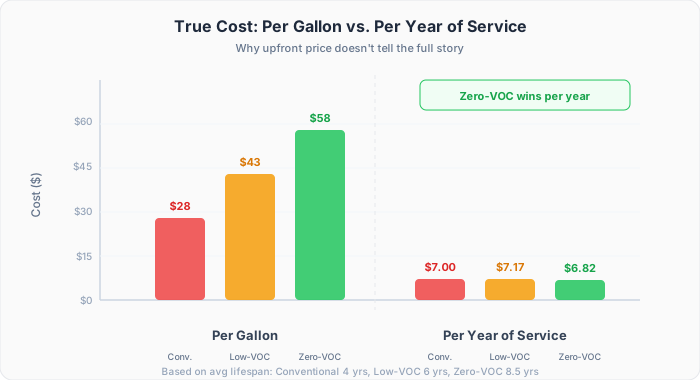
Materials represent only 15–20% of a professional painting project's total cost. On a typical Sacramento bedroom (12x12 feet, 2 gallons of paint), switching from conventional to zero-VOC adds roughly $20–$70 to your material bill. Over the life of the paint, the longer-lasting zero-VOC formula actually costs less per year of service.
Performance Comparison
The myth that eco-friendly paint sacrifices performance died around 2018. Modern zero-VOC formulations use advanced acrylic resins that deliver:
- Coverage: One-coat coverage rates comparable to premium conventional paints
- Adhesion: Equal or better bonding to properly prepared surfaces
- Washability: Several zero-VOC lines outperform conventional paints in scrub tests
- Color retention: No difference in fade resistance between zero-VOC and conventional formulas
- Dry time: Zero-VOC paints typically dry faster -- often ready for a second coat in 2 hours vs 4
Benjamin Moore's Eco Spec line recently earned the Asthma & Allergy Friendly certification from the Asthma and Allergy Foundation of America (Bob Vila, 2026). That certification requires passing independent testing for coverage, durability, and indoor air quality impact. In those tests, Eco Spec performed identically to conventional paints in every durability category.
Best Zero-VOC and Low-VOC Paint Brands for Sacramento
Not all eco-friendly paints are created equal. After using these products across hundreds of Sacramento-area projects, here are the brands and lines that consistently deliver.
Top Zero-VOC Interior Lines
-
Sherwin-Williams Harmony -- GREENGUARD Gold certified, contains antimicrobial agents that inhibit mold and mildew growth on the paint film, and includes odor-eliminating technology. Available in all sheens and thousands of colors. Our most-used zero-VOC line.
-
Benjamin Moore Natura -- Virtually odorless, excellent coverage, certified asthma and allergy-friendly by the AAFA. Performs identically to Benjamin Moore's conventional Regal Select line in independent testing.
-
Benjamin Moore Eco Spec -- The greenest Benjamin Moore line with zero VOCs and zero emissions. Ideal for commercial spaces, schools, and healthcare facilities that need documentation for LEED or CHPS compliance.
-
Dunn-Edwards EverKote -- A California-born brand with strong regional availability. Zero-VOC formula with excellent hide and flow. Pairs well with Dunn-Edwards primers for a full zero-VOC system.
Low-VOC Exterior Options
Zero-VOC formulas are primarily engineered for interior use, where air quality impact is greatest. For exteriors, low-VOC products deliver the UV resistance, flexibility, and weather protection Sacramento homes need:
- Sherwin-Williams Duration Exterior -- Low-VOC, self-priming, with outstanding fade resistance for Sacramento's intense UV exposure
- Benjamin Moore Aura Exterior -- Color Lock technology prevents fading and resists Sacramento's summer heat cycling
- Dunn-Edwards Evershield -- Formulated specifically for California climates, low-VOC, excellent crack-bridging flexibility for stucco
For a breakdown of which sheen works best in each room, check our paint sheen guide.
What Does Eco-Friendly Painting Cost in Sacramento?
The material premium for eco-friendly paint is modest. The real cost depends on project scope, surface condition, and how much prep work your walls need -- the same factors that drive any painting estimate.
Material Cost Premium
Zero-VOC paints carry a $5–$15 per gallon premium over standard lines from the same manufacturer (ProFlow service data). On a per-room basis:
- Single bedroom: $30–$75 additional for zero-VOC materials
- Full home interior (1,800 sq ft): $150–$400 additional
- Full home interior + exterior: $250–$600 additional
For a detailed breakdown of Sacramento painting costs by room and project type, see our house painting cost guide.
Total Project Cost Estimates
| Project | Conventional Paint | Zero-VOC Paint | Difference |
|---|---|---|---|
| Single room (12x12) | $400–$800 | $430–$870 | +$30–$75 |
| 3-bedroom interior | $3,500–$6,000 | $3,650–$6,400 | +$150–$400 |
| Full house exterior | $4,000–$12,000 | $4,150–$12,400 | +$150–$400 |
| Whole-home (interior + exterior) | $7,500–$18,000 | $7,750–$18,600 | +$250–$600 |
Labor costs do not change between conventional and eco-friendly paint. Prep work, application method, and number of coats remain the same. The only variable is the per-gallon material cost.
The Long-Term Math
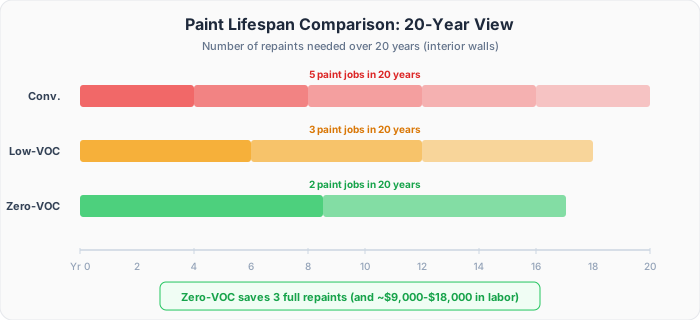
A typical 2,000 sq ft Sacramento home uses approximately 15–20 gallons for a full interior repaint. At $10 more per gallon for zero-VOC, that's $150–$200 in additional material cost. Spread over the 7–10 year lifespan of zero-VOC paint versus 3–5 years for conventional, the zero-VOC option saves one full repaint cycle -- easily $3,000–$6,000 in avoided labor and materials.
California VOC Regulations: What Sacramento Homeowners Need to Know
California enforces some of the strictest paint VOC limits in the nation through the California Air Resources Board (CARB). These regulations affect every gallon of paint sold or used in the state.
Current CARB VOC Limits
- Flat coatings: 50 g/L maximum
- Non-flat coatings (eggshell, satin, semi-gloss): 100 g/L maximum
- Non-flat high-gloss coatings: 150 g/L maximum
Source: CARB Table of VOC Limits.
These limits apply to any coatings sold or used in California. Local air districts -- including the Sacramento Metropolitan Air Quality Management District (SMAQMD) -- can set even stricter limits. The Sacramento region's status as a nonattainment area for ozone makes VOC reduction a regulatory priority.
What This Means for Your Project
If you're hiring a licensed painting contractor in Sacramento, they should already be using compliant products. But "compliant" doesn't mean "healthy." A paint at 99 g/L is technically legal for a non-flat interior coating in California, but it still releases significant VOCs into your living space. Zero-VOC products go well beyond minimum compliance.
LEED and Green Building Compliance
For homeowners pursuing LEED certification, energy-efficient home upgrades, or green building goals, zero-VOC paints earn credits under LEED v4.1 Indoor Environmental Quality (IEQ) standards. ProFlow provides full documentation including Safety Data Sheets (SDS), VOC content reports, and certification letters for LEED, CHPS (Collaborative for High Performance Schools), and facility-specific requirements.
Sacramento & Placer County
Need a real quote on your project?
Free, no-obligation walkthrough. Itemized estimate within 24 hours. Most jobs scheduled within 2–3 weeks.
Who Benefits Most from Eco-Friendly Painting?
Zero-VOC paint improves indoor air quality for everyone, but certain situations make it especially worthwhile.
High-Priority Scenarios
- Families with young children: Children breathe faster and are more susceptible to VOC exposure. Nurseries and playrooms are the most common eco-friendly painting requests we handle in Sacramento.
- Allergy and asthma sufferers: Sacramento County has higher asthma rates than the national average. Zero-VOC paints eliminate one significant irritant source.
- Seniors and immunocompromised residents: Reduced chemical exposure supports respiratory health and recovery from illness.
- Pet owners: Dogs and cats are sensitive to VOC off-gassing. Zero-VOC paint is safe for homes with animals.
- Pregnant women: VOC exposure during pregnancy has been linked to developmental concerns. Zero-VOC products eliminate this risk during interior painting.
Commercial and Institutional Applications
Eco-friendly paint isn't limited to residential projects. Sacramento businesses, schools, and healthcare facilities increasingly require low-VOC or zero-VOC coatings:
- Schools and daycares: California's CHPS (Collaborative for High Performance Schools) program requires low-emitting materials. Zero-VOC paint meets or exceeds these standards.
- Medical offices and clinics: Patient and staff air quality is a liability and compliance concern.
- Office buildings and retail: Employees and customers notice paint odor. Zero-VOC means no disruption to daily operations during a repaint.
- HOA common areas: Multi-unit painting projects benefit from low-odor products that don't affect adjacent units. See our HOA painting guidelines for approval processes.
For commercial project pricing, review our commercial painting cost guide.
The Eco-Friendly Painting Process: What to Expect
An eco-friendly painting project follows the same steps as a conventional one. The difference is in the products and containment methods -- not the timeline or scope of work.
Step-by-Step Process
-
Consultation and product selection -- We evaluate your space, discuss air quality concerns, and recommend specific zero-VOC or low-VOC products by brand and line. You receive a proposal that specifies every product by name and VOC content.
-
Surface preparation -- Patching, sanding, caulking, and priming. We use zero-VOC primers where available (most major brands now offer them). Dust containment barriers isolate the work area.
-
HEPA filtration setup -- For projects where air quality is especially critical (nurseries, medical spaces, homes with chemically sensitive residents), we deploy portable HEPA air scrubbers that filter particles and residual odors.
-
Application -- Brush, roller, or spray depending on the surface. Zero-VOC paints apply identically to conventional products. Dry time is typically equal or faster.
-
Ventilation and curing guidance -- We provide specific re-occupancy recommendations. Most zero-VOC interiors are safe to reoccupy within 2–4 hours of the final coat. We leave windows cracked for 24 hours when possible to accelerate full curing.
-
Documentation and warranty -- You receive labeled touch-up containers, product documentation (TDS and SDS), and finish documentation. If our application fails, we come back and fix it.
For tips on how to prepare your home before painters arrive, see our interior painting preparation guide.
Common Myths About Eco-Friendly Paint
Myth: Zero-VOC paint doesn't cover as well
Modern zero-VOC formulas from Benjamin Moore, Sherwin-Williams, and Dunn-Edwards achieve one-coat coverage at rates equal to their conventional counterparts. The acrylic resins in today's zero-VOC products have closed the performance gap entirely.
Myth: Eco-friendly paint costs twice as much
The actual premium is $5–$15 per gallon. On a typical room, that's $30–$75 in additional materials. Materials account for only 15–20% of a professional painting project's total cost, so the per-project increase is 2–5%.
Myth: You can't get vibrant colors in zero-VOC
Every major brand offers zero-VOC paint in their full color library -- thousands of colors including deep bases and saturated tones. Color accuracy and vibrancy are not affected by VOC content.
Myth: Low-VOC and zero-VOC are the same thing
A low-VOC paint at 49 g/L contains nearly 10 times more volatile compounds than a zero-VOC paint at 5 g/L. For air quality purposes, the distinction is significant -- especially in small, poorly ventilated rooms.
Myth: Eco-friendly paint peels faster
Zero-VOC product lines carry the same manufacturer warranties as conventional paints -- typically 15 to 25 years depending on the brand. In independent scrub and adhesion testing, several zero-VOC formulas actually outperform conventional alternatives.
FAQ
How much more does eco-friendly paint cost in Sacramento?
Zero-VOC paint costs $5–$15 more per gallon than conventional options from the same manufacturer. On a typical Sacramento bedroom, this adds $30–$75 to the material cost. Over the full project, the increase is 2–5% because labor -- the largest cost component -- stays the same. The longer lifespan of zero-VOC paint (7–10 years vs 3–5 years) often makes it cheaper over time.
Is zero-VOC paint safe for nurseries and babies' rooms?
Zero-VOC paint is the safest option for nurseries. It contains fewer than 5 g/L of volatile organic compounds, produces virtually no odor, and is typically safe for re-occupancy within 2–4 hours of the final coat. Brands like Benjamin Moore Natura and Sherwin-Williams Harmony carry Asthma & Allergy Friendly certification and are specifically recommended for children's rooms and healthcare environments.
Does California require low-VOC paint?
California enforces strict VOC limits through the California Air Resources Board (CARB). Flat coatings are limited to 50 g/L, non-flat coatings to 100 g/L, and high-gloss coatings to 150 g/L. All paint sold or used in California must meet these standards. Sacramento's local air district (SMAQMD) can enforce additional restrictions. While "low-VOC" is essentially the state minimum, zero-VOC products go significantly below these thresholds.
Can you use zero-VOC paint on exterior surfaces?
Zero-VOC formulas are primarily designed for interior use, where air quality benefits matter most. For exterior surfaces, low-VOC products (under 50 g/L) are available from every major brand and deliver the UV resistance, flexibility, and weather protection that Sacramento's climate demands. These low-VOC exterior coatings perform comparably to conventional options in durability testing and meet all California regulations.
What certifications should I look for on eco-friendly paint?
Look for GREENGUARD Gold certification (strictest indoor air quality standard), Green Seal certification (environmental performance), and the Asthma & Allergy Friendly mark from the AAFA. In California, also verify compliance with CARB VOC limits and SCAQMD Rule 1113. Any reputable eco-friendly painting contractor should provide Technical Data Sheets showing exact VOC content for every product used.
How long does zero-VOC paint last compared to regular paint?
Zero-VOC paint from premium brands lasts 7–10 years on properly prepared interior surfaces, compared to 3–5 years for conventional paint. The manufacturer warranty coverage is identical -- typically 15 to 25 years. The improved longevity of modern zero-VOC formulas means fewer repaints over the life of your home, which offsets the modest per-gallon premium.
Get an Eco-Friendly Painting Estimate
Sacramento homeowners choosing eco-friendly paint aren't making a compromise. They're choosing products that protect indoor air quality, last longer, and meet the kind of durability standards that professional painters demand.
ProFlow Painting carries zero-VOC and low-VOC lines from Sherwin-Williams, Benjamin Moore, and Dunn-Edwards on every project truck. Our eco-friendly painting service covers residential and commercial projects throughout Sacramento, Roseville, Folsom, Elk Grove, and surrounding communities.
Ready to get started? Request a free eco-friendly painting estimate or call (916) 740-7249. Every estimate specifies exact products by name and VOC content -- no guesswork, no hidden materials.
Free quote · Sacramento & Placer County
Ready for a real estimate, not a guess?
Tell us about your project and we'll walk it with you in person. Itemized quote within 24 hours, no high-pressure sales.