
South-facing wall paint fading happens first in Sacramento because that single wall absorbs 6–8 hours of direct UV every summer day, pushes surface temperatures past 170°F on dark colors, and takes roughly four times the annual UV dose of a north-facing wall. The fix is not a better paint alone — it is a combined strategy of UV-resistant acrylic (Sherwin-Williams Emerald, Benjamin Moore Aura, or Dunn-Edwards Evershield), smart Light Reflectance Value (LRV) color selection at or above 50 on exposed elevations, and a Sacramento-tuned re-coat interval that accounts for Central Valley summer punishment.
If the south or southwest side of your house looks chalky, washed out, or several shades lighter than the shaded elevations, that is directional UV fade — and it is the number-one paint-failure pattern we document on Sacramento homes. Sacramento averaged 23 days above 100°F per year between 1991 and 2020, and 2024 shattered that with 45 triple-digit days (CBS Sacramento, 2024). That heat plus a summer UV index of 8–10 (EPA UV Index, 2025) is why one side of the house always fades faster than the rest.
This guide walks through exactly why it happens, how to choose a color that survives Sacramento's south exposure, which paints deliver real UV durability, and the re-coat schedule that keeps a south wall looking new between full repaints.
The Answer Up Front: Why South Walls Fade First
Four forces converge on a south-facing wall in Sacramento that do not hit any other elevation in the same combination:
- Direct overhead-to-afternoon sun. In the Northern Hemisphere the sun tracks across the southern sky, so a south wall receives sun from roughly 10 AM to 4 PM in summer and nearly the full day in winter. No other wall gets continuous direct exposure at high sun angles.
- Sacramento's summer UV index of 8–10. "Very high" UV exposure hits the south wall during the same peak-angle hours when intensity is strongest. UV radiation is the primary cause of paint fading and chalking (PPG Industries technical bulletin, 2025).
- Peak surface temperatures on dark colors above 170°F. When ambient air hits 100°F, a dark south wall can reach 170–180°F (Weather Spark Sacramento Climate, 2025). Heat accelerates every chemical reaction in the paint film, compounding UV damage.
- Thermal cycling from Sacramento's 40°F day/night swings. Summer daytime highs over 100°F drop into the 60s at night — a 12-hour expansion-and-contraction cycle that fatigues the paint film right as UV is breaking the binder down.
North, east, and west walls each get a subset of these stressors. Only the south wall takes all four at full intensity, which is why homeowners consistently see the south and southwest elevations fade, chalk, and crack years before the rest of the house.
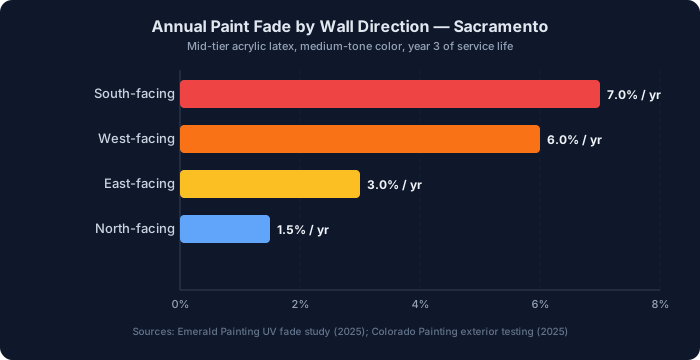
How Much Faster Does a South Wall Actually Fade?
Measurable, not subjective. Paint manufacturers run accelerated UV weathering on south-facing test panels specifically because that is the industry-standard worst case. Independent field data lines up with the lab results:
- Dark and vibrant colors on unprotected south exposures lose up to 40% of original color intensity within 3–5 years (Emerald Painting UV Exposure Study, 2025).
- Budget exterior acrylics without UV inhibitors fade at roughly 7% per year on south/west walls; premium UV-resistant formulations cut that to 1–3% per year (Colorado Painting field data, 2025).
- North-facing walls, with the same paint and color, typically last 3–5 years longer than south walls before needing repainting — a pattern we document on nearly every Sacramento exterior we assess.
That is why your house looks like two different color palettes after five years. The paint did not fail. The south wall just lived five years in what amounts to a UV test chamber.
The Physics: What UV and Heat Actually Do to Paint
Paint fails on a south wall through four linked mechanisms. Each one is worth understanding because the mitigation is different for each.
Pigment Degradation
UV photons break chemical bonds inside pigment molecules. Once a bond breaks, the pigment can no longer absorb the wavelength of visible light that gave it its color. Red, blue, and dark organic pigments have the weakest UV stability. White, beige, and tan pigments based on titanium dioxide and iron oxide are inorganic and resist UV much better (American Coatings Association pigment technical guide, 2025). This is why a red door on a south-facing porch turns pink, a navy shutter turns slate gray, and a dark brown stucco looks faded and dusty — while the same paint on a north elevation stays true.
Binder Breakdown and Chalking
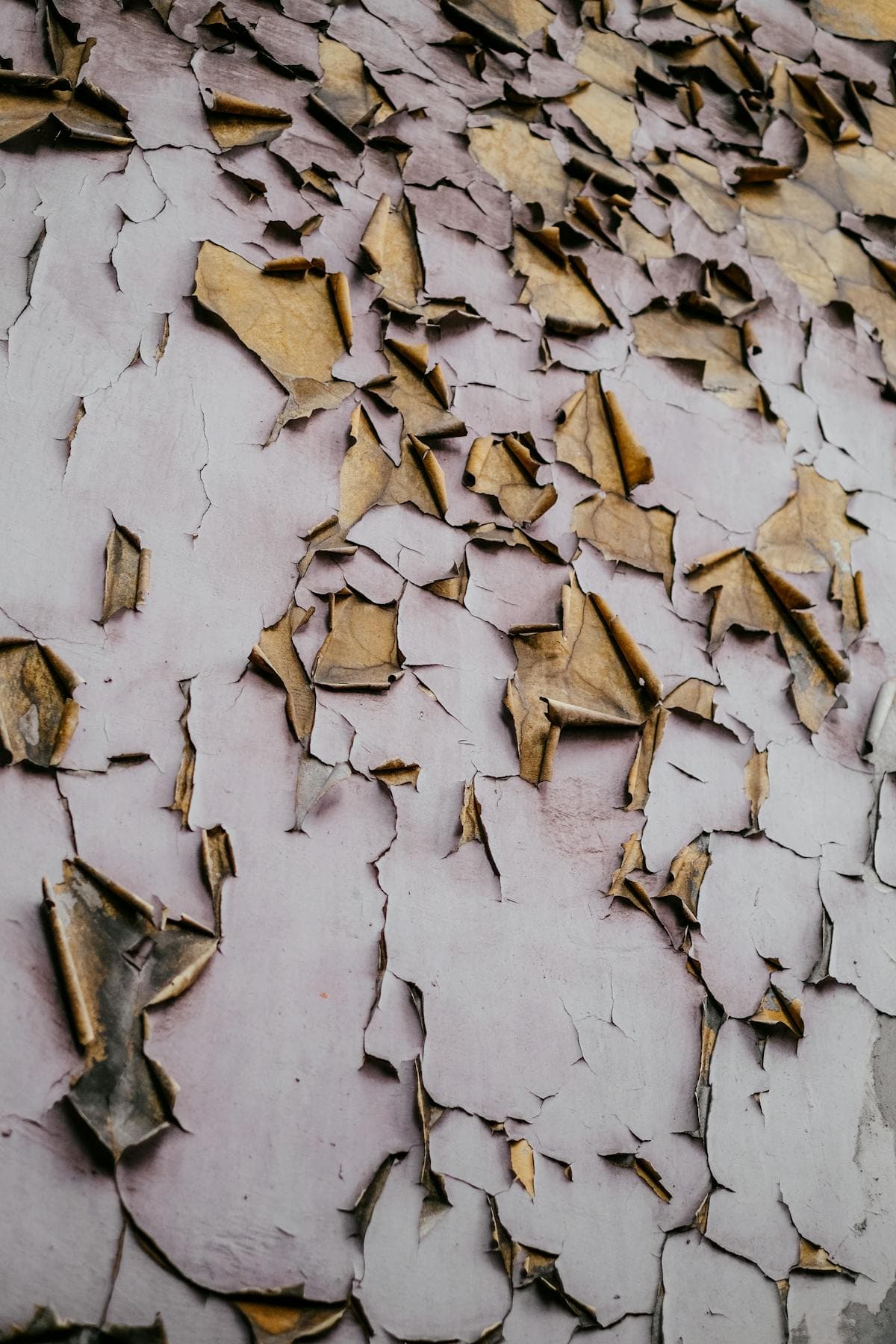
The binder is the acrylic or alkyd resin that holds pigment particles to the substrate. UV radiation breaks binder chains the same way it breaks pigments. As the binder deteriorates, it releases pigment particles onto the surface as a powdery residue. That is chalking — and it is the first visible sign that a south wall is losing its UV protection.
If you wipe your hand across a south-facing wall and it comes away white or color-tinted, chalking is already underway. Heavy chalking means the film has lost most of its protective thickness and fade accelerates from that point forward (Dunn-Edwards Paints technical data sheet, Evershield, 2025).
Film Thinning and Erosion
Over years of UV and rain cycles, the paint film erodes. A coating that started at 3–4 mils dry film thickness can drop below 1.5 mils on a south wall after 5–7 years. Once film drops below about 2 mils, UV protection collapses and the paint often goes from "a little faded" to chalking, cracking, and peeling within one additional summer.
Thermal Cycling Fatigue
On top of the UV damage, the south wall expands and contracts more than any other side of the house — a south-facing stucco panel at 170°F in August and 50°F at 5 AM in December moves through a 120°F range over the Sacramento year. Paint films become brittle under repeated cycling, losing elasticity and cracking before peeling starts. Our guide on how Sacramento heat damages exterior paint covers the full mechanism chain.
Why Sacramento Is Worse Than Most U.S. Cities
Not every hot city produces the same fade pattern. Sacramento's specific climate makes south-wall fade more aggressive than in cities at the same latitude.
Central Valley Sun Intensity
Sacramento sits in the Central Valley at about 38.6° N latitude — close enough to the equator to get high sun angles, but with significantly less atmospheric moisture than coastal California. Clear summer days with low humidity mean the atmosphere filters less UV before it reaches the south wall. The EPA's UV Index for Sacramento regularly reads 9–10 in June and July, compared to 7–8 in San Francisco at the same latitude (EPA UV Index Daily Data, 2025). That extra one to two index points means 25–40% more UV damage per hour of exposure.
Heat Without Cooling Moisture
Coastal cities get marine-layer fog and higher humidity, which slow photochemical reactions. Sacramento summer humidity routinely falls below 20% — dry air that lets surface temperatures climb unchecked and embrittles the paint binder faster than coastal paints experience.
Record-Setting Heat Days
Sacramento recorded 45 triple-digit days in 2024 — nearly double the 23-day historical average. Each additional 100°F+ day pushes surface temperatures past paint's safe service range. Paint rated for 20 years of "normal" UV exposure may only deliver 10–12 years on a south wall in a climate that keeps trending hotter.
Bay Area Homes With Inland Exposure
ProFlow Painting also serves inland Bay Area communities where afternoon temperatures rival Sacramento's. Livermore, Brentwood, Antioch, and Walnut Creek face the same south-wall fade pattern — and every strategy in this guide applies to any Bay Area property more than 15 miles inland from the coast.
How to Pick a Color That Survives a Sacramento South Wall
Color selection is the biggest lever you control. The physics are straightforward: lighter colors reflect more solar radiation, stay cooler, and fade less. The industry measures this with Light Reflectance Value (LRV) — a 0-to-100 scale where 0 is pure black and 100 is pure white.
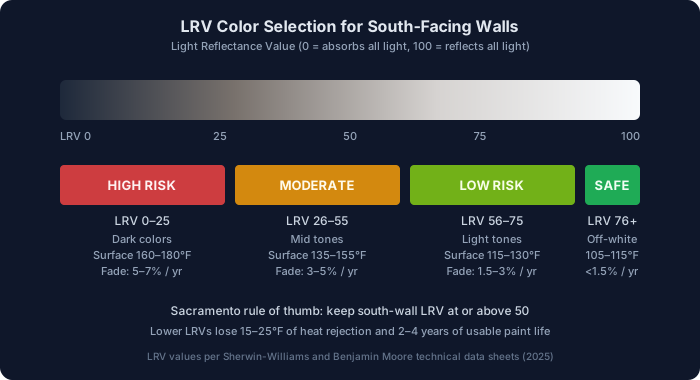
The LRV Rule for Sacramento South Walls
After years of repainting and inspecting Sacramento exteriors, the pattern is clear:
- LRV 0–25 (dark colors): High fade risk. Surface temperatures 160–180°F. Expect 5–7% annual fade and noticeable color loss by year 3 even with premium paint. Reserve dark colors for shaded or north elevations.
- LRV 26–55 (mid-tones): Moderate risk. Surface temps 135–155°F. Workable on south walls with premium UV-resistant paint and realistic expectations of 8–10 year service life.
- LRV 56–75 (light tones): Low risk. Surface temps 115–130°F. The sweet spot for south walls — warm enough to avoid sterile white, cool enough to extend paint life significantly.
- LRV 76+ (off-white to white): Safe. Surface temps 105–115°F. Longest paint life, best heat rejection, minimal fade.
The practical rule of thumb: keep south-wall LRV at 50 or above. Every 10 points of LRV drop adds roughly 7–10°F to peak surface temperature and cuts two to three years off the paint's useful life.
Sacramento-Friendly Colors by LRV
Real-world colors that work on south walls without looking washed out:
- Benjamin Moore Classic Gray OC-23 — LRV 74.5 — warm light gray that stays true
- Sherwin-Williams Agreeable Gray SW 7029 — LRV 60 — greige with broad Sacramento appeal
- Dunn-Edwards Swiss Coffee DEW341 — LRV 82 — near-white that reflects most solar load
- Benjamin Moore Revere Pewter HC-172 — LRV 55.5 — right at the LRV limit; pair with premium paint
- Sherwin-Williams Accessible Beige SW 7036 — LRV 58 — warm neutral that handles south sun
- Dunn-Edwards Whisper DEW340 — LRV 83 — designer-favored off-white for Sacramento stucco
Every manufacturer publishes LRV on their fan decks. Ask for the number — the color name alone will not tell you how it performs on a south wall. For a full color strategy, see our best exterior paint colors for California homes guide.
If You Want Dark Colors on a South Wall
If a dark palette is non-negotiable — common with modern farmhouse, Craftsman, and contemporary designs — there are three ways to make it survive:
- Step up to Sherwin-Williams Emerald, Benjamin Moore Aura, or Dunn-Edwards Evershield. These three have the strongest UV-inhibitor and color-lock technology in their respective product lines.
- Specify an IR-reflective (infrared-reflective) colorant system. Available on most premium dark colors, these pigments reflect infrared even while absorbing visible light — keeping surface temperatures 15–30°F cooler than standard dark paint.
- Plan a shorter re-coat cycle. Budget a maintenance coat on the south wall at year 5–7 and a full repaint at year 8–10, even when the other elevations still look fine.
Our guide to black exterior house paint in Sacramento covers how to pull off the darkest end of the palette without losing the paint job in three summers.
The Three Paints That Actually Resist Sacramento Sun
Paint chemistry has improved dramatically in the last decade, but only a short list of products is worth buying for a south-facing Sacramento wall. These three lead their categories on UV durability:
Sherwin-Williams Emerald Exterior
Emerald is Sherwin-Williams's top-tier exterior acrylic. Its standout feature is a self-crosslinking acrylic binder plus proprietary UV absorbers that maintain color and film integrity in accelerated weathering testing beyond 2,000 hours of Xenon arc exposure (Sherwin-Williams Emerald TDS, 2025). Field lifespan on a Sacramento south wall: 8–12 years with proper prep.
- Price: roughly $85–$100 per gallon (pro price often $65–$80)
- Colors: full LRV range available; IR-reflective colorants optional
- Best for: stucco, wood, fiber cement south and west walls
Benjamin Moore Aura Exterior
Aura uses Color Lock technology and a Gennex colorant system specifically engineered to hold vibrant and dark colors against UV fade. Consumer Reports consistently places Aura in the top tier for fade resistance in hot-climate testing (Consumer Reports Best Exterior Paints, 2026). Field lifespan on a Sacramento south wall: 8–12 years.
- Price: roughly $90–$105 per gallon
- Colors: strong dark-color performance thanks to Gennex colorants
- Best for: homes with saturated or dark accent colors that still need durability
Dunn-Edwards Evershield
Evershield is Dunn-Edwards's premium 100% acrylic exterior, formulated specifically for California's hot, dry climate. The brand is California-founded and tunes its product lines for Central Valley and Southern California conditions. Evershield carries a lifetime limited warranty and independent testing shows strong fade, chalk, and dirt-pickup resistance (Dunn-Edwards Evershield Technical Data, 2025). Field lifespan on a Sacramento south wall: 8–12 years.
- Price: roughly $70–$90 per gallon
- Colors: full LRV range; excellent selection of Sacramento-appropriate neutrals
- Best for: budget-conscious premium projects; readily available at Sacramento-area Dunn-Edwards stores
How the Three Compare
| Product | UV Technology | South-Wall Lifespan | Price/Gal | Best For |
|---|---|---|---|---|
| SW Emerald Exterior | Xenon-tested UV absorbers | 8–12 yrs | $85–$100 | Stucco, fiber cement, mixed substrates |
| BM Aura Exterior | Color Lock with Gennex | 8–12 yrs | $90–$105 | Dark/vibrant color palettes |
| DE Evershield | California climate formulation | 8–12 yrs | $70–$90 | Value premium for Sacramento stucco |
| Mid-range acrylic | Basic UV inhibitors | 5–7 yrs | $45–$65 | Shaded elevations only |
| Budget acrylic | Minimal | 3–5 yrs | $25–$40 | Short-term plans, rental turnovers |
Any of the three premium lines will outlast a mid-range paint on a south wall by 3–5 years. For a deeper side-by-side, see our Sherwin-Williams vs Benjamin Moore comparison and our best exterior paint for Sacramento climate round-up.
The Stucco Exception: Elastomeric
About 40% of Sacramento homes are stucco, and stucco on a south wall has a second failure mode beyond fade: hairline cracking from thermal expansion. For stucco south walls, an elastomeric coating often makes more sense than standard acrylic:
- Stretches 300–800% to bridge cracks as the substrate moves
- Applied at 10–20 mils thickness versus 3–4 mils for standard paint
- Provides significantly better UV protection from sheer film thickness
- Delivers 10–15 year service life on Sacramento south walls
Elastomeric costs $900–$2,000 more than acrylic for a typical Sacramento home but pencils out cheaper per year. Our full elastomeric paint for stucco guide covers the cost-benefit math.
Sacramento & Placer County
Need a real quote on your project?
Free, no-obligation walkthrough. Itemized estimate within 24 hours. Most jobs scheduled within 2–3 weeks.
Re-Coat Intervals for Sacramento South Walls
Here is where most homeowners get hurt financially. The rest of your house may be fine at year 8, but the south wall has been losing a year of life for every year everyone else has been running. Plan the south wall on its own maintenance schedule.
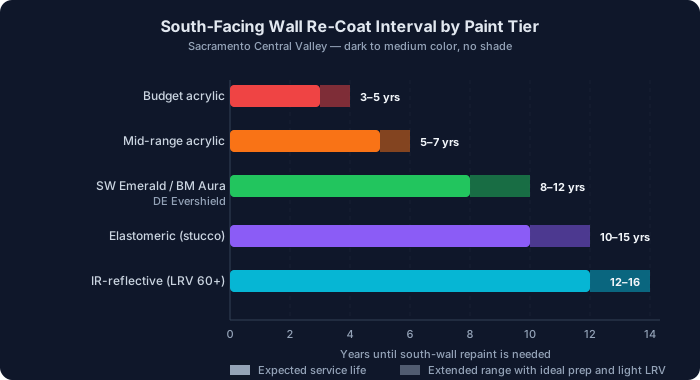
The Sacramento South-Wall Maintenance Schedule
For a south-facing wall painted with premium UV-resistant acrylic in an LRV 50+ color:
- Years 1–3: No maintenance needed. Wash annually to remove dust and pollen.
- Year 4: First visual inspection. Compare south-wall color to a protected area (under an eave or behind a downspout). Note any fade delta.
- Year 5–6: Light chalking typically begins. Wash thoroughly. Consider a single maintenance coat on the south elevation only if fade or chalking is visible.
- Year 7–9: Plan a maintenance coat on the south wall if you have not already. The rest of the house can usually wait.
- Year 10–12: Full exterior repaint due. By this point the south wall has already had one maintenance coat and the other elevations are reaching end-of-life.
For budget or mid-tier paint on a south wall, shift every milestone forward by two to three years. For a dark color at LRV under 30, shift everything forward by another one to two years on top of that.
What "Maintenance Coat" Means
A maintenance coat is one fresh coat of the same color applied only to the south (and sometimes west) elevation, done years before the rest of the house needs painting. It costs roughly 30–40% of a full exterior repaint and extends the south wall's life by 4–6 years. Most Sacramento homeowners have never heard of this strategy, but it is the single most cost-effective tactic for extending a paint job's overall life.
For a complete breakdown of repaint timing across the whole house, see our how often to repaint your house in Sacramento guide and the how long exterior paint lasts breakdown.
Application Details That Make or Break South Walls
Even the right paint in the right color will fail early if applied wrong. These details matter more on a south wall than anywhere else on the house.
Apply Two Full Coats at Spec Thickness
Every premium exterior paint has a specified spread rate — typically 350–400 square feet per gallon. Hitting that rate produces 3–4 mils of dry film per coat, giving 6–8 mils total over two coats — the UV-protection reserve the warranty depends on.
Contractors stretching a gallon to 500+ square feet on a south elevation end up with 2 mils of dry film, half the UV protection, and a paint job that fails in year 4 instead of year 10.
Paint in Cool Conditions
Surface temperatures above 90°F cause paint to skin over before solvents escape, trapping gases and causing blistering within weeks (Sherwin-Williams surface prep guide, 2024). On a Sacramento south wall, the surface hits 90°F by mid-morning and stays there past 6 PM in summer. Professional painters either paint south walls before 9 AM, do them only in spring and fall, or shut down south-wall work entirely during July–August heat waves. Our when to paint a house exterior in Sacramento guide covers the timing in detail.
Do Not Skip Prep
Up to 80% of premature paint failures trace back to surface preparation, not the paint itself (Sherwin-Williams architectural specifier guide, 2024). On a south wall, prep matters more because the chalk layer on faded existing paint must come off completely before new paint can bond.
Minimum prep for a Sacramento south wall:
- Power wash at 2,500–3,000 PSI to remove all chalk and loose material
- Scrape and sand to sound substrate anywhere peeling is present
- Prime bare substrate with a high-adhesion primer
- Caulk all joints with polyurethane caulk rated for thermal cycling
- Allow 24 to 48 hours of drying time after power washing in summer
Our exterior painting preparation guide covers each step, and the power washing before painting guide covers the wash step.
Shade Where You Can
A south wall with 3–4 hours of afternoon tree shade loses 20–30°F of peak surface temperature, which can add 3–5 years of paint life. If you are planting for shade, deciduous trees 10–15 feet from the wall give summer protection without winter shading or moisture problems.
Warning Signs Your South Wall Is Failing Early
Catch these signs at year 3–5 and a maintenance coat saves the paint job. Miss them and you end up with full substrate repair by year 6–7.
- Color delta under eaves. Step back and compare the exposed wall to the protected area under the eave or behind a downspout. If you can see a color difference, fade is underway.
- Chalk transfer to your hand. Rub the wall. White or color-tinted residue on your palm means the binder is breaking down and UV protection is depleting.
- Hairline cracks. Look for fine spider-web cracks on stucco south walls, usually starting near windows or where the wall meets trim. These signal thermal-cycling fatigue.
- Dulling or flattening of sheen. A satin paint that looks flat, or a semi-gloss trim that looks satin, has lost surface finish to UV erosion.
- Blistering or bubbling. Typically means the paint was applied in too much heat. Address immediately before the blisters break and expose substrate.
- Caulk shrinkage at joints. Sacramento's thermal cycling destroys budget caulk faster than it destroys premium paint. Shrinking or cracked caulk lines mean water can get behind the paint film.
For repair guidance once damage is visible, see our how to fix peeling paint guide.
Quick-Reference: South-Wall Strategy Checklist
Before the next paint job or maintenance cycle, verify:
- South-wall color LRV is 50 or higher
- Paint spec is premium UV-resistant acrylic (Emerald, Aura, or Evershield)
- Two full coats at manufacturer-specified spread rate, in writing
- Application scheduled for spring or fall, not July–August
- Surface prep includes full power wash and chalk removal
- Polyurethane caulk rated for thermal cycling
- Budget placeholder for a south-wall maintenance coat at year 6–8
- Stucco homes: elastomeric specified for south and west elevations
- Dark-color homes: IR-reflective colorant system specified
Frequently Asked Questions
Why does one side of my house fade faster?
The sun-exposed side — almost always south or southwest in the Northern Hemisphere — receives four to five times the UV and heat exposure of shaded elevations. Sacramento's summer UV index of 8–10 and frequent 100°F+ days push dark-colored south walls past 170°F surface temperature, which accelerates pigment degradation, binder breakdown, and film erosion. North-facing walls with identical paint and color typically last 3–5 years longer than south-facing walls on the same house.
How fast does paint fade on a south-facing wall in Sacramento?
Budget acrylic paints without UV inhibitors fade at roughly 7% per year on Sacramento south walls, losing up to 40% of color intensity within 3–5 years (Emerald Painting UV study, 2025). Premium UV-resistant acrylics like Sherwin-Williams Emerald, Benjamin Moore Aura, and Dunn-Edwards Evershield cut that rate to 1–3% per year, keeping colors visibly true for 8–12 years before significant fade.
What is the best paint for a south-facing wall in Sacramento?
Sherwin-Williams Emerald Exterior, Benjamin Moore Aura Exterior, and Dunn-Edwards Evershield are the three top-performing exterior acrylics for Sacramento south walls. All three deliver 8–12 years of service life with minimal fade, and Aura leads specifically for dark and vibrant colors thanks to its Gennex colorant system. For stucco south walls, a premium elastomeric coating often outperforms standard acrylic by bridging hairline cracks that develop from thermal expansion.
Does LRV matter for paint fading in Sacramento?
Yes, measurably. Light Reflectance Value (LRV) determines how much solar radiation the paint absorbs versus reflects. Every 10-point drop in LRV adds roughly 7–10°F of peak surface temperature and cuts two to three years off south-wall paint life. Sacramento rule of thumb: keep south-wall LRV at 50 or above. Below LRV 30, expect surface temperatures above 160°F and plan for maintenance coats every 5–7 years even with premium paint.
How do I prevent exterior paint from fading on my Sacramento home?
Combine five tactics: (1) specify premium UV-resistant acrylic on south and west elevations; (2) choose colors at LRV 50+ for sun-exposed walls, or use IR-reflective colorants on darker colors; (3) apply two full coats at manufacturer-specified spread rate; (4) schedule application for spring or fall when surface temperatures stay under 90°F; and (5) plan a maintenance coat on the south wall at year 5–7 — years before the rest of the house needs repainting. Strategic landscaping with deciduous shade trees on the south elevation adds another 3–5 years.
Is UV paint damage worse in California than other states?
Yes, particularly in California's inland valleys. Sacramento's UV index of 8–10 in summer exceeds coastal California (typically 7–8) because low humidity lets more UV through the atmosphere. Combined with extreme summer heat and record-setting triple-digit day counts (45 days in 2024), Sacramento and Central Valley homes experience UV paint damage at roughly 1.5–2x the rate of coastal California and 2–3x the rate of Pacific Northwest or Midwest climates.
How often should I repaint a south-facing wall in Sacramento?
With premium UV-resistant paint in an LRV 50+ color, plan a maintenance coat on the south wall every 5–7 years and a full repaint every 10–12 years. With mid-range paint, shift those milestones forward two to three years. With dark colors (LRV under 30), add another one to two years forward shift. Most Sacramento homes benefit from treating the south elevation on its own maintenance cycle rather than waiting for the whole house to need painting — the south wall is often 5+ years ahead of the rest in terms of fade and chalking.
Stop South-Wall Fade Before It Costs You a Full Repaint
South-facing wall fade is not a paint defect — it is Sacramento's climate doing what it does to every exposed elevation in the Central Valley. The difference between a paint job that lasts 4 years and one that lasts 12 is the product you specify, the color you pick, the prep you insist on, and the maintenance coat you plan years in advance.
ProFlow Painting has repainted hundreds of Sacramento-area south walls — from historic Midtown Victorians to contemporary builds in Folsom, El Dorado Hills, and Granite Bay. We know which colors hold up, which paints deliver their stated warranty in our climate, and when to step up to elastomeric or IR-reflective on the sun-exposed elevations.
Your free exterior assessment includes:
- Wall-by-wall UV damage and fade evaluation by exposure direction
- LRV analysis on your existing colors with fade-risk scoring
- Product recommendations matched to each elevation
- Maintenance-coat scheduling for south and west walls
- Transparent quote with spread-rate and film-thickness commitments in writing
Call (916) 740-7249 to schedule your free exterior assessment. We serve Sacramento, Roseville, Folsom, El Dorado Hills, Granite Bay, Rocklin, and surrounding communities with professional exterior painting built to handle Central Valley sun.
ProFlow Painting | Professional Exterior Painting | Sacramento, CA | (916) 740-7249
Free quote · Sacramento & Placer County
Ready for a real estimate, not a guess?
Tell us about your project and we'll walk it with you in person. Itemized quote within 24 hours, no high-pressure sales.