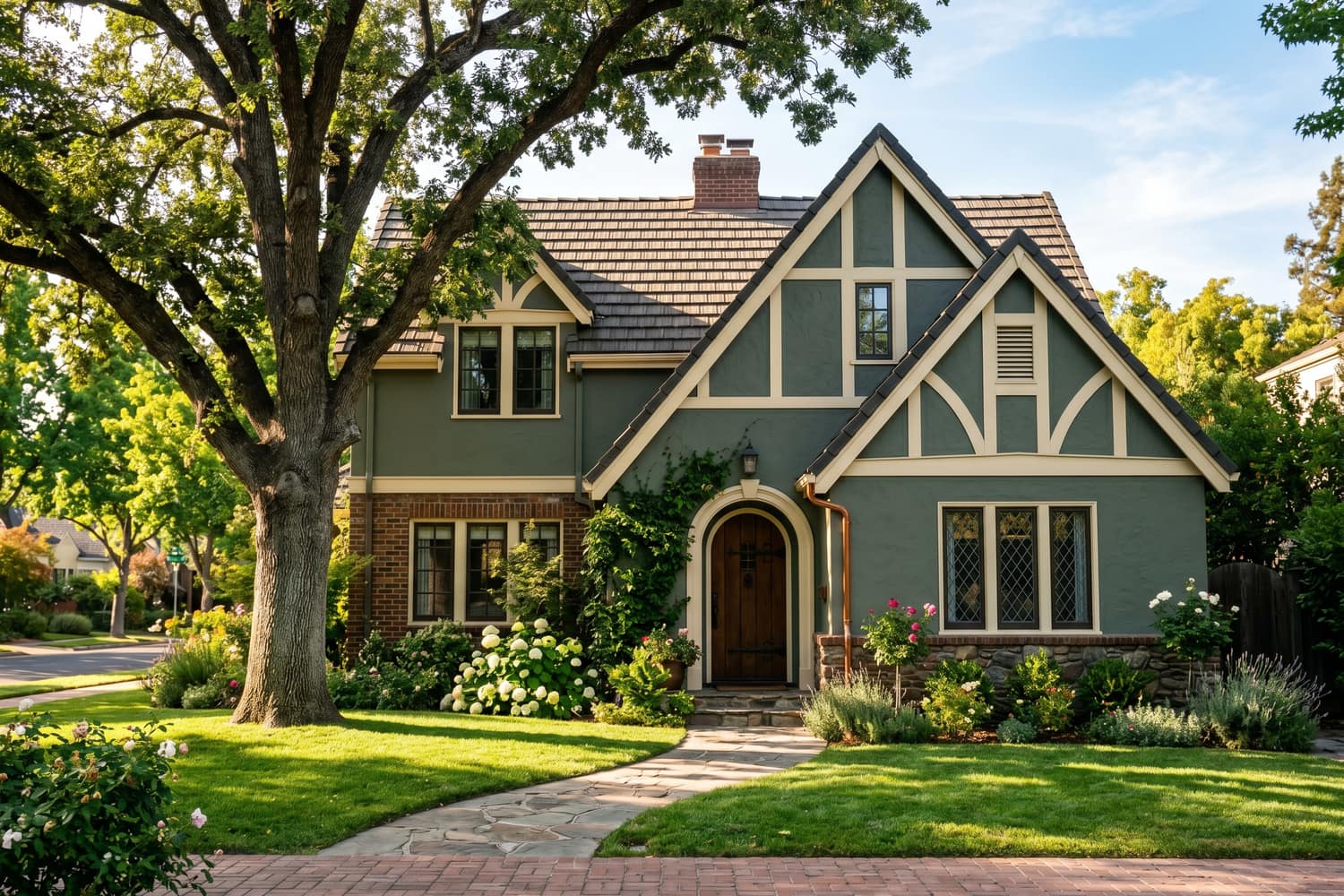

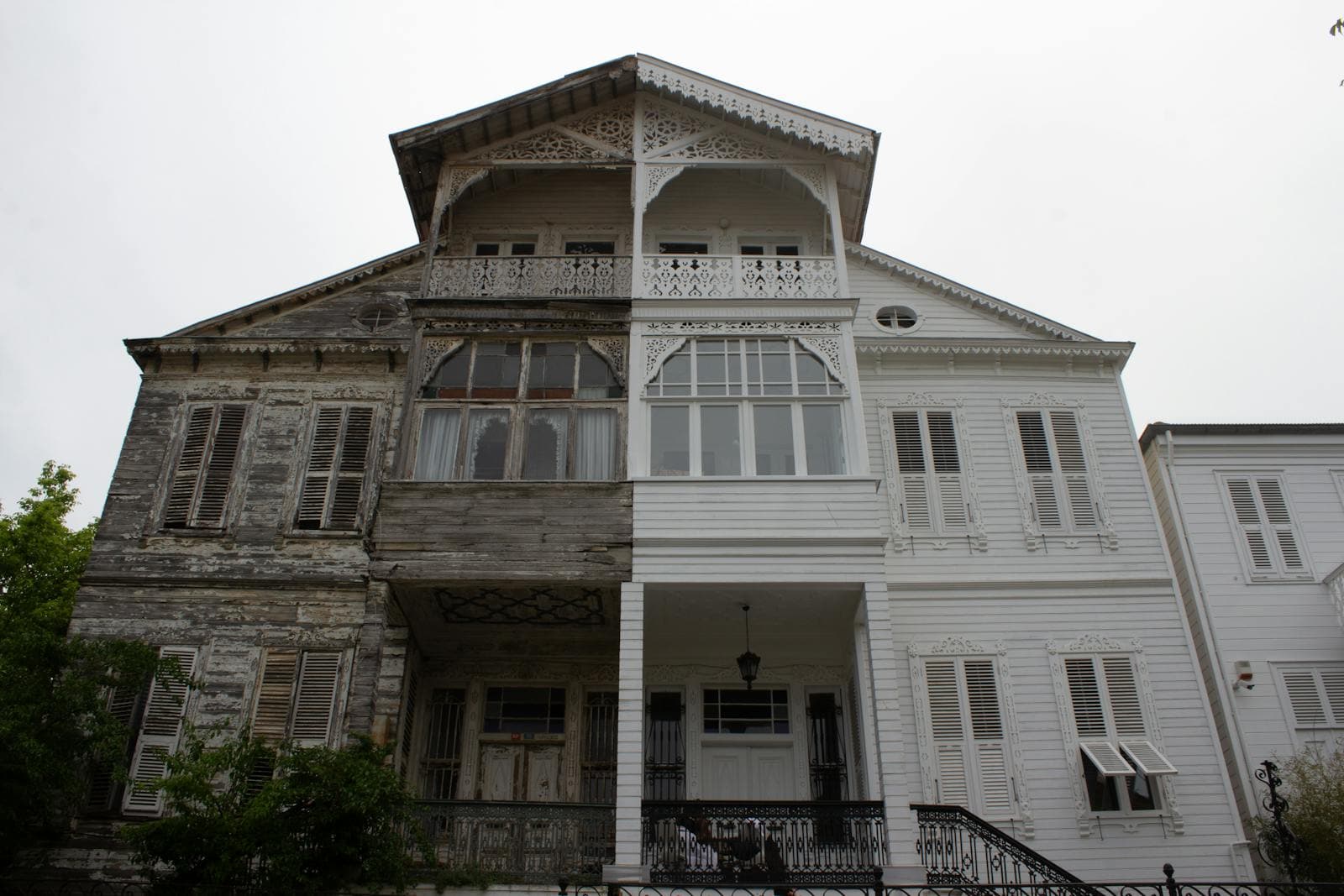
Exterior house painting in Land Park Sacramento is not a generic stucco-tract repaint. The streets between Land Park Drive, Freeport Boulevard, 11th Avenue, and Sutterville Road are dominated by 1920s–1960s architecture — Tudor Revivals, Spanish Revival and Mediterranean stucco, post-war mid-century ranches, and California Craftsman bungalows — and each style has its own period-correct palette, trim logic, and prep requirements that a neighbor's two-color repaint will completely miss.
Layer in Sacramento's Central Valley sun, the 45 triple-digit days recorded in 2024 (CBS Sacramento, 2024), and the strong (if informal) color expectations enforced by the Land Park Community Association and longtime residents around William Land Park and the Sacramento Zoo, and a Land Park exterior repaint becomes an architecture-first job. Choose wrong and a 1932 Spanish Revival looks like a builder-grade stucco home. Choose right and the house reads as one of the better-preserved examples of its period on the block.
This guide walks through the four dominant architectural styles in Land Park, the color palettes that work for each, the real 2026 cost ranges for professional exterior painting in this part of Sacramento, the Land Park Community Association's color-character expectations, and the Sacramento-specific prep and paint choices that keep a Land Park repaint looking sharp for a full decade.
Why Land Park Exterior Painting Is a Different Job
Land Park is one of Sacramento's most architecturally consistent pre-1960 neighborhoods. The 200-acre William Land Park, the Sacramento Zoo, Fairytale Town, and Funderland anchor the area, and the surrounding streets fan out from Land Park Drive and Freeport Boulevard with an uncommon density of intact 1920s–1960s homes that have largely escaped tear-down redevelopment.
For a painter, that means three things matter on every Land Park bid:
- The home's architectural period — usually Tudor Revival (late 1920s–1930s), Spanish Revival/Mediterranean (1930s), Craftsman bungalow (late 1910s–1920s), or mid-century ranch (1950s–early 1960s).
- The substrate — wood siding, smooth or textured stucco, brick veneer, or a stucco-and-half-timbering hybrid on Tudors. Each demands different prep and a different paint.
- The neighborhood color culture — informal but real, enforced through resale comparables, the Land Park Community Association, and word-of-mouth on streets like Land Park Drive, 11th Avenue, and the blocks near McClatchy High School.
A repaint that ignores any of those three reads as out of context within a year, regardless of how well the paint itself goes on.
The mix above is approximate, drawn from common observation walking Land Park Drive, 11th Avenue, and the streets bordering William Land Park. The exact split shifts block to block — the south end near Sutterville Road skews more mid-century, while the blocks closer to Broadway concentrate the older Tudor and Spanish Revival stock.
Tudor Revival in Land Park: Cream Stucco, Dark Timbering, Forest Green
Tudor Revivals built between roughly 1925 and 1938 are one of Land Park's signature styles. You see them on Land Park Drive, on the cross streets running west toward Freeport Boulevard, and concentrated around the older blocks east of the park. They are usually two-story, with steeply pitched front gables, decorative half-timbering over warm cream stucco, leaded or diamond-pane casement windows, prominent brick or stone chimneys, and arched front entries.
The historically correct Tudor palette is built on contrast: a soft warm cream or pale buff stucco field, dark brown to near-black half-timbering, deep accent colors on the door, and bright but never stark trim around windows.
Recommended Tudor Revival exterior palette:
- Stucco field: Sherwin-Williams 7566 Westhighland White, Benjamin Moore OC-3 Soft Chamois, or Dunn-Edwards DE6213 Smokey Cream — warm cream with LRV in the high 60s to low 70s.
- Half-timbering: Benjamin Moore 2124-10 Wrought Iron (near black with a touch of warmth), Sherwin-Williams 7069 Iron Ore, or Benjamin Moore HC-78 Litchfield Gray for a lighter brown-charcoal look on smaller homes.
- Window trim: Sherwin-Williams 7005 Pure White or Benjamin Moore OC-17 White Dove — clean white but not blue-white.
- Front door / accent: Benjamin Moore HC-132 Black Forest Green, Sherwin-Williams 6202 Cast Iron, or a deep ox-blood like Benjamin Moore HC-181 Million Dollar Red.
- Chimney brick: Leave natural where possible. If painted (often a mistake on Tudor), use a heavily muted warm neutral and never a saturated color.
Two practical notes on Tudors specifically. First, the half-timbering should always be visibly darker than the stucco — a flat charcoal-brown at LRV 6–10 gives the right period contrast. Second, do not paint the timbering pure black; warm-leaning blacks like Wrought Iron read as wood-stain rather than industrial paint, which is what the original 1930s Tudors were imitating.
For more on warm cream and white field colors that survive Sacramento sun, see our best exterior paint colors for California homes guide.
Spanish Revival and Mediterranean Stucco: Warm Whites, Cream, Terracotta Accents
Spanish Revival and Mediterranean homes in Land Park were built mostly between 1928 and 1940. They are typically single-story or modest two-story, with smooth or sand-finish stucco, low-pitched red clay tile roofs, arched windows and doorways, recessed entries, decorative wrought-iron details, and (often) a small turret or chimney capped in tile. They concentrate on the older blocks west and north of the park.
The correct palette is restrained: a warm white or soft cream stucco field, terracotta and saddle-brown accents to echo the tile roof, and dark wrought-iron details on railings and lighting.
Recommended Spanish Revival exterior palette:
- Stucco field: Sherwin-Williams 7008 Alabaster, Benjamin Moore OC-95 Navajo White, or Dunn-Edwards DEW341 Swiss Coffee — warm white to soft cream, LRV in the mid 70s to low 80s.
- Trim and recessed accents: A half-shade darker version of the field for window reveals — for example, Benjamin Moore OC-3 Soft Chamois with a Navajo White field.
- Wood doors and decorative beams: Benjamin Moore HC-67 Saddle Brown (traditional warm brown), Sherwin-Williams 7732 Pavilion Beige, or a deep walnut stain on real wood doors.
- Wrought iron: Sherwin-Williams 6258 Tricorn Black, satin sheen.
- Terracotta accents (planters, tile bands, parapet caps): Benjamin Moore CC-156 Smoldering Red or Sherwin-Williams 7587 Cardinal — keep these to small accent surfaces, not field walls.
The single biggest Spanish Revival color mistake in Land Park is painting the stucco a pure cool white or, worse, a trendy gray. The original 1930s palette was warm — sun-bleached white, parchment, soft beige — and the warmth is what makes the red tile roof read correctly. A cool gray-white field fights the roof and flattens the architecture. Stick to warm whites and creams under LRV 80 and the home will look right at any time of day.
Mid-Century Ranch in Land Park: Sage, Mustard, Charcoal
Mid-century ranches built between roughly 1949 and 1965 may be Land Park's largest single architectural group, especially on the south and west edges of the neighborhood toward Sutterville Road. They are typically single-story, long and low, with shallow-pitched gable or hip roofs, wide overhangs, expansive front-facing windows, board-and-batten or horizontal lap siding, and brick or stone accent walls.
The correct mid-century palette is muted but confident: earthy field colors with one strong accent and crisp trim. Forget the saturated mid-century-modern doors of remodeling-show fame — most original 1950s Land Park ranches were painted in restrained earth tones.
Recommended mid-century ranch exterior palette:
- Field (siding): Sherwin-Williams 6204 Sea Salt (cool sage), Benjamin Moore HC-112 Hidden Sage (warmer sage-olive), or Sherwin-Williams 6080 Utterly Beige for a more neutral take.
- Accent walls (brick or board-and-batten): Charcoal — Sherwin-Williams 6258 Tricorn Black or Benjamin Moore HC-167 Amherst Gray.
- Trim and fascia: Benjamin Moore OC-17 White Dove or Sherwin-Williams 7008 Alabaster — soft white that matches the era's fascia work.
- Front door: Mustard or warm gold (Benjamin Moore 2155-30 Carolina Gold), tomato red (Benjamin Moore 2002-30 Salsa), or near-black (BM Wrought Iron) for a more restrained mid-century read.
- Garage door: Match the field color, never the door accent — keeps the long horizontal mass quiet.
Pro tip on mid-century Land Park ranches: keep the trim minimal. The 1950s detail vocabulary was clean fascia, simple window casing, and no dentils or fluted columns. Adding heavy cream-and-charcoal trim contrast on a low ranch reads as 1990s-builder rather than mid-century-original. One field color, one accent, one quiet trim.
Craftsman Bungalows in Land Park: Earth Tones, Cream Trim, Strong Door
Craftsman bungalows in Land Park were built mostly between 1915 and 1928 and tend to cluster on the older blocks closer to Broadway. They are typically 1,000–1,600 sq ft, single-story or 1.5-story, with low-pitched gable roofs, wide overhanging eaves with exposed rafter tails, tapered porch columns on stone or brick piers, multi-light double-hung windows, and shingle or lap siding.
The bungalow palette is earthy and warm, with a single saturated accent on the door:
- Field: Sherwin-Williams 6166 Eclipse (deep olive), Benjamin Moore HC-79 Greenfield Pumpkin (warm gold-brown), or Benjamin Moore HC-99 Abingdon Putty (warm taupe).
- Trim and porch beams: Sherwin-Williams 7566 Westhighland White or Benjamin Moore OC-3 Soft Chamois — never bright white, always warm cream.
- Front door accent: Saturated red, deep olive-green, or a smoky teal — Benjamin Moore HC-181 Million Dollar Red, BM HC-122 Newburg Green, or Sherwin-Williams 6486 Reflecting Pool.
- Foundation, stone piers, brick: Leave natural where possible.
This is the same color logic that works for Craftsman bungalows across Sacramento; for the broader breakdown including East Sac and Curtis Park, see our exterior house painting East Sacramento guide.
Is There an HOA in Land Park? Color Rules in 2026
The most common Land Park exterior question is whether there are color restrictions.
The short answer: there is no formal HOA covering most of Land Park, and no legal HOA color covenants on most homes. Most Land Park properties are not part of a master-planned subdivision with CC&Rs, and there is no governing board with binding authority over your fan deck choice the way there is in a Roseville or Folsom HOA. For the broader picture of California HOA paint rules, see our HOA painting guidelines.
The longer answer: Land Park has strong neighborhood-character expectations enforced informally by the Land Park Community Association, real estate agents specializing in the area, appraisers, and longtime residents. Homes that paint outside period-appropriate ranges — a stark all-black exterior on a 1932 Spanish Revival, a saturated jewel-tone pink on a Tudor — get noticed quickly, take longer to sell, and appraise lower than color-appropriate comparables on the same block.
Practical implications for a Land Park repaint:
- Any color you can defend as period-appropriate for your home's architectural style is socially and financially safe.
- Modern trend colors (matte black exteriors, stark cool-white minimalist schemes, saturated jewel tones) read as out of context on most pre-1965 Land Park architecture and tend to hurt resale.
- Stucco homes — Spanish Revivals and Tudor stucco walls — have a slightly wider safe range than wood-sided homes but still want to stay inside warm historic neutrals.
- Some pockets of Land Park (and adjacent areas like parts of South Land Park or post-1965 infill) may have small subdivision-level CC&Rs. Always check title and any recorded covenants before committing to a color you would have trouble defending.
- When in doubt, photograph three to four homes in your style on neighboring blocks that you consider well-painted. Those photos are your real color guide — more useful than any fan deck.
Land Park is also adjacent to several historic-overlay-eligible pockets and contributes to the broader fabric of Sacramento's historic neighborhoods. While no city-level historic district designation forces approval of paint colors on most Land Park homes today, properties with historical significance may have additional considerations if they are individually designated. If your home has a Mills Act contract or an individual landmark designation, confirm any review requirements before painting.
Sacramento & Placer County
Need a real quote on your project?
Free, no-obligation walkthrough. Itemized estimate within 24 hours. Most jobs scheduled within 2–3 weeks.
How Much Does Exterior Painting Cost in Land Park in 2026?
Land Park exterior painting costs run slightly above Sacramento averages because of older substrates, multi-color period schemes, and stucco prep premiums on Spanish Revivals and Tudors. For a full Sacramento-wide cost overview, see our house painting cost guide; for Land Park specifically the numbers shift.
| Land Park Home Profile | Typical 2026 Cost Range |
|---|---|
| 1,100 sq ft Craftsman bungalow, 2-color scheme | $4,500 – $6,500 |
| 1,400 sq ft Craftsman or mid-century, 2- to 3-color scheme | $5,500 – $7,500 |
| 1,600 sq ft mid-century ranch, 2-color + accent | $6,000 – $8,500 |
| 2,000 sq ft Tudor Revival, stucco + timbering | $7,500 – $10,500 |
| 2,400 sq ft Spanish Revival, stucco | $8,500 – $12,000 |
| 2,800 sq ft Tudor, multi-color period scheme | $10,500 – $13,500 |
| 3,000+ sq ft larger Tudor or custom | $12,000 – $17,500 |
Those ranges assume professional-grade paint (Sherwin-Williams Emerald or Duration, Benjamin Moore Aura or Regal Select, Dunn-Edwards Evershield), two full coats at manufacturer-spec spread rate (350–400 sq ft per gallon), full pressure wash, scraping, sanding, priming, caulking, and cleanup. Stucco prep on Tudor and Spanish Revival homes adds a 15–20% premium over equivalent wood-sided homes — patching hairline cracks, addressing efflorescence, and using high-build masonry primer all add labor.
What Drives the Range
Four factors swing a Land Park repaint by 25–45% at the same square footage:
- Number of colors. A two-color Craftsman or mid-century repaint is straightforward. A three- or four-color Tudor scheme (cream stucco field, dark timbering, white window trim, dark green door) adds 20–30% in labor because every color transition needs its own cut line, masking, and brushwork.
- Stucco prep depth. Hairline crack patching, efflorescence treatment, and proper masonry primer on Tudor and Spanish Revival homes add 15–20%. For deeper stucco-specific guidance, see our stucco painting cost in Sacramento breakdown and the elastomeric paint for stucco guide.
- Lead-safe work practices. Most Land Park homes built before 1978 are presumed to contain lead paint, and any disturbance triggers EPA RRP compliance. A lead-certified contractor and proper containment add real cost. See our lead paint testing in Sacramento guide.
- Architectural detail. Tapered porch columns, exposed rafter tails on Craftsman, decorative timbering on Tudors, wrought iron on Spanish Revivals all slow production. A featureless mid-century ranch paints two to three times faster per square foot than a heavily detailed bungalow.
For a Sacramento-wide comparison and the math on a 2,000 sq ft home specifically, see cost to paint a 2,000 sq ft house in Sacramento.
Sacramento Sun and the Southern Wall Problem
Every Land Park home has a south- or west-facing elevation that takes twice the UV punishment of the north side. Sacramento's UV index hits 9–10 in June and July, and surface temperatures on dark south-facing walls can exceed 170°F in August (Weather Spark Sacramento, 2025). That heat-and-UV combination drives premature chalking, binder breakdown, and color fade — especially on dark Tudor timbering, deep Craftsman olive fields, and saturated mid-century accents.
The practical rules for Land Park historic homes:
- Keep LRV at or above 30 on south and west elevations, even in deep field colors. A mid-century olive at LRV 12 will fade visibly in 4–6 years; the same olive at LRV 32 holds for 8–10 years. Tudor cream stucco at LRV 70 has effectively no fade issue.
- Specify premium acrylic exterior paint — Sherwin-Williams Emerald with SunReflective on dark colors, Benjamin Moore Aura or Regal Select, or Dunn-Edwards Evershield (formulated for Western U.S. UV and heat). See our breakdown of best exterior paint for Sacramento climate for the specific products.
- Two full coats at spec spread rate (350–400 sq ft per gallon). Stretching to 500+ sq ft per gallon cuts film thickness in half and slashes UV durability — the most common cause of premature failure on cheap Land Park bids.
- Use IR-reflective colorants on dark accents. Both Sherwin-Williams and Benjamin Moore offer cool-pigment tinting for dark colors. It adds a small cost and can roughly double the effective life of dark Tudor timbering or a saturated Craftsman door on a south wall.
For more on how Sacramento sun affects color choice, see our best exterior paint colors California guide.
Prep Requirements for Pre-1965 Land Park Homes
Up to 80% of premature exterior paint failures trace back to inadequate surface preparation, not the paint itself (Sherwin-Williams architectural specifier guide, 2024). On a Land Park Tudor, Spanish Revival, or Craftsman, prep is often 35–55% of the total labor budget. Shortcuts here are where a cheap bid fails.
Minimum exterior prep on a pre-1965 Land Park home:
- Full pressure wash at 2,500–3,000 PSI to strip chalk, dirt, cobwebs, mildew. On stucco, lower the pressure and widen the fan tip to avoid driving water behind the wall. Allow 24–48 hours of drying time in summer.
- Lead-safe scraping on pre-1978 homes. EPA RRP rules require lead-certified contractors for any disturbance of known or presumed lead paint. Our lead paint testing in Sacramento guide covers what is legally required and how to budget.
- Scrape, sand, and feather edges on every area of peeling or failing paint on wood substrates. A proper feather eliminates visible ridges under the new topcoat.
- Spot prime bare wood with high-adhesion exterior primer. Oil-based primers still outperform latex on weathered bare redwood and Douglas fir common in Craftsman bungalows. Existing tight paint that is sound does not need priming.
- Patch hairline stucco cracks with elastomeric patching compound. Larger cracks (over 1/8") need the source diagnosed before patching — many Land Park stucco cracks trace to seasonal foundation movement on clay-heavy Sacramento soils.
- Replace rotted trim before painting. Painting over soft wood is a cosmetic fix that fails within one or two winters. Common Land Park rot locations: porch column bases on Craftsman bungalows, window sills facing south/west, fascia corners where downspouts run, eave returns on Tudors.
- Caulk all joints with premium polyurethane or elastomeric caulk rated for thermal cycling. Sacramento's 80°F–100°F day/night swings in summer destroy budget acrylic caulk quickly.
- Mask windows, fixtures, and plants before any spraying. Overspray damage on a neighboring Land Park home — especially on a well-maintained Spanish Revival next door — is a real and expensive mistake.
For the full walkthrough of prep before the crew arrives, see our exterior painting preparation overview.
How Often Should a Land Park Home Be Repainted?
Most Land Park exteriors are on a 7- to 12-year full repaint cycle with spot maintenance in years 4–6 on the south and west elevations. Three factors move that window:
- Paint grade. Budget acrylics in Sacramento sun begin visible failure at year 4–5; premium acrylics hold to year 10+. See the how long exterior paint lasts breakdown.
- Color LRV. Deep mid-century field colors at LRV 10–15 will need refresh on south walls by year 5–6. Tudor cream stucco and Spanish Revival warm whites at LRV 65+ stretch to year 12+.
- Substrate type. Stucco homes generally hold paint longer than wood-sided homes if the prep is done right. Craftsman bungalows with cedar shingle accents are the shortest-cycle group — 7–9 years is typical even with premium paint.
For a more detailed local schedule, see how often to repaint a house in Sacramento and the when to paint your house exterior seasonal guide. The right Sacramento exterior painting season is generally late April through late October — outside the heaviest rain windows but with enough cure time before the first cold snaps.
Frequently Asked Questions
What colors look best on a Land Park Tudor?
The best colors on a Land Park Tudor Revival are warm cream or soft buff stucco fields paired with deep brown to near-black half-timbering, bright but warm-leaning white window trim, and a saturated dark green or oxblood front door. Specific picks: Sherwin-Williams 7566 Westhighland White or Benjamin Moore OC-3 Soft Chamois on the stucco; Benjamin Moore 2124-10 Wrought Iron or Sherwin-Williams 7069 Iron Ore on the timbering; Sherwin-Williams 7005 Pure White on the window trim; Benjamin Moore HC-132 Black Forest Green or HC-181 Million Dollar Red on the front door. Avoid pure-black timbering (reads industrial), cool-gray stucco (fights the warm 1930s detailing), and any saturated jewel-tone field color.
Do Land Park homes have color restrictions?
Most Land Park homes have no formal HOA and no legal color covenants — there is no governing board in the main Land Park area that approves or denies exterior paint colors in writing. There are, however, strong informal expectations enforced by the Land Park Community Association, real estate agents, appraisers, and longtime residents. Homes painted outside period-appropriate ranges for their architectural style — modern matte black, stark minimalist white, or saturated trend colors on 1920s–1960s architecture — tend to take longer to sell and appraise lower than color-appropriate comparables. Some pockets of South Land Park or post-1965 infill subdivisions may have specific CC&Rs; always check title and any recorded covenants before committing to an unconventional color.
How much does it cost to paint a Land Park bungalow?
A 1,100–1,600 sq ft Craftsman or mid-century bungalow in Land Park typically costs $4,500 to $7,500 to paint professionally with two coats of premium acrylic exterior paint, full prep, and a two- or three-color period-appropriate scheme. Smaller 1,000–1,200 sq ft bungalows on the lower end of the range start around $4,500–$5,500 with a simple two-color scheme. Larger 1,400–1,600 sq ft homes with a three-color scheme (field, trim, accent door) and deeper prep on weathered wood siding push toward $6,500–$7,500. Pre-1978 lead-safe work practices add roughly 5–10%, and replacing rotted porch column bases or fascia trim before painting can add another $500–$2,500 depending on extent.
What is the best exterior paint for Spanish Revival stucco in Sacramento?
The best exterior paints for Spanish Revival stucco in Sacramento are Sherwin-Williams Emerald Exterior, Benjamin Moore Aura Exterior, and Dunn-Edwards Evershield. All three deliver 8–12 years of service life on stucco when applied at manufacturer-spec spread rate over a high-build masonry primer with proper hairline crack patching. For Spanish Revival homes with significant stucco cracking history, premium elastomeric coatings (Sherwin-Williams ConFlex XL, Dunn-Edwards Evertex) bridge hairline cracks and extend service life to 12–15 years on south-facing elevations — though they are not appropriate on every Land Park Spanish Revival because they reduce vapor permeability. Avoid budget contractor-grade exterior paint on stucco; the cost savings disappear in a repaint cycle that is three to four years shorter and often shows premature chalking.
Who paints historic homes in Land Park?
ProFlow Painting paints historic homes in Land Park, including Tudor Revivals on Land Park Drive and the cross streets toward Freeport Boulevard, Spanish Revival and Mediterranean stucco homes north of William Land Park, mid-century ranches near Sutterville Road, and Craftsman bungalows closer to Broadway. Hiring criteria for any Land Park historic painter should include: lead-safe EPA RRP certification for pre-1978 homes, demonstrated period-color knowledge by architectural style, premium acrylic and stucco coating experience (Sherwin-Williams Emerald, Benjamin Moore Aura, Dunn-Edwards Evershield), willingness to write paint spec, spread rate, and warranty into the contract, and references from same-style homes in Land Park or adjacent neighborhoods like Curtis Park and East Sacramento. See our how to choose a painting contractor in Sacramento guide for the full 12-point vetting list.
Can I paint a Land Park Tudor a modern color like all-black or all-white?
Technically yes — there is no formal HOA preventing it on most Land Park homes — but it is generally a resale and curb-appeal mistake on a 1920s–1930s Tudor. Modern all-black exteriors fight the warm cream-and-timbering palette the architecture was designed for, and stark cool-white modern minimalist schemes flatten the half-timbering detail that defines the style. Both colors also push LRV to extremes that Sacramento sun punishes — pure black walls run hot enough to damage substrate adhesion, and stark whites show every speck of dirt and chalking from the Central Valley dust. If you want a contemporary read on a Tudor, try a richer, warmer dark like Benjamin Moore Wrought Iron timbering against a slightly creamier stucco — modern but architecturally honest. The same logic applies to Spanish Revivals (warm whites and creams, never pure cool white) and mid-century ranches (muted earth tones beat saturated trend colors for resale).
Preserve the Architecture. Survive the Sun.
Land Park exteriors are historic and mid-century first, modern second. The right repaint starts with the architectural period — Tudor Revival, Spanish Revival, mid-century ranch, or Craftsman bungalow — and builds a palette that respects that period while engineering the paint film to survive Sacramento's Central Valley sun.
ProFlow Painting has repainted Tudors near William Land Park, Spanish Revivals on the older blocks west of the park, mid-century ranches toward Sutterville Road, and Craftsman bungalows on the streets closer to Broadway. We know which period colors work, which paints actually deliver their stated warranty in Sacramento heat, and how to handle lead-safe prep on pre-1978 Land Park homes.
Your free Land Park exterior assessment includes:
- Architectural style identification and period-appropriate color recommendations
- Multi-color period scheme design (Tudor cream-and-timbering, Spanish warm whites with terracotta accents, mid-century earth tones, Craftsman field-and-door)
- Sacramento sun and LRV analysis for south- and west-facing elevations
- Stucco condition assessment for Tudors and Spanish Revivals
- Lead-safe prep assessment on pre-1978 homes
- Transparent quote with paint spec, spread rate, film thickness, and warranty in writing
Call (916) 740-7249 to schedule your free Land Park exterior assessment. We serve Land Park, South Land Park, Curtis Park, Hollywood Park, East Sacramento, the Fab 40s, Midtown, McKinley Park, and the surrounding Sacramento historic neighborhoods with professional exterior painting built around both architectural accuracy and Central Valley climate reality.
ProFlow Painting | Land Park Historic Home Exterior Painting | Sacramento, CA | (916) 740-7249
Free quote · Sacramento & Placer County
Ready for a real estimate, not a guess?
Tell us about your project and we'll walk it with you in person. Itemized quote within 24 hours, no high-pressure sales.