

Color drenching is the interior paint trend dominating 2026 -- and Sacramento homes are uniquely suited for it. The technique involves painting every surface in a room -- walls, ceiling, trim, doors, and sometimes even built-in shelving -- in a single color or closely related tones. The result is an immersive, cocooning space that feels intentionally designed rather than just painted.
This isn't a subtle shift. Color drenching is a deliberate move away from the white-walls-white-ceiling formula that has dominated residential interiors for decades. Designers across the country are embracing it, and the homes getting the most attention on shelter magazines and design platforms in 2026 feature drenched rooms in everything from dusty sage to deep chocolate brown (Homes & Gardens, 2026; Apartment Therapy, 2026).
For Sacramento homeowners considering a change from the standard builder-beige palette, this guide covers what color drenching actually is, which rooms and colors work best, how much it costs, and whether you should hire a professional or tackle it yourself.
Already know what you want? Check our interior painting cost guide for full project pricing.
What Is Color Drenching in Painting?
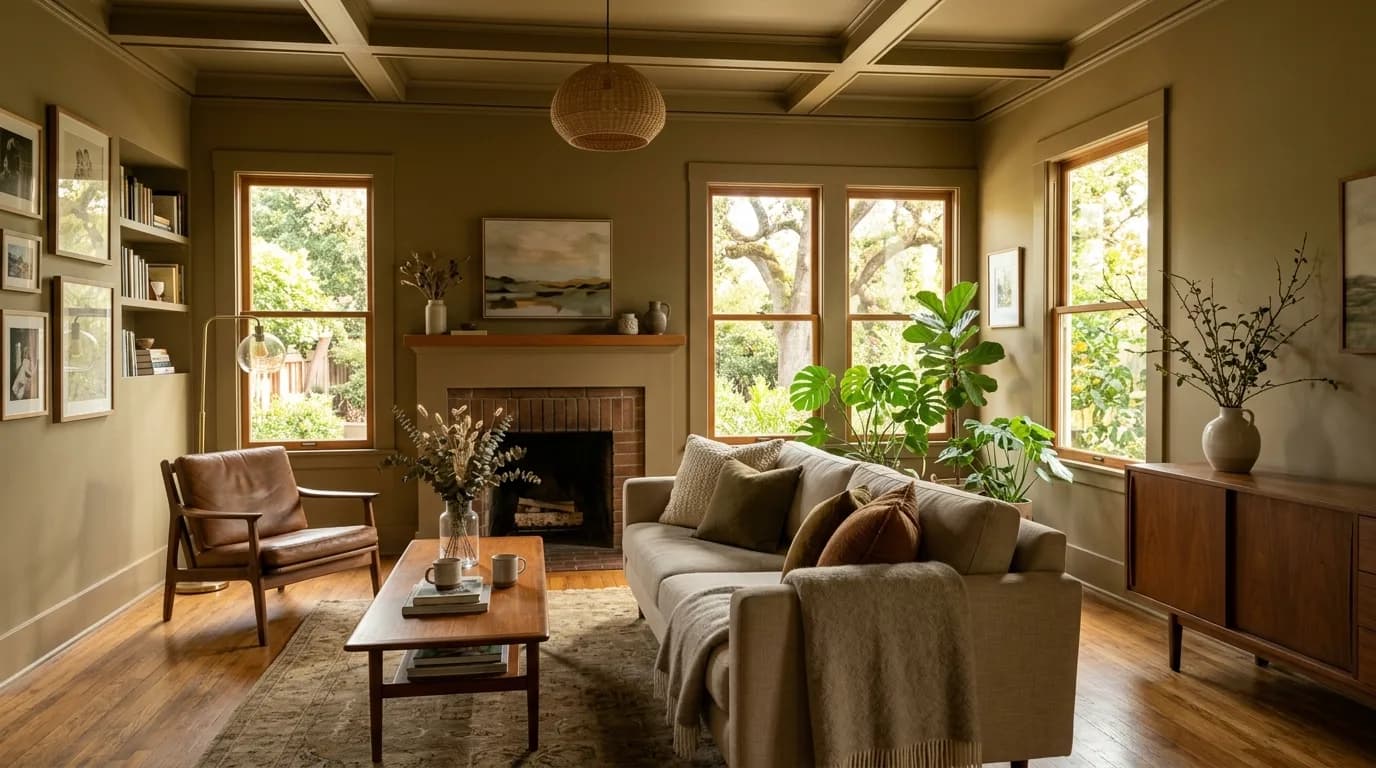
Color drenching means applying one dominant color to every visible surface in a room. Walls, ceiling, crown molding, baseboards, door frames, and doors all get the same shade -- or closely related tones of that shade. The goal is to erase the visual boundaries between surfaces, creating a room that feels like a unified, enveloping space rather than a box with different-colored planes.
The technique has three key variations:
- Full drench: Every surface in the exact same color and sheen. The purest form of the trend. Walls, ceiling, trim, doors -- all one color.
- Tone-on-tone drench: Closely related shades of the same hue across different surfaces. Walls might be medium sage, ceiling a lighter sage, and trim a slightly deeper sage. This creates subtle depth without breaking the monochromatic feel.
- Limewash drench: Using mineral-based limewash paint across surfaces for a textured, old-world effect. The natural variation in limewash application creates movement and depth even within a single color (We and the Color, 2026).
The psychological effect is significant. When your eye doesn't bounce between a colored wall and a white ceiling, the brain processes the space as calmer and more intentional. Designers call this the "chromatic envelope effect" -- the room becomes the color rather than containing it (Aura Modern Home, 2025).
Understanding paint sheens is especially important with color drenching because sheen variation creates visual contrast even within a single hue.
Color Drenching vs Accent Wall: Why the Shift
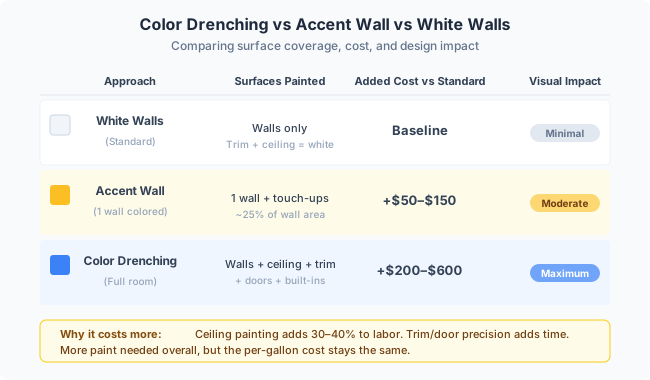
Accent walls have been the default "bold" move in residential painting for the past 15 years. One wall gets color; the other three stay white or neutral. Color drenching flips that formula completely.
The shift happened because accent walls often look like indecision rather than design. One colored wall surrounded by white reads as a compromise -- bold enough to notice, but not committed enough to feel intentional (Milton & King, 2025).
Key Differences
| Factor | Accent Wall | Color Drenching |
|---|---|---|
| Surfaces painted | 1 wall | All walls + ceiling + trim + doors |
| Color commitment | Low | High |
| Visual continuity | Creates contrast | Creates immersion |
| Room size effect | Can make walls feel uneven | Blurs boundaries, can feel larger |
| Reversal effort | Easy -- repaint 1 wall | Major -- repaint entire room |
| Design perception | 2015–2020 trend | 2024–2026 trend |
The Middle Ground: Color Capping
Not ready for a full drench? Color capping is the emerging 2026 compromise. You paint the ceiling and upper portion of the walls in one color while keeping the lower walls in a contrasting shade -- or vice versa. It gives architectural interest without the full commitment of drenching (House Digest, 2026; Sunset Magazine, 2026).
Color capping works particularly well in rooms with chair rail molding or wainscoting, where the architectural break provides a natural transition line.
Best Colors for Color Drenching
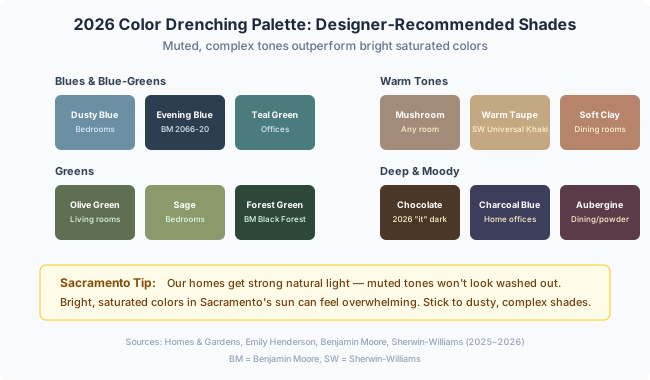
Not every color works for drenching. The rule: muted and complex beats bright and saturated. Sacramento's abundant natural light amplifies color intensity, so shades that look subtle on a paint chip can feel bold on every surface of a room.
Blues and Blue-Greens
The safest entry point for first-time color drenchers. Dusty blues and teal-greens create calm, sophisticated spaces that read as neutral-adjacent. Benjamin Moore's "Evening Blue" and soft blue-greens like SW "Vast Sky" are popular choices for drenched bedrooms and home offices.
Greens
Olive, sage, and forest green are among the most popular drenching colors in 2026. Rich olive green works as "a grounding neutral that isn't boring" -- it plays well with both warm wood tones and cool metallics. Sage creates a spa-like bedroom when applied floor to ceiling.
Warm Neutrals
Mushroom grays, warm taupes, and soft clay tones are the approachable end of color drenching. These colors create a cocooning effect without the risk of feeling overwhelming. Sherwin-Williams' "Universal Khaki" is a designer favorite for drenched dining rooms.
Deep and Moody Tones
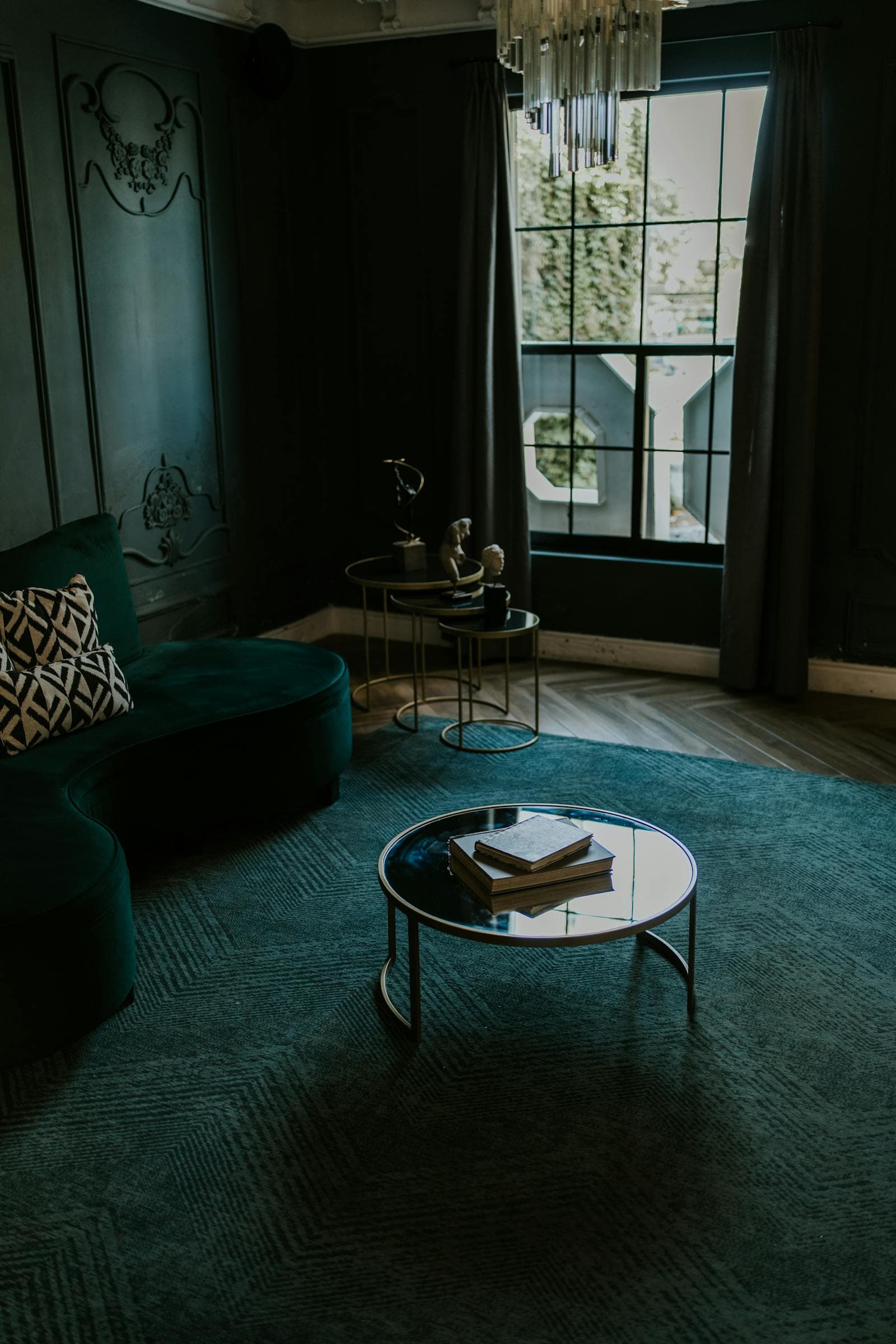
Chocolate brown is positioned as the "it" dark color of 2026, replacing the harsh matte blacks of recent years (Emily Henderson, 2026). Deep charcoal blue and aubergine work in home offices and dining rooms where dramatic lighting reinforces the mood.
Colors to Avoid for Drenching
Bright, saturated colors (think fire-engine red or electric blue) overwhelm most rooms when applied to every surface. Primary colors in full saturation create visual fatigue. If you love a bold color, opt for a dusty or muted version -- terra cotta instead of orange, denim blue instead of royal blue.
For the full 2026 palette these drench colors come from, see our 2026 interior paint colors guide.
Best Rooms for Color Drenching
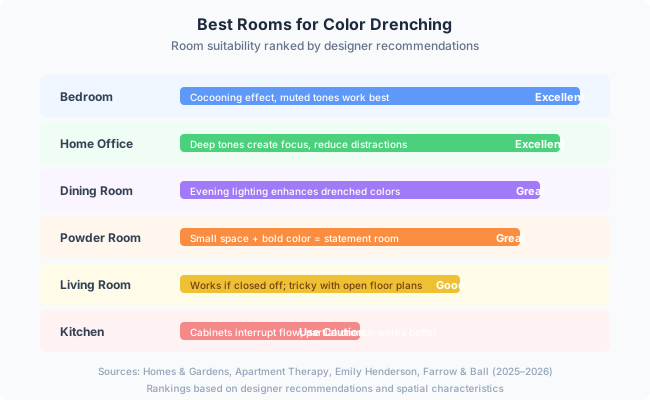
Color drenching works better in some rooms than others. The key factors are room size, natural light, how long you spend in the space, and whether it connects to other rooms via open floor plans.
Bedrooms (Excellent)
Bedrooms are the top recommendation from nearly every designer covering this trend. You experience the room primarily in low and evening light, the cocooning effect promotes relaxation, and the door closes -- creating a clean boundary between the drenched space and the rest of the house (Homedit, 2026).
Muted tones work best: sage green, dusty blue, warm mushroom, or deep chocolate. Avoid anything too stimulating for a sleep environment.
Home Offices (Excellent)
Deep olive, charcoal blue, or earthy brown can make a workspace feel focused and polished. The drenched environment reduces visual distractions at the edges of your peripheral vision, which can genuinely improve concentration. This is one of the strongest use cases for the technique.
Dining Rooms (Great)
Dining rooms are used in shorter bursts, often in evening light, and they benefit from richer tones. If you want one room in the house to feel expensive without a full remodel, a drenched dining room in deep green or warm clay delivers significant impact for relatively low cost.
Powder Rooms (Great)
Small spaces are surprisingly good candidates. Color drenching in a powder room eliminates the visual breaks between surfaces, which can actually make the room feel larger. Bold colors that might overwhelm a bedroom work perfectly in a space you visit for two minutes at a time.
Living Rooms (Good, With Caveats)
Open-concept living rooms that flow into kitchens or hallways present a challenge: where does the drench end? The boundary between a drenched room and the adjacent space needs careful handling. Closed-off living rooms work well; open floor plans may benefit from color capping instead.
Kitchens (Use Caution)
Cabinets, countertops, and appliances interrupt the continuous surface that makes drenching work. A partial drench -- painting the walls, ceiling, and trim while leaving cabinets as-is -- can work, but it's a modified version of the technique rather than a true drench.
How Much Does Color Drenching Cost?
Color drenching costs more than standard room painting because you're covering more surfaces to a higher standard of precision. The average cost to paint a room with walls only runs around $624 in 2026 (Angi, 2026). Add ceiling, trim, and doors, and that number climbs.
Cost Breakdown for a 12x12 Room
| Component | Standard Painting | Color Drenching |
|---|---|---|
| Walls (4) | $400–$600 | $400–$600 |
| Ceiling | Not included | +$150–$300 |
| Trim/baseboards | Not included (stays white) | +$100–$200 |
| Doors (1–2) | Not included | +$75–$150 per door |
| Precision/transition work | Minimal | +$50–$150 |
| Total estimate | $400–$600 | $775–$1,400 |
The biggest cost driver is the ceiling. Ceiling painting adds roughly 30–40% to labor costs because it requires different positioning, roller technique, and significantly more prep to protect floors and furniture. Doors are the second biggest time multiplier -- each door adds 45–90 minutes of labor for proper brushwork (Grove Street Painting, 2025).
Ways to Manage Cost
- Start with one room. A drenched bedroom or home office delivers maximum impact for a single-room investment.
- Skip the doors initially. Painting walls, ceiling, and trim gets you 90% of the drenched effect. Doors can be done in a follow-up phase.
- Use tone-on-tone rather than exact-match. A lighter shade on the ceiling can simplify the job while maintaining the drenched feel.
- Bundle with other painting work. If you're already getting rooms painted, adding the drenching technique to one room costs less than booking it separately.
Sacramento & Placer County
Need a real quote on your project?
Free, no-obligation walkthrough. Itemized estimate within 24 hours. Most jobs scheduled within 2–3 weeks.
Color Drenching Technique: How It's Done
The technique sounds simple -- paint everything one color -- but execution is where the details matter. Color drenching exposes every imperfection because there's no contrast to distract the eye.
Surface Preparation
Prep matters more with drenching than with standard painting. Wall imperfections, ceiling cracks, trim nail holes, and uneven caulk lines all become visible when everything is the same color. A thorough interior painting prep process is essential.
Key prep steps for color drenching:
- Fill all nail holes and cracks -- spackle, sand smooth, prime
- Re-caulk trim-to-wall joints -- gaps that hide behind contrast become obvious in a drench
- Sand glossy trim -- degloss existing semi-gloss or gloss trim for proper adhesion
- Clean ceiling thoroughly -- dust, cobwebs, and stains show through paint on a colored ceiling
- Tape precisely -- or cut in with a very steady hand
Paint Selection
Sheen selection is the most important technical decision in a color drenching project. Most designers recommend:
- Walls: Eggshell or matte for a soft, non-reflective surface
- Ceiling: Flat or matte to minimize imperfection visibility
- Trim and doors: Satin or semi-gloss for durability and subtle contrast
Using the same color in different sheens creates visual depth without breaking the monochromatic feel. The slight light-reflection difference between matte walls and satin trim adds dimension. Our paint sheen guide breaks down the options in detail.
Limewash Drenching
Limewash adds another dimension to color drenching. Because limewash is a mineral paint that penetrates rather than coats, the application creates natural tonal variation -- no two brushstrokes look identical. The result is a textured, old-world aesthetic that looks like the room "grew" its color organically (ROMABIO, 2025).
Limewash works on porous surfaces (unpainted drywall, plaster, brick) but requires specific preparation on previously painted walls. It's a premium technique that adds $2–$4 per square foot over standard paint.
Should You Hire a Professional for Color Drenching?
Color drenching raises the stakes on execution quality. With standard room painting, white trim hides where the wall color meets the woodwork. In a drenched room, there's nowhere for imperfections to hide.
When DIY Works
A small, simple room -- a powder room or bedroom with minimal trim detail -- is manageable for an experienced DIYer. If you've painted rooms before and can cut a clean line, the technique is the same. You're just doing more of it.
When to Call a Pro
Hire a professional for:
- Rooms with detailed trim, crown molding, or built-ins. These features require precise brushwork that's hard to rush.
- Ceiling painting. Ceiling work is physically demanding and technique-sensitive. Roller marks, drips, and uneven coverage are highly visible on a colored ceiling.
- Limewash application. Limewash requires specific technique and experience. Mistakes are harder to fix because the paint bonds to the substrate.
- Open-plan transitions. The boundary where a drenched room meets an adjacent space needs careful planning and clean execution.
A professional interior painting crew can drench a standard bedroom in one day. DIY on the same room takes two to three days when you include proper prep, multiple coats on the ceiling, and drying time between surfaces.
Unsure about hiring? Our contractor selection guide covers what to look for in a Sacramento painter.
Color Drenching for Sacramento Homes
Sacramento's housing stock and climate create specific considerations for color drenching.
Light Conditions
Sacramento gets over 260 sunny days per year. South- and west-facing rooms receive intense afternoon light that amplifies color. A shade that looks moody and sophisticated in a Seattle bedroom might feel aggressively bold in a Sacramento home at 3 PM in July.
Test colors in your specific room at multiple times of day. What reads as "dusty sage" at 8 AM might read as "lime green" at 4 PM with direct sun hitting the walls.
Sacramento Housing Styles
Common Sacramento home styles and how they pair with drenching:
- Ranch-style homes (1950s–1970s): Often have lower ceilings that benefit from drenching -- the technique makes 8-foot ceilings feel less boxy.
- Tract homes (1980s–2000s): Builder beige and popcorn ceilings need ceiling prep or removal before drenching. Smooth ceilings show the technique best.
- Open-concept remodels: Use color capping or partial drenching where rooms flow into each other.
- Older midtown/East Sac homes: Existing trim detail and plaster walls are excellent candidates for limewash drenching.
Climate and Paint Performance
Sacramento's dry climate is actually ideal for drenching projects. Low humidity means faster drying between coats, which is especially important when you're painting ceilings and walls in sequence. For eco-friendly paint options that meet California VOC standards, low-VOC and zero-VOC paints perform well for drenching since they're available in the full color spectrum.
FAQ
What is color drenching in painting?
Color drenching is an interior paint technique where every surface in a room -- walls, ceiling, trim, baseboards, and doors -- is painted in the same color or closely related tones of one hue. The result is an immersive, monochromatic space that erases visual boundaries between surfaces. It's the dominant interior paint trend of 2025–2026, replacing accent walls as the go-to bold design move (Homes & Gardens, 2026).
Is color drenching a good idea for small rooms?
Yes -- small rooms are among the best candidates for color drenching. When every surface is the same color, the eye can't distinguish where walls end and the ceiling begins, which creates an illusion of more space. Powder rooms and small bedrooms benefit particularly well from the technique. Light and mid-tone colors maximize the expansive effect, but even deeper shades work in small spaces because they eliminate the contrasting visual breaks that emphasize a room's dimensions (Homes & Gardens, 2026; Farrow & Ball, 2025).
What colors work best for color drenching?
Muted, complex tones outperform bright saturated colors. The top choices for 2026 include dusty blue-greens, sage and olive green, mushroom gray, warm taupe, soft clay, deep chocolate brown, and charcoal blue. Sacramento homes get strong natural light, so shades that look dark on a paint chip often read as medium tones on the wall. Avoid primary colors or neon-adjacent shades -- they create visual fatigue when applied to every surface in a room.
How much does it cost to color drench a room?
A color-drenched room costs roughly $775 to $1,400 for a 12x12 space, compared to $400–$600 for standard wall-only painting. The premium comes from ceiling painting (adds $150–$300), trim and baseboard painting ($100–$200), door painting ($75–$150 per door), and the precision work required at transitions. Starting with a single bedroom or home office keeps the investment manageable while delivering significant design impact.
Should I hire a professional for color drenching?
For most homeowners, yes. Color drenching eliminates the visual breaks that hide imperfections in standard painting. Every wall-to-ceiling joint, every trim edge, and every nail hole becomes visible when everything is the same color. Professional painters have the ceiling technique, prep skills, and precision cutting ability that the technique demands. DIY is reasonable for simple rooms with minimal trim, but complex rooms with crown molding, built-ins, or limewash application benefit from professional execution.
Transform Your Sacramento Home With Color Drenching
Color drenching is more than a trend -- it's a design philosophy that turns a standard room into an intentional, immersive space. Sacramento homes with their abundant natural light, classic trim details, and range of architectural styles are ideal candidates for the technique.
Start small. One bedroom or home office. Pick a muted, complex color. Test it at different times of day. Then commit.
ProFlow Painting's interior painting team handles color drenching projects across the Sacramento metro area -- from simple single-room drenches to full-home transformations with limewash and tone-on-tone finishes. Request a free estimate or call (916) 740-7249 to discuss your project. We'll help you choose the right color, sheen, and technique for your space.
Free quote · Sacramento & Placer County
Ready for a real estimate, not a guess?
Tell us about your project and we'll walk it with you in person. Itemized quote within 24 hours, no high-pressure sales.