
Free Estimate · Yolo County
Exterior Painting – Woodland, CA
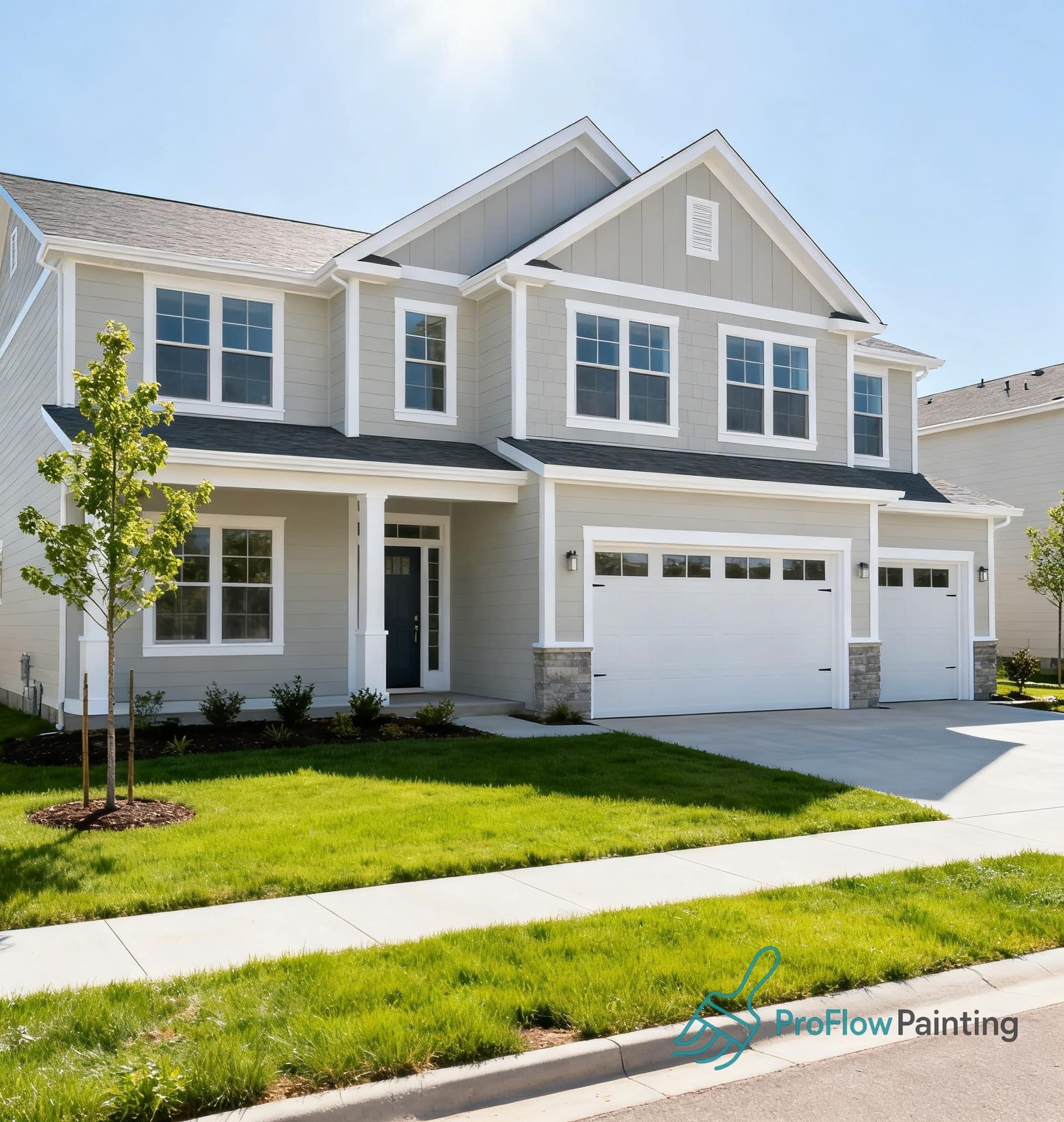
Exterior painting for Woodland homes built for valley heat, tule fog, and UV — proper prep on historic wood, stucco, and fiber cement with coatings that last.
- Licensed & insured crews
- Response within 1 business day
- Serving Woodland & Yolo County
Free estimate
Get your Woodland quote
We respond within one business day with a real next step.
Free Estimates
Written & Scoped
1-Day Response
Within 1 Business Day
One Crew
Start Through Finish
Clean Jobsites
Daily Cleanup, Final Walk-Through
Sacramento-Based
Serving Greater Sacramento
Exterior Painting in Woodland, CA
Woodland's climate is unforgiving on exterior paint. Sustained 100°F+ summers bleach and crack coatings that weren't built for Central Valley UV exposure. Winter tule fog keeps surfaces damp for days at a stretch — moisture that works behind any film that wasn't properly prepped. We spec exterior systems by substrate and climate, not by what's cheapest.
Exterior Surfaces We Paint
- Wood Siding & Shingles
- Stucco & EIFS
- Fiber Cement Siding
- Trim, Fascia & Soffits
- Entry Doors & Shutters
- Fences, Gates & Decks
Woodland sits in the heart of the Central Valley — hot, dry summers that push past 105°F, followed by tule fog winters where humidity can stay above 90% for days. That climate cycle is hard on exterior paint. UV exposure at valley elevation bleaches pigment and breaks down binders faster than in coastal climates. Fog-season moisture penetrates any gap that wasn't caulked or any film that's started to lift. Getting the prep right and choosing coatings matched to the climate is the difference between a paint job that lasts 8–12 years and one that starts failing in three.
What we paint on Woodland home exteriors
We paint all exterior wall surfaces — wood siding, stucco, fiber cement plank and panel, and brick or masonry — along with all trim, fascia, soffits, eaves, window casings, exterior doors, shutters, and decorative millwork. We also paint fences, gates, and deck surfaces. On older Woodland homes with wood siding, we're often repainting surfaces that have multiple paint layers, failed caulk at joints, and wood that's weathered or softened at the end grain.
Woodland's historic housing stock — what exterior prep looks like
The Victorian and Craftsman homes in Woodland's historic core — along Dead Cat Alley, College Street, and First and Second Streets — are among the best-preserved in the Sacramento region. They're also among the most demanding exteriors to paint correctly.
Original wood siding on these homes is often old-growth Douglas fir or redwood — dense-grained, tight wood that holds paint well when it's sound, but shows every surface failure when it isn't. Common conditions we find at estimate: failed caulk at corner boards and window casings (often the original linseed-oil-based caulk that's shrunk and cracked); peeling at south- and west-facing walls where UV is most intense; end-grain exposure at siding butt ends and belly boards where moisture has worked in over decades; and multiple thick paint layers at detailed trim work where buildup has started to obscure the original profiles.
Proper prep on these homes means scraping all loose paint to a sound edge, sanding feathered cuts to minimize ridges, recaulking all joints and penetrations with a paintable elastomeric, spot-priming bare wood before any topcoat goes on, and checking for any wood rot at the contact points most vulnerable to moisture — sill ends, post bases, fascia where it meets the gutter.
Pre-1978 homes in Woodland's historic neighborhoods likely have lead-based paint on exterior surfaces. We follow EPA RRP protocols for any work involving disturbance of painted surfaces — scraping, pressure washing, or sanding — with proper containment and disposal.
Newer Woodland exteriors — Spring Lake and Southeast subdivisions
Spring Lake and the Southeast Woodland subdivisions built from the late 1990s through 2010s are predominantly stucco over wood-frame construction with fiber cement or stucco board details. These exteriors are more uniform in condition than the historic stock and prep faster, but they have their own failure modes.
Stucco cracks are the most common issue — hairline cracks from building settlement and thermal cycling are normal in the Central Valley climate, but they need to be chased and filled with elastomeric caulk or patching compound before painting. Elastomeric coatings are the appropriate topcoat for stucco in this climate — they bridge minor cracking and flex with thermal movement rather than cracking through with the substrate.
HOA color approval is required for exterior repaints in most Spring Lake communities. We can provide a color specification sheet with the paint manufacturer's color name and formula number for your HOA submission; the approval process is the homeowner's responsibility, but we'll give you the documentation you need.
Exterior coatings we use in Woodland
For wood siding on historic homes, we use oil-alkyd primer (or a high-solids water-based primer on pre-primed surfaces) followed by two coats of a 100% acrylic exterior topcoat — Sherwin-Williams Duration, Benjamin Moore Aura Exterior, or Dunn-Edwards WeatherShield. These formulas are designed for high-UV environments and carry better fade resistance than standard exterior latex.
For stucco, an elastomeric coating is the correct choice in Woodland's climate — it bridges the hairline cracking that's unavoidable in the Central Valley's thermal cycle. Sherwin-Williams Loxon and Dunn-Edwards Evershield are our standard stucco specs.
For fiber cement (Hardie board and similar), Sherwin-Williams Duration with a Loxon XP primer is the standard system — fiber cement is more dimensionally stable than wood but still needs a penetrating primer to seal the edges and cut faces.
All exterior work gets a full coat of primer on any bare or repaired surface. Applying topcoat directly over bare wood or patched stucco without primer is the most common cause of early failure we see on repainted homes.
Prep is the whole job
The coating itself rarely fails. What fails is what's under it — inadequately scraped surfaces, unpainted bare wood, dry-caulked joints, or primer that wasn't given time to cure before topcoat went on. Our exterior process on every Woodland home:
- Pressure wash the entire exterior — removes surface chalk, dirt, and biological growth
- Inspect and scrape all loose, peeling, or chalking paint to a sound surface
- Sand feathered edges and spot-sand areas where gloss needs to be broken for adhesion
- Replace or consolidate any soft, checked, or punky wood (minor repairs in scope; extensive rot is a separate carpenter's trade)
- Caulk all joints, gaps, penetrations, and failed seams with paintable elastomeric
- Spot-prime all bare surfaces and repairs — oil primer on bare wood, masonry primer on stucco repairs
- Apply two full coats of finish topcoat; back-roll any spray application for full penetration
Best time to paint exteriors in Woodland
The reliable windows for exterior painting in Woodland are spring (March through mid-June) and fall (mid-September through November). Spring gives you moderate temperatures, low humidity, and good drying conditions without the heat extremes that create application problems in summer. Fall gives you the same conditions after the heat breaks, with longer days than winter.
Summer (late June through August) is workable but requires early-morning starts — we apply exterior coats before 10 a.m. when possible and avoid coating in direct sun on surfaces above 90°F. High surface temperatures cause latex to skin-dry before it levels, leaving lap marks and uneven sheen. We don't apply topcoat to surfaces in direct afternoon sun during a Woodland summer.
Winter exterior work is limited by tule fog. December and January fog keeps surface moisture high through midday, and you need at least 4 hours of dry conditions after application for the film to set properly. Short fog-season days combined with high humidity make January and February poor months for exterior painting; we'll be honest about that in scheduling conversations rather than taking a job we can't execute correctly.
What drives exterior painting costs in Woodland
Surface condition is the primary cost driver. A Spring Lake stucco home in good condition with minimal cracking and sound paint preps quickly. A 1910 Victorian on College Street with multiple paint layers, failed caulk at every window casing, wood softening at sill ends, and elaborate trim detail will cost substantially more — because it takes substantially more hours to prep correctly.
Home size and story count matter: second-story work requires scaffolding or pump jacks on taller homes, which adds cost. Trim complexity — wide built-up crown, decorative brackets, turned porch columns — adds time relative to a simple stucco box. Condition of existing caulk and whether window glazing needs attention are other variables worth noting at estimate.
Comparison: standard exterior vs. elastomeric coating for Woodland stucco
| Factor | Standard Acrylic Latex | Elastomeric Coating | |---|---|---| | Crack bridging | Minimal | Good — bridges hairline cracks | | Film thickness | Thin (4–6 mils DFT) | Thick (10–20 mils DFT) | | Best substrate | Wood, fiber cement | Stucco, masonry | | Vapor permeability | High | Variable — check product specs | | Cost | Lower | Higher | | Expected life in Woodland | 7–10 years (good prep) | 10–15 years (good prep) |
Get a Woodland exterior estimate before the next heat season.
Get a Free Woodland Exterior EstimateOur process
The 5-step exterior painting process we run in Woodland
Every job in Yolo County follows the same five stages — so you know what happens before, during, and after we paint.
- 01
Consult
On-site visit in Woodland to measure, review surfaces, and confirm full scope of work.
- 02
Prep
Wash, scrape, sand, patch, caulk, and prime — no shortcuts before topcoat.
- 03
Protect
Floors, landscaping, fixtures, and furniture covered before any spray or brush.
- 04
Paint
Two-coat exterior painting system applied with the right method for each surface.
- 05
Walkthrough
Final walkthrough on site — no final payment until you've signed off.
What we paint
Surfaces & spaces we paint in Woodland
Each surface gets the right prep, primer, and coating system spec'd for Yolo County conditions.
Siding
Inspect, prep, prime, coat — same standard on every job.
Stucco
Inspect, prep, prime, coat — same standard on every job.
Wood Trim
Inspect, prep, prime, coat — same standard on every job.
Fascia & Soffits
Inspect, prep, prime, coat — same standard on every job.
Garages
Inspect, prep, prime, coat — same standard on every job.
Fences & Gates
Inspect, prep, prime, coat — same standard on every job.
Entry Doors
Inspect, prep, prime, coat — same standard on every job.
Local conditions
Why Woodland's climate changes how we paint
Coatings and schedules are matched to Yolo County weather — heat, fog, rain, and UV all factor into prep and product choice.
- Woodland gets valley heat plus agricultural dust from surrounding farmland; every exterior starts with a thorough wash before primer.
- Winter tule fog keeps surfaces damp into late morning — we push exterior starts to when moisture readings clear.
- Historic wood siding here is often 80–100 years old; we scrape, sand and spot-prime with an oil-based or alkyd primer before acrylic topcoat.
Coverage
Neighborhoods we serve in Woodland
- Spring Lake
- Beamer Park
- Downtown Main Street historic district
- Gibson Road corridor
- East Street corridor
Style fit
What we paint in Woodland
- Pre-1940 Victorians and craftsman bungalows around Main Street and Beamer Park
- 1960s–70s ranch homes across the central city
- 2005-and-newer stucco tracts in Spring Lake
Local details
What changes when we paint in Woodland
Drive time, HOA review, the age of the housing stock and local rules all shape the scope. Here is how they play out in Woodland.
Distance and response from our Sacramento office
1750 Howe Ave is about 22 miles up I-5 from our Sacramento office — 30 minutes each way. We answer every estimate request within one business day and send a written, line-item bid within 24–48 hours of the walkthrough.
HOA and color approval
Older Woodland neighborhoods have no HOA. Spring Lake has an HOA with a defined exterior palette — color changes go through review first.
Homes built before 1978
Most homes here were built before 1978. Any pre-1978 home gets EPA RRP lead-safe prep — contained sanding, HEPA cleanup, documented disposal — and it's written into the scope.
Woodland specifics
Most of central Woodland predates 1978 — EPA RRP lead-safe prep is standard on these homes.
Woodland specifics
Exterior work on designated historic homes downtown may need review under the city's historic preservation ordinance.
Related pages
FAQ
FAQ — Woodland exterior painting
How long does exterior painting take for a Woodland home?
+
A standard single-story Woodland home runs 3–5 days including pressure washing, prep, and two coats. Two-story homes or historic homes with extensive prep typically run 5–8 days. We give you a project timeline at estimate so you know what to expect.
Do you need to do anything special for HOA color approval in Spring Lake?
+
We provide a color specification document with the manufacturer, color name, and formula number for your HOA submission packet. Color approval timing is up to the HOA — we recommend getting approval before scheduling so there's no delay once prep starts.
Can you paint during Woodland's summer heat?
+
Yes, with scheduling adjustments. We start exterior coats early morning, avoid application on surfaces in direct afternoon sun, and don't apply above 90°F surface temperatures. Summer exterior work takes more schedule coordination but is doable.
What's the right exterior paint for a historic Woodland home?
+
A 100% acrylic exterior with a high-quality oil or high-solids water-based primer on bare wood. We typically use Sherwin-Williams Duration or Benjamin Moore Aura Exterior — both are formulated for UV exposure and have the flexibility to handle minor wood movement without cracking.
Do you handle lead paint on older Woodland homes?
+
Yes. For homes built before 1978, we follow EPA RRP protocols when work disturbs painted surfaces. This includes containment, HEPA vacuum, and proper disposal. We document the process for your records.
Other Woodland painting services: Interior painting in Woodland | Residential painting in Woodland | Commercial painting in Woodland
Exterior painting near Woodland: Exterior painting in Davis | Exterior painting in West Sacramento | Exterior painting in Sacramento
Same city
Other painting services in Woodland
Nearby cities
Exterior Painting in nearby cities
Ready when you are
Start your exterior painting project in Woodland
Send the property details, photos, and timeline. A ProFlow project manager will respond within one business day with scoped pricing and a real schedule window.