

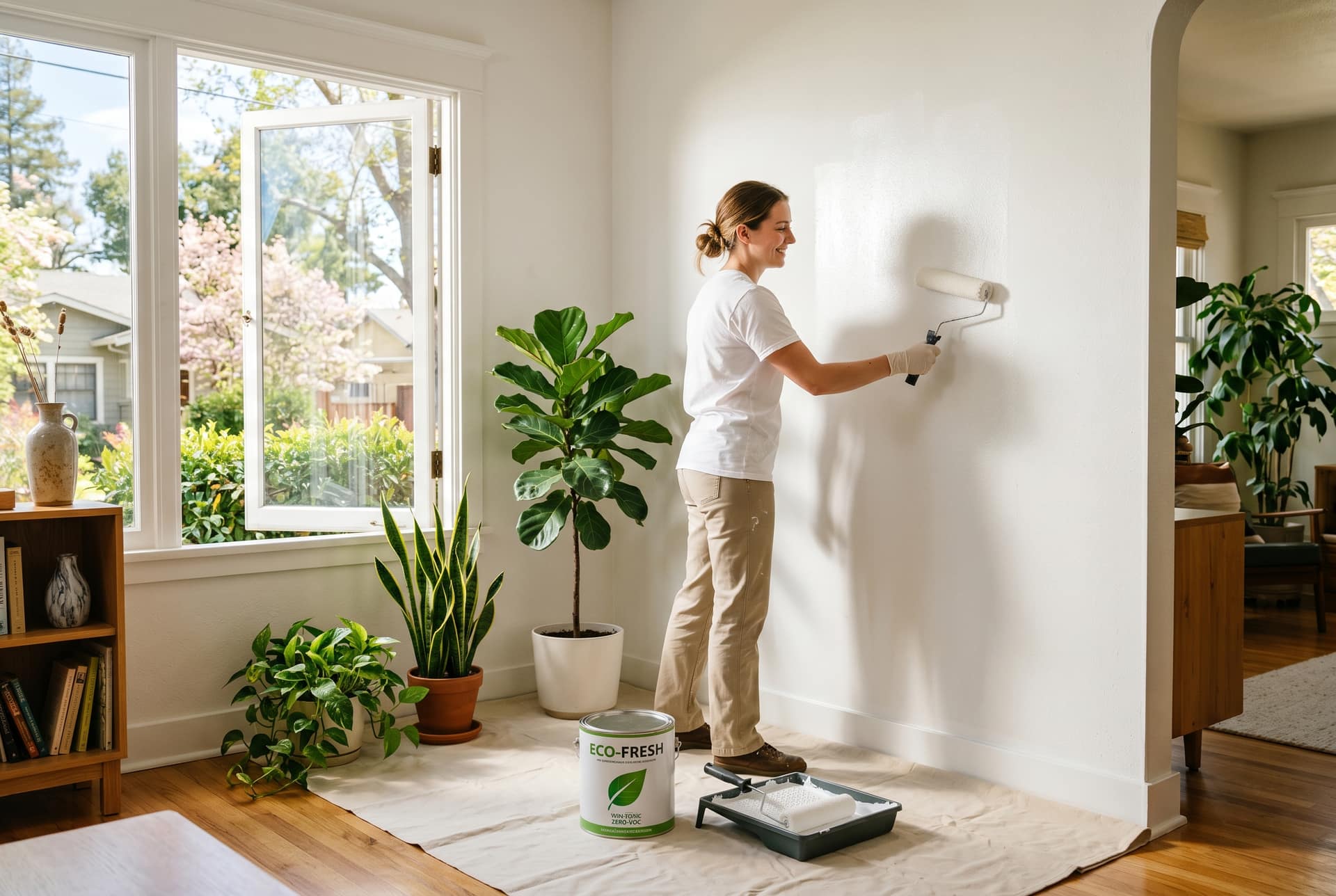
That fresh paint smell most people recognize? It's actually a cocktail of volatile organic compounds releasing into your home's air—compounds linked to respiratory issues, headaches, and long-term health concerns. For Sacramento families spending hot summer months indoors with air conditioning running, these chemicals concentrate in living spaces, creating invisible health risks.
The good news: today's eco-friendly paints deliver stunning results without the health compromises. Zero-VOC and low-VOC options have evolved dramatically, matching or exceeding traditional paint performance while protecting indoor air quality. Sacramento's environmentally conscious homeowners increasingly choose sustainable painting solutions—and they're not sacrificing durability, coverage, or color selection to do it.
This guide explores everything Sacramento homeowners need to know about eco-friendly painting: understanding VOCs and their health impacts, comparing sustainable product options, evaluating costs, and making informed decisions that protect both family health and environmental values. Whether you're painting a nursery, refreshing your entire home, or simply curious about healthier options, you'll find practical information to guide your choices.
Understanding VOCs and Indoor Air Quality
What Are VOCs?
Volatile Organic Compounds (VOCs) are carbon-based chemicals that evaporate at room temperature. In traditional paints, VOCs serve as solvents—they keep paint liquid during application and evaporate as paint dries and cures.
Common Paint VOCs Include:
- Formaldehyde
- Benzene
- Toluene
- Ethylene glycol
- Methylene chloride
- Perchloroethylene
These compounds release most heavily during application and the first few days afterward, but off-gassing continues at lower levels for weeks or even months. The "new paint smell" indicates active VOC release into your indoor environment.
Health Concerns
VOC exposure creates both immediate and long-term health effects:
Short-Term Effects:
- Eye, nose, and throat irritation
- Headaches and dizziness
- Nausea and fatigue
- Difficulty concentrating
- Allergic skin reactions
- Asthma attacks in sensitive individuals
Long-Term Exposure Risks:
- Respiratory damage
- Liver and kidney damage
- Central nervous system effects
- Potential increased cancer risk (some VOCs are known carcinogens)
- Developmental effects in children
Vulnerable Populations:
- Children (smaller bodies, developing systems)
- Pregnant women (fetal development concerns)
- Elderly individuals
- People with respiratory conditions
- Those with chemical sensitivities
The EPA notes that indoor VOC levels typically measure 2-5 times higher than outdoor levels, sometimes exceeding 1,000 times outdoor concentrations during and after painting activities.
Sacramento-Specific Considerations
Sacramento's climate creates unique VOC exposure concerns:
Summer Air Quality: When temperatures exceed 95-100°F, Sacramento homeowners close windows and run air conditioning. This recirculates indoor air, concentrating any VOCs released from recent painting. Without fresh air exchange, compounds accumulate rather than dissipate.
Air Quality Alert Days: Sacramento frequently experiences poor outdoor air quality from wildfire smoke, vehicle emissions, and regional pollution. During these periods, homeowners can't open windows for ventilation, extending indoor VOC exposure from painting projects.
Extended Indoor Seasons: Sacramento's extreme summer heat keeps families indoors for 4-5 months annually—precisely when VOC concentration risks are highest. Choosing low-emission paints reduces cumulative exposure during these extended indoor periods.
Eco-Friendly Paint Categories
Zero-VOC Paints
Definition: Zero-VOC paints contain less than 5 grams per liter of volatile organic compounds—essentially negligible emissions. Most major manufacturers now offer zero-VOC lines that perform comparably to traditional paints.
Characteristics:
- Minimal or no odor during application
- Safe for immediate occupancy after painting
- No off-gassing concerns
- Suitable for occupied homes, including during painting
- Ideal for bedrooms, nurseries, and living spaces
Performance Reality: Early zero-VOC formulations sacrificed coverage and durability. Modern products have overcome these limitations. Premium zero-VOC paints like Benjamin Moore Natura, Sherwin-Williams Harmony, and Behr Premium Plus (some lines) deliver excellent coverage, washability, and longevity.
Cost Consideration: Zero-VOC paints typically cost $5-15 more per gallon than standard equivalents—a modest premium for significant health benefits. For a typical room requiring 2 gallons, you're looking at $10-30 additional investment.
Low-VOC Paints
Definition: Low-VOC paints contain less than 50 grams per liter for flat finishes and less than 150 grams per liter for other sheens. This represents significant reduction from traditional paints measuring 200-400+ g/L.
Characteristics:
- Reduced odor compared to traditional paints
- Faster air quality recovery after painting
- Broader product selection than zero-VOC
- Often more affordable than zero-VOC alternatives
- Suitable for most residential applications
When Low-VOC Works: Low-VOC paints offer a middle ground when specific performance characteristics require some solvent content. Some specialty applications (high-traffic areas, moisture resistance) may benefit from low-VOC rather than zero-VOC formulations.
Natural and Organic Paints
Definition: Natural paints use plant-based, mineral, or other non-synthetic ingredients. True organic paints derive from naturally occurring materials without petrochemical components.
Common Ingredients:
- Plant oils (linseed, soy, citrus)
- Natural pigments (mineral oxides, earth colors)
- Natural resins
- Milk protein (casein paints)
- Clay and mineral fillers
- Essential oils (for natural antimicrobial properties)
Characteristics:
- Completely non-toxic formulations
- Pleasant natural scents (citrus, plant-based)
- Breathable finishes allowing moisture transfer
- Biodegradable and environmentally minimal impact
- Often support sustainable agriculture
Considerations: Natural paints may have limited color ranges, longer drying times, and different application characteristics than conventional products. Coverage and durability vary by brand. Costs often exceed conventional zero-VOC options.
Notable Brands:
- AFM Safecoat
- ECOS Paints
- BioShield
- Old Fashioned Milk Paint
- Real Milk Paint
California-Compliant Paints
California maintains the nation's strictest VOC regulations through the California Air Resources Board (CARB). All paints sold in California must meet these requirements:
Current CARB Limits:
- Flat paints: 50 g/L maximum
- Non-flat paints: 100 g/L maximum
- Specialty coatings: Varied by type
This means standard paints purchased in Sacramento already meet low-VOC standards that exceed national requirements. However, zero-VOC and natural paint options still provide additional health benefits beyond regulatory minimums.
Top Eco-Friendly Paint Brands for Sacramento Homes
Premium Zero-VOC Options
Benjamin Moore Natura:
- Truly zero VOC (even tinted)
- Excellent coverage and hide
- Wide color selection through Benjamin Moore palette
- Available at Benjamin Moore retailers and paint stores
- Sacramento availability: Good through local dealers
- Price: $65-75/gallon
- Best for: Living spaces, bedrooms, nurseries
Sherwin-Williams Harmony:
- Zero VOC with antimicrobial properties
- Helps reduce common household odors
- Good coverage and durability
- Available at Sherwin-Williams stores
- Sacramento availability: Excellent (multiple stores)
- Price: $55-65/gallon
- Best for: Bedrooms, bathrooms, high-use areas
BEHR Premium Plus (Zero VOC lines):
- Affordable zero-VOC option
- Available at Home Depot
- Good coverage for the price point
- Wide color selection
- Sacramento availability: Excellent
- Price: $35-45/gallon
- Best for: Budget-conscious eco-friendly projects
Natural Paint Options
AFM Safecoat:
- Zero VOC and zero emissions
- Designed for chemically sensitive individuals
- Seals in off-gassing from other materials
- Medical-grade formulations available
- Sacramento availability: Limited (specialty order)
- Price: $55-80/gallon
- Best for: Sensitive individuals, maximum health priority
ECOS Paints:
- Zero VOC with pleasant natural scent
- Pet-safe and child-safe formulations
- Wide color range
- Good durability and washability
- Sacramento availability: Online and specialty stores
- Price: $60-70/gallon
- Best for: Families prioritizing non-toxic environments
BioShield Clay Paint:
- Natural clay-based formulation
- Breathable, moisture-regulating finish
- Unique matte aesthetic
- Covers minor wall imperfections
- Sacramento availability: Specialty order
- Price: $45-65/gallon
- Best for: Natural aesthetic, adobe-style homes
Performance-Focused Low-VOC
Benjamin Moore Regal Select:
- Low VOC (under 50 g/L)
- Superior stain resistance
- Excellent washability
- Professional-grade durability
- Sacramento availability: Good
- Price: $60-70/gallon
- Best for: High-traffic areas needing durability
Sherwin-Williams Duration:
- Low VOC formulation
- strong coverage (one coat possible)
- Outstanding durability and washability
- Lifetime warranty
- Sacramento availability: Excellent
- Price: $70-80/gallon
- Best for: Maximum durability, long-term value
Dunn-Edwards Evershield:
- California-made, CARB compliant
- Low VOC with excellent performance
- Good value for quality
- Local company with strong Sacramento presence
- Sacramento availability: Excellent
- Price: $45-55/gallon
- Best for: Local preference, good value
Room-by-Room Eco-Friendly Recommendations
Nurseries and Children's Rooms
Priority: Maximum safety with truly zero emissions
Top Recommendations:
- Benjamin Moore Natura (zero VOC even after tinting)
- ECOS Paints (specifically formulated as child-safe)
- AFM Safecoat (medical-grade for maximum sensitivity)
Application Tips:
- Paint at least 2-3 weeks before baby arrives
- Ensure good ventilation during and after painting
- Allow full cure time before child occupies room
- Consider ceiling painting—babies spend lots of time looking up
Color Considerations: Soft, calming colors benefit infant sleep and development. Muted greens, soft blues, warm neutrals, and gentle yellows work well. Avoid stimulating bright colors in primary sleep areas.
Master Bedrooms
Priority: Low odor for immediate comfort, healthy sleeping environment
Top Recommendations:
- Sherwin-Williams Harmony (antimicrobial properties)
- Benjamin Moore Natura (zero odor)
- BEHR Premium Plus Zero VOC (budget-friendly)
Why It Matters: Adults spend 7-9 hours nightly in bedrooms. Any off-gassing occurs during your longest continuous indoor exposure period. Zero-VOC paints eliminate this concern entirely.
Living Rooms and Common Areas
Priority: Durability balanced with health considerations
Top Recommendations:
- Benjamin Moore Regal Select (low VOC, excellent durability)
- Sherwin-Williams Duration (low VOC, superior washability)
- Dunn-Edwards Evershield (local, low VOC, good value)
Considerations: High-traffic areas benefit from paints with excellent washability. Low-VOC options in premium lines deliver this performance while maintaining health standards. Consider satin or eggshell sheens for easier cleaning.
Kitchens
Priority: Moisture resistance, washability, food-safe environment
Top Recommendations:
- Sherwin-Williams Harmony (antimicrobial, moisture-resistant)
- Benjamin Moore Natura Kitchen & Bath (zero VOC, mildew-resistant)
- AFM Safecoat (maximum non-toxicity near food preparation)
Special Considerations: Kitchen painting near food preparation areas warrants extra attention to non-toxic formulations. Zero-VOC options prevent chemical migration into food contact surfaces.
Bathrooms
Priority: Mildew resistance, moisture performance, ventilation challenges
Top Recommendations:
- Benjamin Moore Natura Bath & Spa (zero VOC, mildew-resistant)
- Sherwin-Williams Harmony (antimicrobial properties)
- Dunn-Edwards Aristoshield (mildew-resistant, low VOC)
Ventilation Awareness: Bathrooms often have limited ventilation. Zero-VOC paints are especially important where air exchange is restricted. Mildew-resistant formulations prevent moisture-related issues common in Sacramento's bathroom environments.
Home Offices
Priority: Cognitive function, reduced chemical distractions
Top Recommendations:
- Benjamin Moore Natura (truly zero emissions)
- ECOS Paints (pleasant, non-chemical environment)
- Sherwin-Williams Harmony (odor-reducing properties)
Why It Matters: Working from home means extended exposure to indoor air quality. VOCs can cause headaches, fatigue, and difficulty concentrating—problems that directly impact productivity. Zero-VOC paints eliminate these concerns.
Sacramento & Placer County
Need a real quote on your project?
Free, no-obligation walkthrough. Itemized estimate within 24 hours. Most jobs scheduled within 2–3 weeks.
Cost Comparison: Eco-Friendly vs. Traditional Paints
Price Per Gallon
| Paint Category | Price Range | Coverage |
|---|---|---|
| Traditional (standard VOC) | $25-40 | 350-400 sq ft |
| Low-VOC (premium) | $40-60 | 350-400 sq ft |
| Zero-VOC (standard) | $35-50 | 350-400 sq ft |
| Zero-VOC (premium) | $55-80 | 400-450 sq ft |
| Natural/Organic | $45-85 | 300-400 sq ft |
Total Project Cost Comparison
Example: 2,000 Square Foot Home Interior
Traditional Paint:
- Paint cost: 15 gallons x $35 = $525
- Total materials: ~$625
Premium Zero-VOC Paint:
- Paint cost: 15 gallons x $65 = $975
- Total materials: ~$1,075
Difference: $450 for whole-house health upgrade
Professional Painting: Most Sacramento painting contractors charge similar labor rates regardless of paint type. Material cost differences represent only 5-10% of total professional project costs.
Long-Term Value Considerations
Health Cost Avoidance: Medical studies link VOC exposure to respiratory issues, headaches, and chronic conditions. While difficult to quantify, avoiding these health impacts provides real value.
Indoor Air Quality: Zero-VOC paints maintain better indoor air quality throughout their lifespan, not just during application. This ongoing benefit extends the value beyond initial cost comparisons.
Resale Appeal: Sacramento's health-conscious market increasingly values eco-friendly home features. Documentation of zero-VOC painting may support higher valuations, particularly for families with children or health sensitivities.
Environmental Impact: Reduced VOC emissions benefit regional air quality—relevant in Sacramento's challenging air quality environment. This broader value extends beyond individual homes.
Sacramento's Air Quality and Paint Choices
Regional Air Quality Challenges
Sacramento faces significant air quality issues that intersect with painting decisions:
Ozone Pollution: Ground-level ozone forms when VOCs react with nitrogen oxides in sunlight. Sacramento's sunny climate and vehicle emissions create persistent ozone problems, especially summer afternoons. Every VOC reduction helps address this regional challenge.
Wildfire Smoke: Increasing wildfire frequency brings hazardous air quality days to Sacramento each summer and fall. During smoke events, residents can't ventilate homes, making low-emission interior products more important.
Temperature Inversions: Winter temperature inversions trap pollutants in the Sacramento Valley, creating poor air quality that can last days. Indoor air quality becomes paramount during these periods.
CARB Regulations Impact
California Air Resources Board regulations ensure all paints sold in Sacramento meet minimum VOC standards. This means:
- Standard paints already outperform national averages
- Zero-VOC and natural options provide additional benefits
- Sacramento homeowners have access to the cleanest conventional paints nationwide
- Regulatory compliance doesn't mean zero impact—just reduced impact
Making Air Quality-Conscious Decisions
During Poor Air Quality Days:
- Postpone painting if possible during smoke events
- If painting, use zero-VOC products exclusively
- Maintain air filtration running during and after painting
- Keep windows closed but consider HEPA filtration
During Good Air Quality Days:
- Excellent opportunity for ventilated painting
- Open windows accelerate any off-gassing
- Natural ventilation supports faster cure times
- Consider scheduling major painting during clear-air periods
Professional Eco-Friendly Painting Services
What to Ask Contractors
When hiring Sacramento painting contractors for eco-friendly projects:
Product Questions:
- What zero-VOC or low-VOC brands do you recommend?
- Can you provide product data sheets showing VOC content?
- Do tinted paints maintain zero-VOC status?
- What specialty eco-friendly products do you have experience with?
Process Questions:
- How do you ensure proper ventilation during painting?
- What's your timeline for safe re-occupancy?
- Do you use low-VOC primers and caulks as well?
- How do you handle paint disposal responsibly?
Experience Questions:
- Have you completed eco-friendly projects for families with chemical sensitivities?
- What feedback have you received from health-conscious clients?
- Can you provide references from eco-friendly projects?
Professional Advantages for Eco-Friendly Projects
Product Knowledge: Professional painters understand product interactions and can recommend appropriate eco-friendly products for specific applications. They know which zero-VOC options perform best for different surfaces and conditions.
Proper Application: Eco-friendly paints sometimes have different application characteristics. Professional application ensures proper coverage, drying times, and finish quality.
Complete System Approach: Truly eco-friendly painting requires low-VOC primers, caulks, and related materials. Professional contractors specify complete systems rather than just paint selection.
Ventilation Management: Professionals understand optimal ventilation during eco-friendly painting projects, balancing cure times with occupant comfort and air quality.
Frequently Asked Questions
Are zero-VOC paints as durable as traditional paints?
Modern zero-VOC paints from major manufacturers perform comparably to traditional products. Premium lines like Benjamin Moore Natura, Sherwin-Williams Harmony, and others deliver excellent durability, washability, and longevity. Early zero-VOC formulations did sacrifice performance, but technology has advanced significantly.
For high-traffic areas, premium zero-VOC products or low-VOC high-durability options (like Sherwin-Williams Duration) provide excellent wear resistance. The performance gap that existed a decade ago has largely closed.
Do eco-friendly paints cost significantly more?
The premium for eco-friendly paints is modest—typically $10-20 per gallon more than standard equivalents. For a typical room requiring 2 gallons, you're looking at $20-40 additional investment for significant health benefits.
When considering total project costs including labor, the material difference represents only 5-10% of professional painting costs. Many Sacramento homeowners find this premium worthwhile for improved indoor air quality.
Can I paint a room and sleep in it the same day with zero-VOC paint?
Zero-VOC paints are safe for occupied spaces during and after painting—that's their primary advantage. However, paint needs time to cure properly for best durability. Most manufacturers recommend waiting until paint is dry to touch (1-2 hours) before occupying rooms.
For optimal comfort, painting in the morning allows all-day ventilation and ensures complete surface drying before bedtime. While zero-VOC paints don't pose health concerns, wet paint on walls is still wet paint.
Do tinted paints remain zero-VOC?
This varies by brand. Some manufacturers maintain zero-VOC status even after adding tint colorants. Others see slight VOC increases after tinting, though levels remain very low.
Benjamin Moore Natura maintains zero-VOC even when tinted from their standard color palette. Ask your paint supplier to confirm whether specific products remain zero-VOC after tinting.
Are eco-friendly paints available in all colors?
Yes, major zero-VOC lines offer full color palettes. Benjamin Moore Natura accesses their complete color system. Sherwin-Williams Harmony and other premium eco-friendly lines similarly offer extensive color options.
Natural paint brands may have more limited color ranges, often focusing on earth tones and organic hues. If specific colors are important, premium zero-VOC lines from major manufacturers provide the widest selection.
How do I verify a paint's actual VOC content?
Request the Safety Data Sheet (SDS) or product data sheet from the manufacturer or retailer. These documents specify actual VOC content in grams per liter.
California products display VOC content on labels due to CARB requirements. Compare this number to category standards:
- Zero-VOC: Under 5 g/L
- Low-VOC: Under 50 g/L (flat) or 150 g/L (other sheens)
- Traditional: Often 150-300+ g/L
Can eco-friendly paints cover dark colors?
Premium zero-VOC paints provide good coverage over dark colors, though like any paint, significant color changes may require additional coats. Using a tinted primer appropriate to your finish color improves coverage and reduces total coats needed.
For dramatic color changes (dark to light), expect 2-3 coats regardless of paint type. The coverage difference between premium zero-VOC and traditional paints is minimal with proper preparation and application.
Make the Healthy Choice for Your Sacramento Home
Your home's paint affects daily life for years—every breath your family takes indoors interacts with painted surfaces. Choosing eco-friendly options protects your family's health while delivering beautiful, durable results.
Sacramento's climate makes indoor air quality particularly important. With months of closed-window weather during summer heat and winter cold, low-emission paints provide lasting benefits beyond the painting project itself.
Modern zero-VOC and low-VOC paints have eliminated the performance compromises that once made eco-friendly options less attractive. Today, you can have both health-conscious painting and professional-quality results.
ProFlow Painting offers eco-friendly painting services throughout Sacramento:
- Zero-VOC and low-VOC product expertise
- Knowledge of natural and organic paint options
- Experience with chemically sensitive clients
- Complete eco-friendly systems (primers, caulks, paints)
- Proper ventilation and application techniques
Our Eco-Friendly Services Cover:
- Whole-house interior painting with zero-VOC products
- Nursery and children's room painting with maximum-safety options
- Bedroom painting for healthy sleep environments
- Kitchen and bathroom painting with appropriate formulations
- Commercial spaces for health-conscious businesses
Schedule Your Eco-Friendly Consultation:
Call (916) 740-7249 to discuss eco-friendly painting options for your Sacramento home. We'll recommend appropriate products for your priorities, provide detailed pricing, and answer your questions about healthy, sustainable painting choices.
Protect your family's health while beautifying your home. Eco-friendly painting delivers both—and we're here to help you make it happen.
ProFlow Painting: Sacramento's trusted choice for eco-friendly, sustainable painting services. Protecting homes, families, and our environment since 2015. Licensed, insured, and committed to healthy indoor environments.
Free quote · Sacramento & Placer County
Ready for a real estimate, not a guess?
Tell us about your project and we'll walk it with you in person. Itemized quote within 24 hours, no high-pressure sales.